Why do you always run out of money before month-end?
|
If you keep asking yourself, “Why do I always run out of money before month-end?”, you are not alone. Many salaried professionals and business owners in India struggle with cash flow gaps despite earning a decent income. The problem is rarely low income alone. It is usually poor cash flow planning, hidden expenses, rising EMIs, and lifestyle inflation.
At Saarathi.ai, we have observed that borrowers who frequently face month-end shortages often have high fixed obligations and no structured budgeting system. The good news is this pattern can be fixed. In this guide, we break down the real reasons you run out of money before month-end and how to regain control using practical, India-specific strategies.
The Real Reasons You Run Out of Money Before Month-End
1. You Do Not Track Daily Spending
Small UPI payments, food delivery, subscriptions, and cab rides feel harmless. But over 30 days, they create a silent drain.
Common overlooked expenses:
Swiggy and Zomato orders
OTT subscriptions
Impulse Amazon purchases
Weekend outings
App renewals
When you do not track spending, your bank balance surprises you near month-end.
According to coverage in Economic Times, digital payment growth in India has significantly increased micro-transactions, making spending easier and less visible.
2. Your EMIs Are Too High
EMIs are one of the biggest reasons for cash crunch.
Lenders typically evaluate FOIR, which means Fixed Obligation to Income Ratio. Ideally, total EMIs should remain below 40-50 percent of income.
If your EMI burden is too high:
You lose financial flexibility
Emergencies push you into credit card debt
Savings stop completely
At Saarathi.ai, we have observed that many borrowers take multiple personal loans without checking repayment capacity. This creates a monthly pressure cycle.
Before taking a loan, always compare personal loan offers on Saarathi.ai to ensure affordable EMIs and competitive interest rates.
3. Lifestyle Inflation Is Eating Your Income
When salary increases, expenses increase faster.
Examples:
Upgrading phone every year
Moving to premium rental apartments
Buying a new car immediately after appraisal
Frequent vacations
Lifestyle upgrades feel rewarding, but if they outpace savings, month-end shortages become routine.
According to reports by CRISIL, rising urban consumption has increased unsecured borrowing among young professionals. Without planning, this can lead to financial stress.
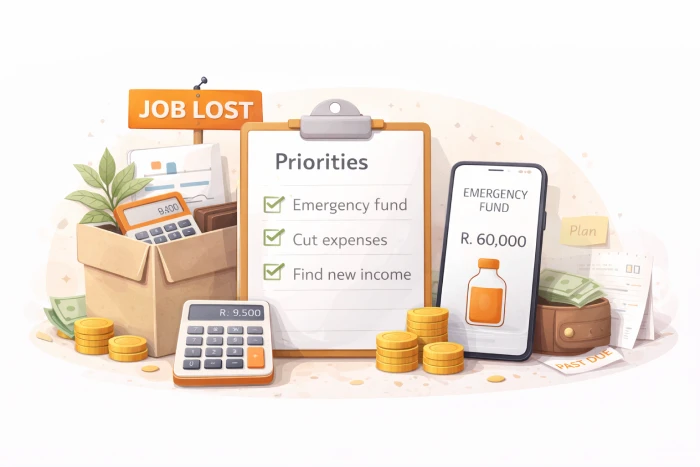
4. No Emergency Buffer
One medical bill, gadget repair, or unexpected travel expense can disturb your entire month.
If you do not have:
3 to 6 months of emergency savings
Health insurance
Contingency planning
You will depend on credit cards or short-term loans.
A strong financial plan always prioritizes an emergency fund before lifestyle upgrades.
5. You Budget Once and Forget
Many people create a budget in January and never review it again.
But:
Rent increases
Fuel prices fluctuate
Grocery costs rise
Insurance premiums change
Without monthly reviews, your budget becomes outdated.
You can track active loans and obligations transparently in Saarathi Bazaar, helping you monitor fixed commitments easily.
6. You Depend on Credit Cards for Gaps
Credit cards delay the problem but do not solve it.
If you only pay the minimum due:
Interest rates can exceed 30-40 percent annually
Debt compounds quickly
Next month starts with negative cash flow
Using credit cards without a repayment plan is one of the fastest ways to run out of money before month-end.
If you already face high-interest debt, consider structured refinancing by comparing options on Saarathi.ai instead of rolling over credit card dues.
7. You Ignore Annual and Seasonal Expenses
Indian households have predictable seasonal expenses:
Diwali shopping
School admissions
Insurance renewals
Wedding gifts
Travel bookings
If you do not plan monthly savings for these, they hit you suddenly and wipe out your balance.
Create a sinking fund:
If annual expense is Rs 60,000, save Rs 5,000 monthly.
This prevents last-minute borrowing.
8. Your Income Is Variable but Spending Is Fixed
Freelancers, commission-based employees, and small business owners often face irregular income.
Mistake:
Spending based on best month earnings.
Correct approach:
Budget based on average or lowest earning month.
At Saarathi.ai, we recommend conservative income declaration when checking eligibility using our AI expert tool. This ensures sustainable EMI commitments.
You can ask eligibility questions via Saarathi AI before applying for a loan to avoid overborrowing.
9. You Do Not Automate Savings
If you wait to save what is left, nothing remains.
Better strategy:
SIP on salary day
Auto transfer to savings
Separate emergency account
Pay yourself first.
This builds discipline and reduces impulsive spending.
10. Poor Credit Planning Increases Interest Burden
If your credit score is low:
You get higher interest rates
EMIs increase
Approval chances drop
This increases monthly outflow.
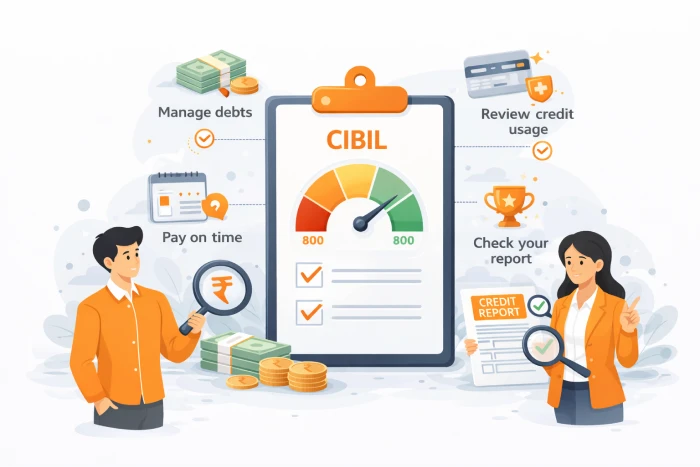
To maintain a healthy credit profile:
Pay EMIs on time
Keep credit utilization below 30 percent
Avoid multiple loan applications
Monitor credit report regularly
With Saarathi.ai, our AI Recommendation Engine matches you with suitable lenders from 110+ banks and NBFCs, reducing rejection risk and protecting your credit score.
Signs You Are Heading Toward a Cash Flow Crisis
You check bank balance daily near month-end
You borrow from friends frequently
You rotate credit card payments
Savings are zero
Salary is exhausted within 20-25 days
If this pattern continues for more than 3 months, immediate action is required.
How to Stop Running Out of Money Before Month-End
Step 1: Track Every Rupee for 30 Days
Categorize:
Fixed expenses
Variable expenses
Discretionary spending
Awareness alone reduces overspending.
Step 2: Adjust the 50-30-20 Rule for India
Recommended allocation:
55 percent Needs including EMIs
20 percent Wants
25 percent Savings
If EMIs exceed 50 percent, consider refinancing.
Step 3: Reduce EMI Burden
Options:
Balance transfer
Consolidation
Longer tenure with lower EMI
Compare lenders for better rates
You can compare personal loan offers on Saarathi.ai in a fully paperless journey and track your application in Saarathi Bazaar for complete transparency.
Step 4: Build a 3-Month Emergency Fund
Target:
Minimum 3 months expenses
Ideal 6 months
Keep it liquid and accessible.
Step 5: Plan Seasonal Spending
Create separate savings for:
Festivals
Travel
Insurance renewals
School fees
Monthly allocation prevents shocks.
Step 6: Increase Income Strategically
If budgeting alone is insufficient:
Upskill
Freelance
Negotiate salary
Monetize skills
Higher income with controlled lifestyle builds wealth faster.
Sample Scenario: Why Salary Vanishes in 20 Days
Monthly Income: Rs 75,000
Fixed Costs
Rent: Rs 22,000
EMI: Rs 18,000
Utilities: Rs 5,000
Insurance: Rs 3,000
Total Fixed: Rs 48,000
Remaining: Rs 27,000
Variable and Lifestyle
Groceries: Rs 9,000
Dining: Rs 6,000
Fuel: Rs 6,000
Subscriptions: Rs 3,000
Miscellaneous: Rs 5,000
Total Variable: Rs 29,000
Shortfall: Rs 2,000 every month
This gap forces credit card usage, which compounds into bigger deficits.
Small adjustments like reducing dining and refinancing high-interest loans can fix the cycle.
How Budget Discipline Improves Loan Approval
Lenders evaluate:
FOIR
Repayment track record
Income stability
Credit score
If you consistently run out of money, you risk delayed EMIs and lower credit score.
With Saarathi.ai:
AI-based lender matching improves approval chances
You avoid multiple rejections
You get transparent comparisons
You track progress in Saarathi Bazaar dashboard
A strong monthly surplus increases eligibility for home loans, business loans, and personal loans.
FAQs
1. Why do I run out of money even with a good salary?
High EMIs, lifestyle inflation, and lack of tracking are common reasons.
2. How much EMI is safe for monthly income?
Ideally under 40-50 percent of income to maintain financial stability.
3. Can refinancing reduce month-end stress?
Yes. Lower interest rates or longer tenure can reduce EMI burden.
4. Should I use credit cards to manage cash flow?
Only if you repay in full. Minimum payments lead to high interest accumulation.
5. How can I check loan eligibility without harming my credit score?
Use AI tools like Saarathi.ai to assess eligibility before submitting applications.
6. Does budgeting improve credit score?
Yes. Timely EMI payments and controlled spending strengthen credit health.
Conclusion
Running out of money before month-end is not a salary problem alone. It is a structure problem.
Key Takeaways:
Track daily expenses
Keep EMIs under control
Plan seasonal spending
Build emergency savings
Avoid credit card dependency
Use AI tools for smart borrowing
Financial stability starts with awareness and structured planning. If you are managing EMIs or planning a new loan, discover personalized loan options on Saarathi.ai today. Compare lenders, track applications in Saarathi Bazaar, and get expert guidance from our AI assistant in a fast, transparent, paperless journey.