How Global Wars and Tensions Affect Your Loan Eligibility and Job Stability?
|
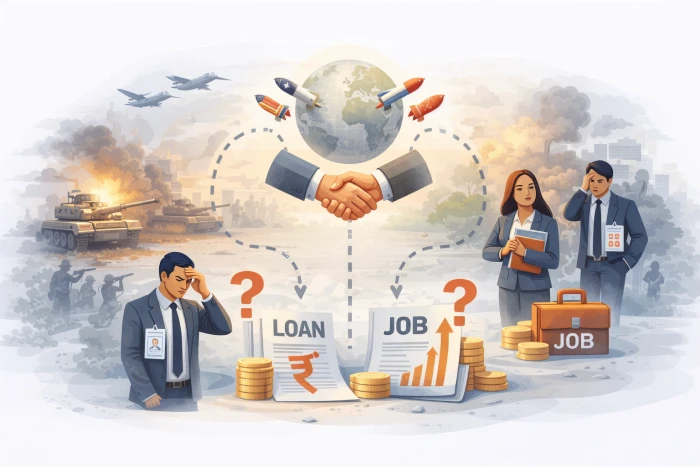
Global wars and geopolitical tensions may feel distant, but their economic effects can directly influence your loan eligibility and job stability in India. From oil price spikes and currency volatility to inflation and hiring slowdowns, global conflicts trigger ripple effects across financial systems. If you are planning a home loan, personal loan, or business loan, understanding how these macro risks impact lending criteria and employment trends is critical. In this guide, we explain how global tensions influence RBI policy, interest rates, credit approvals, and sector-wise job stability, along with practical steps to protect your financial future.
How Global Wars Impact the Indian Economy
When major global conflicts break out, markets react immediately.
Common economic consequences include:
Spike in crude oil prices
Disruption in global supply chains
Stock market volatility
Currency depreciation
Capital outflows from emerging markets
India imports a significant portion of its crude oil. When oil prices surge due to war-related supply disruptions, inflation rises. The Reserve Bank of India monitors such developments closely because inflation directly influences monetary policy.
Higher inflation can eventually lead to higher interest rates, which affects borrowers.
Impact on Loan Interest Rates
1. Inflation-Driven Rate Hikes
Wars often increase commodity prices. If inflation crosses the RBI’s comfort band of 2 to 6 percent, policy tightening may follow.
When the repo rate increases:
Floating home loan EMIs rise
Personal loan interest rates adjust upward
Business loans become costlier
Even a 0.5 percent increase can significantly impact long tenure loans.
2. Liquidity Tightening
Geopolitical risk increases global uncertainty. Foreign investors may withdraw capital from emerging markets like India. This reduces liquidity in financial markets.
Reduced liquidity often results in:
Higher bond yields
Stricter credit assessment
Slower loan disbursals
At Saarathi.ai, we have observed that during volatile cycles, lenders prioritize applicants with strong credit scores and stable employment profiles.
How Loan Eligibility Changes During Global Tensions
Loan eligibility depends on three key pillars:
Income stability
Credit score
Debt to income ratio
During global stress, lenders may tighten norms.
Stricter Income Verification
Lenders may:
Scrutinize salary slips more closely
Prefer applicants from stable sectors
Reduce eligibility multiples
Higher Credit Score Preference
Borrowers with scores above 750 are viewed as lower risk. Marginal profiles may face higher interest rates or reduced sanctioned amounts.
You can compare personal loan offers on Saarathi.ai to see lender-wise eligibility variations in real time.
Conservative Loan to Value Ratios
For home loans, lenders may reduce loan to value ratios slightly to manage risk.
You can compare home loan offers on Saarathi.ai to evaluate competitive funding structures.
Sector-Wise Job Stability During Global Conflicts
1. IT and Export-Focused Industries
If wars impact the US or European economies:
IT project pipelines may slow
Hiring may moderate
Variable pay may shrink
However, currency depreciation sometimes boosts export revenues.
2. Manufacturing and MSMEs
Supply chain disruptions can:
Increase raw material costs
Reduce profit margins
Affect cash flow cycles
MSMEs may face working capital stress, impacting job stability.
3. Oil and Energy Sector
Energy companies may benefit from higher prices, but volatility remains high.
4. Startups
Startups dependent on foreign venture capital may see:
Funding delays
Valuation corrections
Hiring freezes
As frequently reported by Economic Times, global risk-off sentiment typically reduces capital flows to emerging markets.
Impact on EMIs and Household Budgets
Wars often increase:
Fuel prices
Food inflation
Transportation costs
This reduces disposable income.
If interest rates rise simultaneously, households face dual pressure:
Higher EMIs
Higher living costs
Borrowers with high debt to income ratios above 45 percent are more vulnerable during such periods.
How RBI Responds to Geopolitical Shocks
The Reserve Bank of India uses several tools:
Repo rate adjustments
Forex market intervention
Liquidity injections
Regulatory flexibility for lenders
During past global disruptions, RBI provided targeted liquidity to maintain financial stability.
India’s relatively strong foreign exchange reserves act as a buffer against sudden currency shocks.
What Borrowers Should Do During Geopolitical Uncertainty
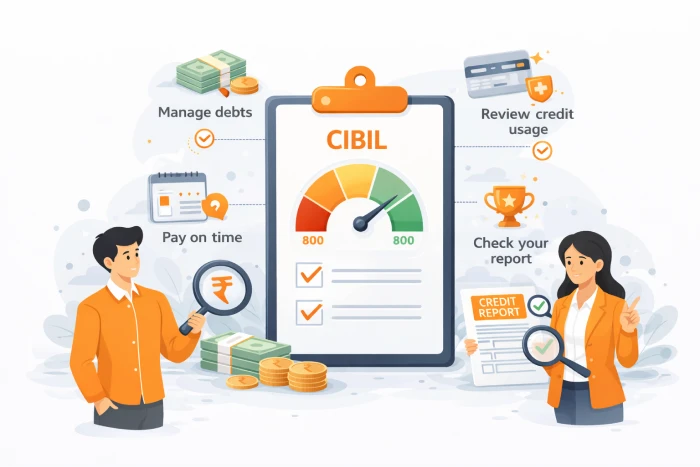
1. Strengthen Your Credit Score
Pay EMIs on time. Avoid unnecessary credit inquiries.
You can ask eligibility questions via Saarathi AI expert before formally applying. This reduces rejection risk.
2. Maintain EMI Discipline
Keep total EMIs below 35 to 40 percent of income.
3. Build Emergency Funds
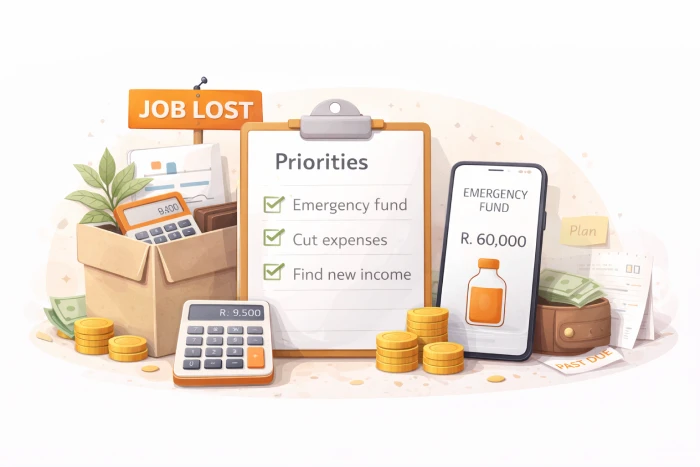
Maintain at least 6 months of EMI and living expenses.
4. Choose Loan Structure Carefully
In volatile cycles:
Fixed rate loans provide predictability
Floating rates may increase if repo rises
Compare total cost before deciding.
5. Track Your Loan Journey Transparently
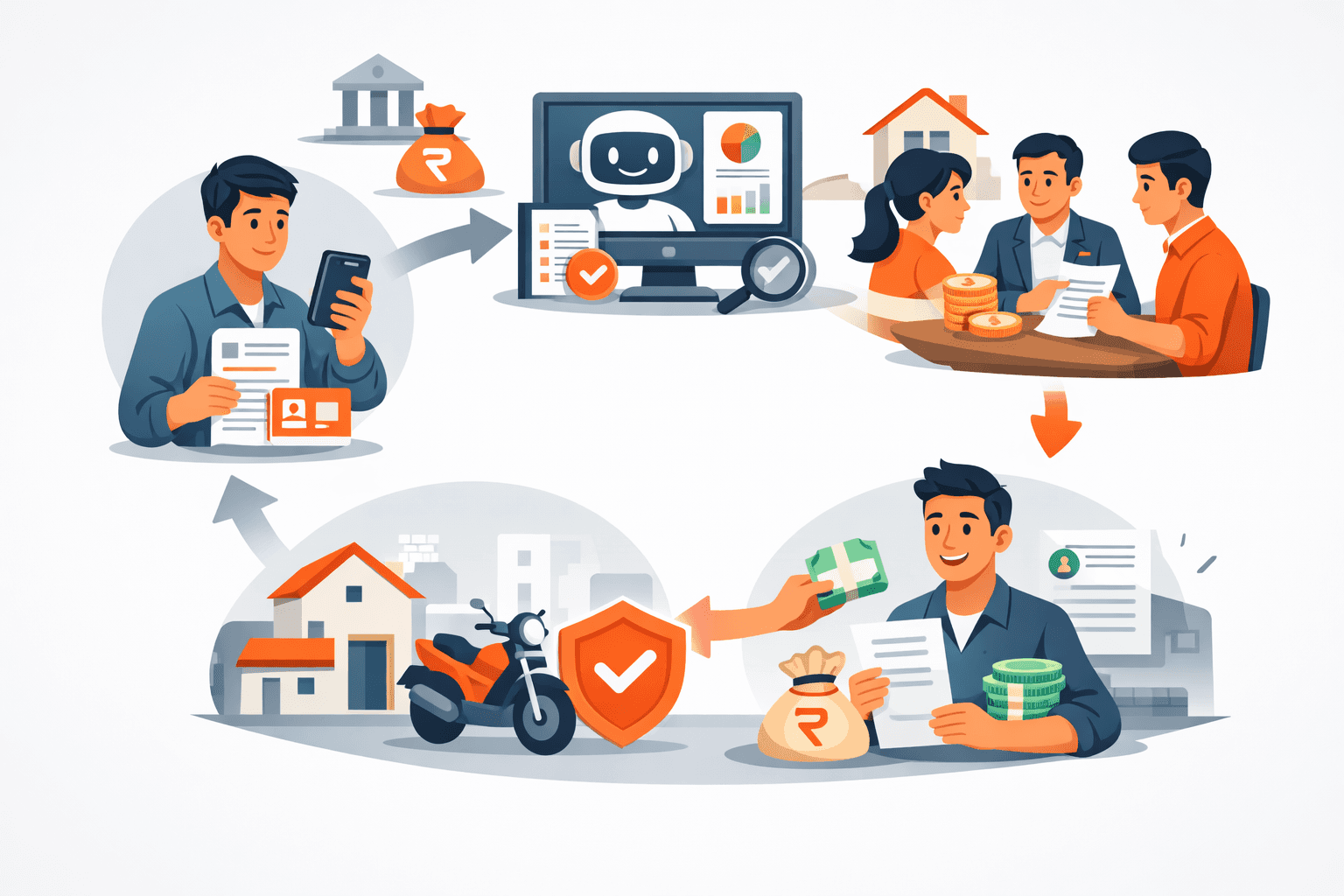
You can track your application in Saarathi Bazaar to monitor approvals, documentation, and lender communication in real time.
Real-World Scenario
Suppose a major global conflict causes oil prices to jump sharply.
Likely chain reaction:
Fuel prices rise
Inflation increases
RBI considers rate hike
Bond yields move higher
Floating loan EMIs increase
If the conflict also slows global growth:
IT hiring may slow
Export demand may weaken
Startup funding may tighten
This combination can affect both job stability and loan affordability.
At Saarathi.ai, we have seen that borrowers who proactively compare across 110 plus lenders secure better rates even in uncertain markets because pricing strategies differ significantly across institutions.
FAQs
Can global wars directly reduce my loan eligibility?
Not directly, but they can affect inflation, interest rates, and lender risk appetite, which influence eligibility criteria.
Will my EMI increase during geopolitical tensions?
If RBI raises repo rates in response to inflation, floating rate EMIs may increase.
Which sectors are safest during global conflicts?
Essential services, government roles, and diversified domestic businesses tend to be relatively more stable.
Should I delay taking a home loan during global instability?
If your income is stable and EMI ratio is manageable, borrowing remains viable with proper planning.
How can I reduce loan rejection risk?
Maintain a high credit score, stable income records, and use digital eligibility tools before applying.
Conclusion
Global wars and geopolitical tensions create economic uncertainty that can affect inflation, interest rates, job stability, and loan eligibility in India. While these risks are real, India’s regulatory framework and monetary tools provide resilience.
For borrowers, the focus should be on strong credit health, conservative EMI planning, and transparent lender comparison rather than reacting emotionally to headlines.
Discover personalized loan options on Saarathi.ai today and make confident borrowing decisions even during global uncertainty.