Boost Your CIBIL: 5 Tips for Fast Loan Approval
|
Your CIBIL score can decide whether your loan gets approved, rejected, or approved at a high interest rate. In 2026, with AI-driven underwriting becoming mainstream, lenders still treat the CIBIL score as a critical trust signal. The difference between a score of 680 and 780 can mean saving lakhs of rupees in interest over time. The good news is that improving your CIBIL score is not complicated if you focus on the right actions. At Saarathi.ai, we have observed that borrowers who actively work on their credit profile for just three to six months before applying often unlock better offers and faster approvals. This guide shares CIBIL score improvement tips that actually work before applying for a loan, based on real borrower behaviour and lender expectations in India.
What Is a CIBIL Score and Why It Matters
A CIBIL score is a three-digit number ranging from 300 to 900 that reflects your creditworthiness. It is calculated based on your repayment history, credit utilisation, credit mix, and length of credit history. Most banks and NBFCs in India consider a score above 750 as excellent. Scores between 650 and 749 are considered average, while anything below 650 signals higher risk. According to lending guidelines aligned with the Reserve Bank of India, lenders must assess borrower risk carefully, and the CIBIL score remains the first screening tool.
Check Your Credit Report Before Anything Else
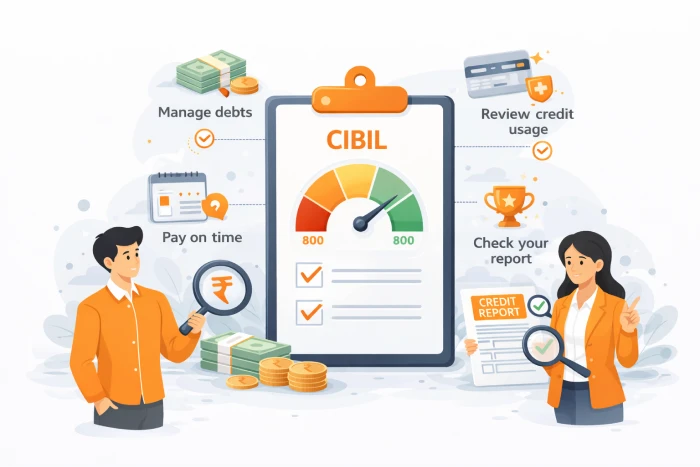
The most important first step is checking your full credit report, not just the score. Many borrowers are surprised to find errors such as incorrect outstanding amounts, duplicate loan entries, or even loans they never took. These errors can pull down your score significantly. Review every detail, including personal information, loan status, and payment history. If you find discrepancies, raise a dispute immediately with TransUnion CIBIL. Correcting errors alone can sometimes improve your score within a few weeks.
Pay EMIs and Credit Card Dues on Time
Payment history contributes the highest weight to your CIBIL score. Even one missed EMI or credit card payment can hurt your score for months. Set up auto-debit instructions or reminders to ensure timely payments. If you have missed payments in the past, focus on building a clean repayment streak going forward. At Saarathi.ai, we have seen that borrowers who maintain six consecutive months of on-time payments often see noticeable score improvement.
Reduce Credit Card Utilisation Below 30 Percent
High credit card utilisation signals financial stress to lenders. Ideally, your outstanding balance should be less than 30 percent of your total credit limit. For example, if your total credit limit is Rs. 2 lakh, try to keep usage below Rs. 60,000. If possible, pay down balances before the statement date so lower utilisation is reported. This single step can significantly boost your CIBIL score within two to three billing cycles.
Avoid Applying for Multiple Loans at Once
Each loan or credit card application triggers a hard inquiry on your credit report. Too many inquiries within a short period indicate credit hunger and reduce your score. Before applying, check eligibility using platforms that minimise unnecessary credit checks. Saarathi.ai allows borrowers to assess eligibility and compare offers smartly, helping avoid multiple rejections and unnecessary score damage.
Maintain a Healthy Credit Mix
A balanced mix of secured loans like home or auto loans and unsecured credit like personal loans or credit cards reflects responsible credit behaviour. Borrowers with only unsecured loans often appear riskier. If you are new to credit, even a small secured loan with disciplined repayment can help build a strong score over time. Do not take unnecessary loans just for mix, but understand how diversity improves long-term credit health.
Do Not Close Old Credit Accounts Hastily
Older credit accounts increase the average age of your credit history, which positively impacts your score. Closing your oldest credit card may reduce your credit age and increase utilisation ratio. If the card has no annual fee and is not misused, keeping it active can help your score. Many borrowers unknowingly reduce their CIBIL score by closing old accounts before applying for a loan.
Settle Overdues the Right Way
If you have past defaults or overdue accounts, clearing them is essential. However, there is a difference between settlement and full closure. A settled account indicates that the lender accepted less than the total amount due and can still negatively impact your score. Whenever possible, aim for full repayment and obtain a no-dues certificate. Over time, this reflects better than settlements on your credit report.
Give Your Credit Score Time to Improve
CIBIL score improvement is not instant. Positive actions take time to reflect. Typically, meaningful improvement is visible within three to six months of disciplined behaviour. Be wary of agencies promising instant fixes. In 2026, lenders and regulators discourage shortcuts and unethical practices. Consistency and patience remain the most reliable strategy.
How AI Platforms Help You Apply at the Right Time
AI-led platforms analyse your credit profile and suggest the right timing and lender for application. Saarathi AI expert helps borrowers understand whether they should wait and improve their score or proceed with suitable lenders who accept moderate scores. The Saarathi Recommendation Engine then matches borrowers with lenders most aligned to their current profile, increasing approval chances even if the score is not perfect.
Common Myths About CIBIL Score Improvement
Many borrowers believe checking their own score reduces it, which is not true. Soft inquiries do not impact your score. Another myth is that income alone can compensate for a poor score. While income matters, credit discipline carries more weight. Understanding these myths prevents costly mistakes before applying for a loan.
FAQs
How much CIBIL score is good for loan approval?
A score above 750 is considered excellent, while most lenders prefer at least 700 for competitive rates.
How fast can my CIBIL score improve?
With disciplined repayment and low utilisation, improvement is often visible within three to six months.
Does loan rejection reduce CIBIL score?
The rejection itself does not, but the hard inquiry associated with the application can lower your score.
Should I close unused credit cards before a loan?
Not necessarily. Closing old cards can reduce credit age and increase utilisation.
Can I get a loan with a low CIBIL score?
Yes, but interest rates may be higher. Using AI-led platforms helps find suitable lenders.
Conclusion
Improving your CIBIL score before applying for a loan is one of the smartest financial moves you can make in 2026. Key actions include paying dues on time, reducing credit utilisation, avoiding multiple applications, correcting report errors, and maintaining credit discipline. Even small improvements can unlock lower interest rates and faster approvals. If you want clarity on your eligibility and personalised guidance on improving your credit profile, explore smart loan options and expert insights on Saarathi.ai and apply with confidence.