What Happens If You Miss an EMI Payment?
|
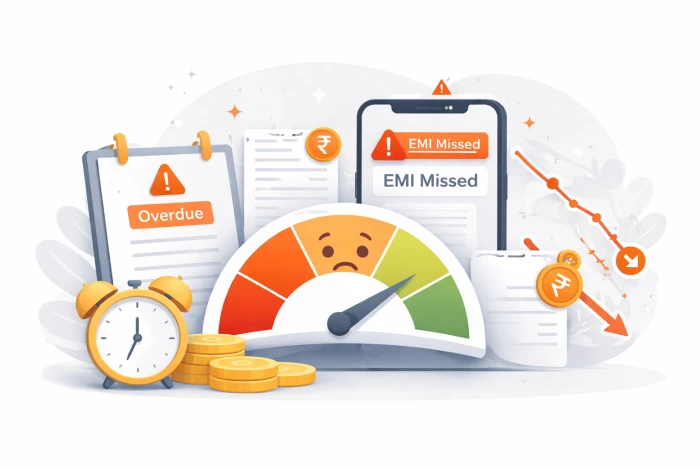
Missing an EMI payment can feel stressful, especially if it happens unexpectedly due to job loss, medical emergency, or cash flow issues. But what really happens when you miss an EMI payment in India? The consequences can range from late fees and interest penalties to credit score damage and legal recovery action if delays continue.
In 2026, with stricter digital lending norms and real-time credit reporting, lenders act faster than ever. At Saarathi.ai, we have observed that borrowers who understand the impact of a missed EMI and act quickly can limit financial damage significantly. In this detailed guide, we explain the short-term and long-term consequences, RBI regulations, credit score impact, and practical recovery steps.
What Is an EMI and Why It Matters
An Equated Monthly Installment or EMI is the fixed amount you repay every month toward your loan. It includes:
Principal repayment
Interest component
Applicable fees or charges
Whether it is a personal loan, home loan, car loan, or business loan, timely EMI payments help build a strong credit profile.
When you miss an EMI, it signals repayment risk to lenders and credit bureaus.
What Happens Immediately After You Miss an EMI?
1. Late Payment Charges Apply
Most banks and NBFCs charge:
Late payment fee of Rs 500 to Rs 1,500
Penal interest of 1-3 percent per month on overdue amount
These charges vary depending on loan type and lender policy.
2. Overdue Status Is Reported
If the EMI remains unpaid beyond the due date, lenders may mark it as overdue in internal systems. After a specific cycle, they report it to credit bureaus like CIBIL.
3. Reminder Calls and Notifications
You may receive:
SMS reminders
Email alerts
Calls from collection teams
Under guidelines issued by the Reserve Bank of India, lenders must follow fair practices in recovery communication.
How a Missed EMI Affects Your Credit Score
Your credit score plays a crucial role in future loan approvals.
1. Short Delay of 1-5 Days
If you pay within the grace period, it may not significantly impact your score.
2. Delay Beyond 30 Days
Once an EMI is overdue by 30 days and reported, your CIBIL score can drop by 50-100 points depending on your profile.
3. Multiple Missed EMIs
Repeated delays severely damage your creditworthiness and may lead to loan rejection in the future.
According to credit behavior analysis reported by CRISIL, consistent repayment history is one of the strongest predictors of credit stability.
At Saarathi.ai, we have observed that borrowers with even one 30-day default may see higher interest rates in future loan offers.
Stages of Loan Delinquency in India
Lenders categorize missed payments as follows:
Days Past Due | Status | Impact |
1-30 Days | Overdue | Late fee + reminder |
31-60 Days | Delinquent | Credit score impact |
61-90 Days | Serious delinquency | Strong recovery action |
90+ Days | NPA | Legal recovery process |
After 90 days of non-payment, the loan may be classified as a Non-Performing Asset or NPA under RBI norms.
Legal and Recovery Actions
If payments remain unpaid for several months:
Recovery agents may contact you
Legal notices may be issued
Civil recovery proceedings may begin
For secured loans, asset seizure may occur
For example:
In home loans, property can be repossessed
In vehicle loans, the car may be seized
In loan against property, collateral may be auctioned
RBI guidelines protect borrowers from harassment. Collection practices must follow ethical standards.
Impact on Different Types of Loans
1. Personal Loan
Unsecured loans carry higher risk. Lenders act quickly due to lack of collateral.
2. Home Loan
Long-term impact is serious. Missed EMIs can affect property ownership.
3. Business Loan
Cash flow disruption may escalate financial stress and affect GST compliance.
4. Credit Card EMI
Interest compounds rapidly, increasing outstanding balance.
At Saarathi.ai, we recommend tracking all loan obligations through a centralized dashboard like Saarathi Bazaar to avoid missing due dates.
What Should You Do Immediately After Missing an EMI?
If you have missed an EMI, act quickly.
1. Pay as Soon as Possible
Clearing dues within a few days can limit damage.
2. Contact the Lender
Explain your situation honestly. Lenders may offer:
Grace period
EMI rescheduling
Temporary moratorium
Loan restructuring
3. Avoid Taking High-Interest Debt
Do not rely on informal lenders to cover EMI gaps.
4. Check Your Credit Report
Monitor your credit status to ensure accurate reporting.
Loan Restructuring and Relief Options
Under special circumstances such as economic slowdowns or personal crises, restructuring may be allowed as per RBI frameworks.
Options may include:
Extending loan tenure
Reducing EMI temporarily
Converting overdue into new schedule
However, restructuring may still reflect in your credit history.
How to Prevent Missing EMIs in Future
Prevention is always better than damage control.
1. Set Auto-Debit Instructions
Ensure adequate balance before the due date.
2. Maintain Emergency Fund
Keep at least 3-6 months of EMI reserve.
3. Avoid Over-Borrowing
High EMI-to-income ratio increases risk.
At Saarathi.ai, our AI eligibility checker analyzes your debt-to-income ratio before recommending loan amounts. This prevents financial overextension.
4. Use a Loan Comparison Platform
Many borrowers miss EMIs because they chose high EMIs without comparing options.
Instead of accepting the first offer, compare personal loan offers on Saarathi.ai and choose a repayment plan that suits your cash flow.
Can One Missed EMI Ruin Your Financial Future?
Not necessarily.
One accidental delay, if corrected quickly, may cause limited damage. The real risk comes from repeated defaults.
We have seen borrowers recover their credit score within 6-12 months by:
Making timely future payments
Reducing credit utilization
Avoiding new unnecessary debt
Responsible financial behavior restores trust with lenders.
Special Note on Digital Lending in 2026
With increasing adoption of digital lending apps, transparency has improved. Media coverage by The Economic Times highlights how digital underwriting and real-time reporting are reshaping borrower accountability.
Using platforms like Saarathi.ai gives you:
Transparent comparison across 110+ lenders
AI-driven loan recommendations
Real-time tracking in Saarathi Bazaar
Expert guidance via Saarathi AI chatbot
Paperless documentation
These tools reduce the chances of repayment mismanagement.
Common Myths About Missed EMIs
Myth 1: One missed EMI means jail
False. It is a civil matter unless fraud is involved.
Myth 2: Recovery agents can harass you anytime
False. RBI mandates fair practice codes.
Myth 3: Ignoring calls will solve the problem
False. Communication prevents escalation.
FAQs on Missed EMI Payments
1. How many days late before EMI affects CIBIL?
Usually after 30 days if reported to the credit bureau.
2. Can I request an EMI date change?
Yes, many lenders allow due date changes.
3. What is penal interest?
Extra interest charged on overdue EMI amount.
4. Can a loan be settled after default?
Yes, but settlement negatively impacts credit score.
5. Does restructuring hurt credit score?
It may be reflected but is better than default.
Conclusion
Missing an EMI is serious but manageable if addressed early.
Key Takeaways:
Late fees and penal interest apply immediately
Credit score impact begins after 30 days overdue
Repeated defaults can lead to legal action
Communication with lender is critical
Smart loan comparison reduces repayment stress
Before taking any loan, ensure your EMI fits comfortably within your monthly budget. Discover personalized loan options on Saarathi.ai today, compare transparently, and manage your loans confidently with AI-powered insights.