Venture Capitalists Slowdown 2026: Startup Employees and Loan Risk
|
Global venture capital funding moves in cycles. When liquidity is abundant, startups raise capital easily and expand aggressively. When global funding slows due to higher interest rates or recession fears, valuations correct and hiring freezes become common. This raises a practical concern for many Indian professionals: if global VC funding slows, will startup employees face loan rejections? The answer is not automatic rejection, but lender risk assessment may become stricter. In this article, we explain how funding cycles influence loan approvals, what lenders evaluate, and how startup employees can strengthen their home loan or personal loan applications in 2026.
Why Global VC Funding Cycles Matter in India
India’s startup ecosystem is closely linked to global capital flows.
When US and global interest rates rise:
Venture capital becomes expensive
Investors prioritize profitability over growth
Funding rounds slow down
Layoffs or hiring freezes increase
As frequently reported by Economic Times, global liquidity tightening often impacts emerging market startup valuations.
Even if your company remains stable, lenders may factor in sector wide risk perception.
How Lenders Evaluate Loan Applications
Banks and NBFCs primarily assess:
Income stability
Credit score
Employer profile
Debt to income ratio
Employment continuity
The Reserve Bank of India mandates prudent underwriting standards to ensure financial system stability.
During funding slowdowns, lender risk models may adjust.
Why Startup Employees May Face Stricter Scrutiny
1. Higher Sector Risk Perception
If multiple startups announce layoffs:
Lenders perceive higher job instability
Approval thresholds may tighten
Income verification may become more detailed
2. Variable Compensation Structure
Startup employees often have:
ESOP components
Performance based bonuses
Rapid salary changes
Lenders usually consider only fixed monthly salary for eligibility.
3. Recent Job Changes
Frequent job switches or short tenure at current employer may raise red flags during global funding stress.
Does This Mean Automatic Rejection?
No.
Loan approvals depend on individual profile strength.
You are less likely to face rejection if:
You work at a well funded or profitable startup
You have 2 to 3 years of stable employment history
Your credit score is above 750
Your EMI to income ratio is below 40 percent
At Saarathi.ai, we have observed that borrowers with strong documentation and disciplined credit behavior continue to receive competitive offers even during funding slowdowns.
You can compare home loan offers on Saarathi.ai to identify lenders with flexible assessment models.
Impact on Different Loan Types
Home Loans
Home loans are secured by property, so lenders focus more on repayment capacity and collateral.
However, during uncertainty:
Income multiples may reduce slightly
Loan to value ratios may be conservative
Personal Loans
Unsecured personal loans are more sensitive.
Lenders may:
Increase minimum credit score requirement
Adjust interest spreads
Reduce sanctioned amount
You can compare personal loan offers on Saarathi.ai to evaluate lender specific criteria.
Business Loans for Startup Founders
If you are a founder:
Personal guarantee may be required
Business cash flow scrutiny increases
Funding visibility matters
What If Layoffs Increase?
If layoffs accelerate:
Lenders may temporarily tighten sector exposure
Processing time may increase
High risk profiles may face rejection
However, India’s diversified economy cushions overall credit freeze risk.
The Reserve Bank of India monitors credit growth and financial stability, reducing probability of systemic lending freeze.
How Startup Employees Can Improve Approval Chances
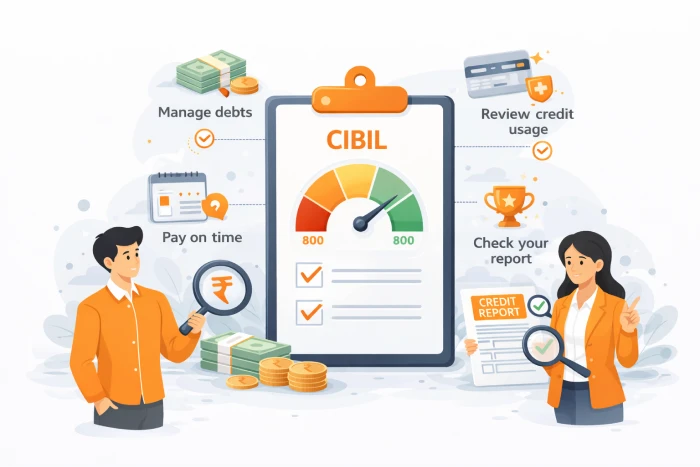
1. Strengthen Credit Score
Maintain score above 750.
Pay all EMIs and credit cards on time.
2. Maintain Stable Documentation
Provide:
Salary slips
Bank statements
Offer letter
Employment confirmation
3. Reduce Existing EMIs
Keep EMI to income ratio below 40 percent.
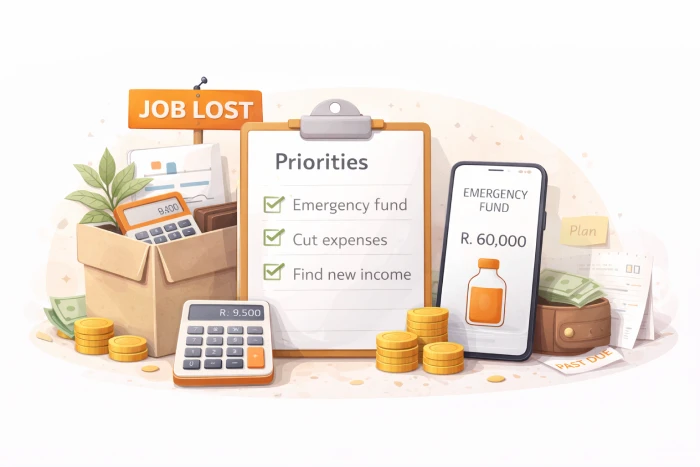
4. Build Emergency Fund
Maintain at least 6 months of EMIs and expenses.
5. Choose the Right Lender
Different lenders assess startup risk differently.
You can ask eligibility questions via Saarathi AI expert before applying to reduce rejection risk.
6. Track Application Transparently
Use Saarathi Bazaar to track your application in Saarathi Bazaar and monitor progress in real time.
Should You Delay a Loan?
Consider delaying if:
Your startup recently raised no new funding
Layoff rumors are strong
You have less than 6 months emergency savings
Your EMI burden would exceed 45 percent of income
Otherwise, stable profiles can proceed with structured planning.
Long Term Outlook
India’s startup ecosystem remains structurally strong due to:
Large domestic market
Digital adoption
Government support initiatives
Growing investor base
VC cycles are cyclical. Funding slows, stabilizes, and returns.
The key for borrowers is to avoid over leverage during uncertain employment phases.
FAQs
Will banks reject all startup employees during VC slowdown?
No. Approvals depend on individual credit profile and employment stability.
Do ESOPs count as income for loan eligibility?
Usually no. Lenders consider fixed salary for repayment assessment.
Are personal loans harder to get during funding slowdown?
Yes, unsecured loans may see tighter criteria.
Should I wait for funding cycle to improve?
If your job is stable and finances strong, borrowing remains viable.
How can I reduce rejection risk?
Maintain strong credit score, stable employment record, and compare lenders carefully.
Conclusion
If global venture capital funding slows, startup employees may face stricter scrutiny but not automatic rejection. Lenders adjust risk models based on sector stability, but strong credit discipline and stable income remain decisive factors.
The smarter approach is preparation, not panic.
Discover personalized loan options on Saarathi.ai today and secure the right financing solution with confidence, even during funding slowdowns.