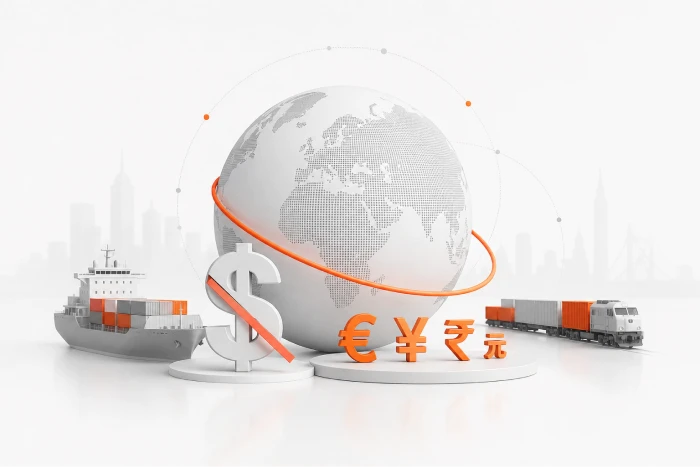
The New World Order: How De-Dollarization Is Reshaping Global Trade?
|
The global financial system is undergoing a quiet but significant shift. For decades, the US dollar has dominated international trade, reserves, and cross-border transactions. However, in recent years, countries have started exploring alternatives, a trend known as de-dollarization. In 2026, this shift is gaining momentum as nations diversify reserves, trade in local currencies, and reduce dependence on the dollar. For India, this transformation has implications not only for trade and currency stability but also for interest rates, inflation, and borrowing costs. At Saarathi.ai, we have observed that global economic shifts increasingly influence domestic lending conditions. In this guide, we explain what de-dollarization means and how it impacts global trade and Indian borrowers.
What Is De-Dollarization
De-dollarization refers to:
Reducing reliance on the US dollar in global trade
Using alternative currencies for international transactions
Diversifying foreign exchange reserves
It involves:
Bilateral trade agreements in local currencies
Increased use of gold and other reserve assets
Regional currency cooperation
Why Countries Are Moving Away from the Dollar
Geopolitical Factors
Countries want:
Reduced dependence on US financial system
Protection from sanctions and restrictions
Currency Risk Management
Using local currencies:
Reduces exchange rate volatility
Protects trade margins
Economic Sovereignty
Nations aim to:
Strengthen domestic currencies
Gain more control over monetary policy
Rising Role of Emerging Economies
Countries like:
India
China
Brazil
Are pushing for:
Multi-currency trade systems
How De-Dollarization Is Reshaping Global Trade
Shift to Local Currency Trade
Countries are increasingly:
Trading in their own currencies
Example:
India settling trade in INR with select partners
Impact:
Reduced dependency on USD
Lower transaction costs
Diversification of Reserves
Central banks are:
Reducing USD reserves
Increasing gold and other currencies
This changes:
Global financial stability dynamics
Rise of Regional Trade Blocs
Trade agreements now focus on:
Regional currencies
Alternative payment systems
Digital Currency Adoption
Central Bank Digital Currencies (CBDCs):
Enable cross-border transactions
Reduce reliance on traditional systems
Impact on India
Strengthening of INR
Increased use of INR in trade:
Improves currency stability
Enhances global acceptance
Reduced Forex Risk
Businesses benefit from:
Lower currency fluctuations
Predictable costs
Boost to Exports and Imports
Simplified trade settlements:
Encourage trade growth
Changes in Interest Rate Trends
Global currency shifts influence:
Inflation
RBI policies
This affects:
Loan interest rates
At Saarathi.ai, we have observed that global trends indirectly impact borrowing costs in India.
Impact on Personal and Business Borrowing
Interest Rate Volatility
Changes in global markets can:
Influence domestic rates
Credit Availability
Improved economic stability:
Increases lending confidence
Business Loan Demand
More trade activity:
Increases need for working capital
Currency Stability Benefits
Stable INR:
Reduces inflation pressure
Improves repayment capacity
Opportunities for Businesses
Easier International Trade
Lower dependency on USD
Reduced transaction costs
Better Cash Flow Management
Predictable currency exchange
Access to New Markets
Strengthened regional partnerships
Risks to Consider
Transition Uncertainty
Global system is still evolving
Currency Volatility
Short-term fluctuations possible
Policy Changes
Regulatory adjustments may occur
How Borrowers Can Prepare
Stay Informed
Track:
Economic trends
RBI policies
Plan Loans Strategically
Choose right timing
Monitor interest rates
Manage Currency Exposure
For businesses:
Hedge risks
Diversify trade currencies
Maintain Strong Financial Profile
Good credit score
Stable income
You can ask eligibility questions via Saarathi AI experts for guidance.
How Saarathi.ai Helps in Changing Economic Conditions
AI-Based Recommendation Engine
Matches you with lenders based on market conditions.
Smart Eligibility Insights
Understand your borrowing capacity.
Saarathi Bazaar Dashboard
Track your application in Saarathi Bazaar and compare offers.
Paperless Process
Apply quickly with updated market insights.
You can compare personal loan offers on Saarathi.ai based on current trends.
Real Insight from Saarathi.ai
At Saarathi.ai, we have observed that borrowers who stay aware of macroeconomic trends like de-dollarization are better positioned to time their loans and secure more favorable terms.
Impact of Global Trends in 2026
Insights from CRISIL and Economic Times indicate:
Growing multi-currency trade systems
Increased role of emerging economies
Shift toward digital and decentralized finance
This is reshaping global finance.
FAQs
What is de-dollarization?
It is reducing dependence on the US dollar in global trade.
Why are countries moving away from USD?
To reduce risk and increase economic control.
Does it affect India?
Yes, through trade, currency, and interest rates.
Will it impact loan interest rates?
Indirectly, through inflation and RBI policies.
Is de-dollarization good for businesses?
Yes, it can reduce costs and improve stability.
Can Saarathi.ai help in such changing conditions?
Yes, with AI-based insights and lender matching.
Conclusion
De-dollarization marks a significant shift in the global financial system, with far-reaching implications for trade, currencies, and borrowing. For India, it presents both opportunities and challenges, from stronger currency positioning to evolving interest rate dynamics.
Understanding these changes can help you make smarter financial and borrowing decisions in an increasingly interconnected world.
Discover personalized loan options on Saarathi.ai today and navigate global financial changes with smarter, data-driven decisions and complete confidence.