Recession 2026: Reduce EMIs or Increase Liquidity?
|
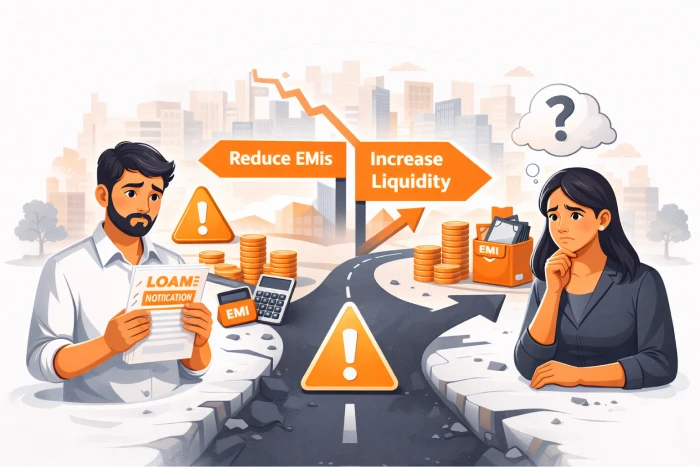
If 2026 brings a prolonged global recession, Indian households will face a critical financial question: should you focus on reducing EMIs or increasing liquidity? During economic slowdowns, job uncertainty rises, interest rate cycles shift, and lenders reassess risk. The right strategy depends on your income stability, loan structure, and emergency savings. Some borrowers benefit more from lowering monthly EMI burden, while others should prioritize building cash reserves. In this recession survival guide, we break down the economic context, evaluate both strategies, and help you make a balanced decision.
What Happens During a Global Recession?
A global recession usually results in:
Slower GDP growth
Hiring freezes in export sectors
Stock market volatility
Reduced capital flows to emerging markets
As frequently reported by Economic Times, global downturns affect India through IT exports, foreign investments, and commodity prices.
The key financial risks for households are:
Income instability
Rising or volatile EMIs
Higher cost of living
The Reserve Bank of India responds based on inflation trends. If inflation falls, rates may decline. If inflation remains sticky, rates may stay high.
Strategy 1: Reducing EMIs
Reducing EMIs improves monthly cash flow stability.
You can reduce EMIs by:
Making partial prepayments
Refinancing to a lower interest rate
Switching lenders
Extending tenure
Benefits of Lower EMIs
Reduced monthly stress
Better debt to income ratio
Lower total interest outgo if principal is prepaid
Higher approval chances for future credit
You can compare home loan offers on Saarathi.ai to check whether refinancing can reduce your rate.
For unsecured debt, you can compare personal loan offers on Saarathi.ai to consolidate high interest obligations into a structured plan.
When EMI Reduction Makes Sense
Choose this strategy if:
EMI exceeds 40 percent of monthly income
Interest rates are high
You lack financial flexibility
You carry multiple unsecured loans
Lowering fixed commitments improves resilience.
Strategy 2: Increasing Liquidity
Liquidity means having accessible cash or near cash funds.
During recession, liquidity is powerful.
Benefits of Higher Liquidity
Cushion against job loss
Flexibility to manage emergencies
Avoid distress borrowing
Ability to invest during market dips
Financial planners typically recommend:
6 months of living expenses
Plus 6 months of EMIs for safety
When Liquidity Is More Important
Prioritize liquidity if:
Your job sector faces instability
You rely on variable income
You plan career transitions
Interest rates are expected to fall soon
Holding cash provides optionality.
EMI vs Liquidity: Which Is Better?
The answer depends on risk profile.
Case 1: Stable Government or Essential Sector Job
Income stability high
Lower probability of sudden job loss
In this case, reducing EMIs through prepayment may provide long term benefit.
Case 2: IT or Startup Sector Employee
Exposure to global slowdown
Potential hiring freezes
Here, increasing liquidity may be smarter than aggressive prepayment.
Case 3: MSME Owner
Revenue volatility possible
Working capital pressure
Liquidity is critical for business survival.
The Role of Interest Rate Cycles
If recession reduces inflation:
The Reserve Bank of India may cut repo rates
Floating home loan EMIs may decline
In that case, aggressive prepayment may not be necessary.
If inflation remains high due to supply issues:
Rates may stay elevated
EMI reduction becomes more valuable
Monitoring monetary policy updates is essential.
A Balanced Hybrid Strategy
Instead of choosing one extreme, consider balance.
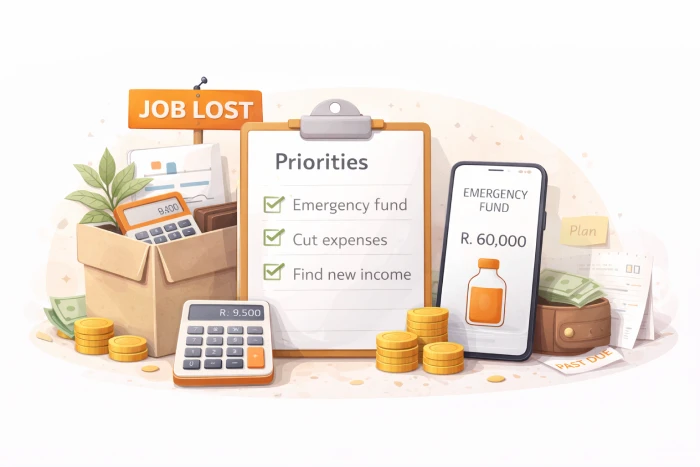
Step 1: Build at least 6 months of emergency fund
Step 2: Reduce high interest unsecured loans
Step 3: Gradually prepay long tenure secured loans
At Saarathi.ai, we have observed that borrowers who maintain disciplined EMI ratios and emergency buffers face lower stress during volatile cycles.
You can ask eligibility questions via Saarathi AI expert before refinancing or restructuring to understand the best approach.
You can also track your application in Saarathi Bazaar to ensure full transparency if you decide to switch lenders.
Warning Signs You Should Act Immediately
EMI exceeds 50 percent of income
Multiple credit card rollovers
Frequent use of personal loans for recurring expenses
Declining savings balance
In such cases, reducing EMIs and building liquidity both become urgent priorities.
What About Investing During Recession?
While markets may offer opportunities, do not invest surplus funds unless:
Emergency savings are secured
EMI obligations are manageable
Income visibility is clear
Liquidity first, investment later.
Practical Checklist for 2026
Calculate EMI to income ratio
Review interest rate type, fixed or floating
Assess job stability
Build emergency fund
Compare refinance options
Avoid unnecessary new debt
FAQs
Should I prepay my home loan during a recession?
Only if you have sufficient emergency savings and a high EMI burden.
Is it better to hold cash or reduce debt?
If job risk is high, liquidity may be more important. If income is stable and rates are high, debt reduction helps.
Will EMIs fall in a recession?
If inflation declines, repo rates may fall, reducing floating EMIs.
Should I refinance my loan now?
Compare rates carefully before switching. Small rate differences may not justify costs.
How can I reduce financial stress during a recession?
Maintain emergency savings, control discretionary spending, and compare lenders for better rates.
Conclusion
During a global recession in 2026, the choice between reducing EMIs and increasing liquidity depends on your financial stability and risk exposure. Lower EMIs reduce fixed obligations, while higher liquidity protects against income shocks.
For most borrowers, a balanced approach works best. Build a strong emergency buffer first, then strategically reduce high cost debt.
Discover personalized refinancing and loan options on Saarathi.ai today and strengthen your financial resilience in uncertain times.