Old vs New Tax Regime in India 2026: Which One Should You Choose?
|
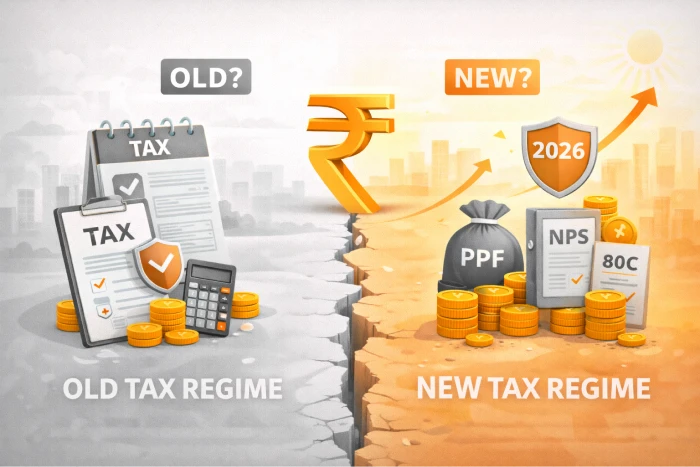
Choosing between the old tax regime and the new tax regime is one of the most important decisions for taxpayers in India. Since the introduction of the new tax regime, individuals now have the flexibility to select the structure that best suits their income level, deductions, and financial planning strategy.
The old tax regime allows taxpayers to claim several deductions and exemptions such as Section 80C investments, house rent allowance, and home loan benefits. In contrast, the new tax regime offers lower tax rates but removes most deductions. At Saarathi.ai, we have observed that many salaried professionals are often unsure which regime will help them save more tax. Understanding the differences between the two systems in 2026 can help individuals make smarter tax and investment decisions.
What is the Old Tax Regime?
The old tax regime is the traditional tax structure that allows taxpayers to reduce their taxable income through deductions and exemptions.
Under this regime, individuals can claim deductions for investments, insurance premiums, housing expenses, and several other financial commitments.
Common deductions available in the old tax regime include:
Section 80C investments such as PPF, ELSS, EPF, and tax-saving FDs
Health insurance premiums under Section 80D
Home loan principal repayment deductions
Home loan interest deductions under Section 24
House Rent Allowance exemptions
Standard deduction for salaried employees
Education loan interest deduction under Section 80E
Because of these deductions, the old tax regime often benefits individuals who actively invest and claim tax-saving benefits.
What is the New Tax Regime?
The new tax regime was introduced to simplify the tax structure by offering lower tax rates while removing most deductions and exemptions.
Under this system, taxpayers pay tax based on reduced rates but cannot claim many traditional deductions.
The new regime is designed for individuals who prefer a simplified tax filing process without the need for investment-based deductions.
However, certain benefits such as the standard deduction and employer contributions to the National Pension System may still be applicable.
The new regime has gradually become the default option for many taxpayers, although individuals can still choose the old regime if it provides better tax savings.
Tax Slabs Under the New Tax Regime (2026)
The new tax regime follows a progressive tax structure with multiple income slabs.
Annual Income | Tax Rate
Up to ₹3 lakh | 0 percent
₹3 lakh to ₹6 lakh | 5 percent
₹6 lakh to ₹9 lakh | 10 percent
₹9 lakh to ₹12 lakh | 15 percent
₹12 lakh to ₹15 lakh | 20 percent
Above ₹15 lakh | 30 percent
Taxpayers earning up to ₹7 lakh may benefit from tax rebates under Section 87A, which effectively reduces tax liability to zero in many cases.
These revised tax slabs aim to provide relief to middle-income taxpayers.
Key Differences Between Old and New Tax Regimes
Understanding the main differences between the two tax regimes helps individuals choose the most suitable option.
Feature | Old Tax Regime | New Tax Regime
Tax Rates | Higher | Lower
Deductions | Available | Mostly removed
Investment Incentives | Encouraged | Limited
Tax Filing Complexity | Higher | Simpler
Suitable For | Investors and homeowners | Individuals with fewer deductions
Each regime has its advantages depending on financial circumstances.
When the Old Tax Regime May Be Better
The old tax regime may be beneficial for individuals who actively claim deductions.
Situations where the old regime may offer better tax savings include:
Significant Section 80C investments
Taxpayers investing up to ₹1.5 lakh in PPF, ELSS, or EPF can reduce taxable income substantially.
Home loan borrowers
Individuals paying home loan EMIs can claim deductions on both principal and interest payments.
Health insurance policyholders
Premiums paid for family health insurance are deductible under Section 80D.
House rent allowance benefits
Employees paying rent may claim HRA exemptions under the old regime.
Many salaried professionals with these deductions often find the old regime more tax-efficient.
When the New Tax Regime May Be Better
The new tax regime may benefit individuals who do not claim many deductions.
Situations where the new regime may be advantageous include:
Fewer tax-saving investments
Individuals who prefer not to lock funds in tax-saving instruments may benefit from lower tax rates.
Simplified tax filing
The new regime eliminates the need to track multiple deductions and exemptions.
Higher disposable income
Some taxpayers may prefer greater take-home salary rather than long-term tax-saving investments.
Young professionals early in their careers sometimes prefer the new regime due to limited financial commitments.
Example Comparison
Consider a salaried professional earning ₹12 lakh annually.
Scenario 1: Old tax regime with deductions
Section 80C investments: ₹1.5 lakh
Health insurance deduction: ₹25,000
Standard deduction: ₹50,000
Taxable income reduces significantly, potentially lowering total tax payable.
Scenario 2: New tax regime without deductions
Taxable income remains ₹12 lakh but is taxed at lower slab rates.
Comparing both calculations helps determine which regime results in lower tax liability.
Role of Financial Planning in Tax Optimization
Choosing the right tax regime should be part of broader financial planning rather than a standalone decision.
Tax-efficient investments such as ELSS, PPF, and NPS help reduce taxable income while supporting long-term wealth creation.
Home loans also provide tax benefits that can significantly reduce annual tax liability.
Many professionals explore property purchases while planning taxes. Before committing to property financing, borrowers often compare home loan offers on Saarathi.ai to identify competitive lenders and interest rates.
How Digital Platforms Simplify Financial Decisions
Technology is helping individuals manage tax planning, investments, and borrowing decisions more efficiently.
Digital financial platforms allow users to evaluate financial products, check eligibility, and track financial progress.
For example, individuals can ask eligibility questions via Saarathi AI expert to understand loan requirements, documentation, and approval timelines instantly.
Saarathi.ai connects borrowers with more than 110 banks and NBFCs across India. The Saarathi Recommendation Engine matches borrowers with lenders suited to their financial profiles.
Borrowers can also track your application in Saarathi Bazaar and monitor documentation progress, approvals, and lender responses through a transparent dashboard.
These digital tools help individuals integrate tax planning with long-term financial strategies.
Frequently Asked Questions
Which tax regime is better for salaried employees?
The best tax regime depends on the deductions available. Employees with significant deductions may benefit from the old regime, while those with fewer deductions may prefer the new regime.
Can taxpayers switch between tax regimes?
Yes. Salaried individuals can generally switch regimes each financial year when filing income tax returns.
Is the new tax regime mandatory?
No. Although the new regime may be the default option, taxpayers can still choose the old regime if it provides better tax benefits.
Do home loan deductions apply in the new tax regime?
Most home loan deductions are not available under the new tax regime, making the old regime more attractive for homeowners.
How should I decide which regime to choose?
Taxpayers should calculate tax liability under both regimes and select the option that results in lower tax payments.
Conclusion
The choice between the old and new tax regimes in India depends on individual financial circumstances, deductions, and long-term planning goals. The old tax regime benefits taxpayers who actively invest and claim deductions, while the new regime offers simplicity with lower tax rates but fewer exemptions.
Carefully comparing both systems each financial year helps ensure the most tax-efficient outcome.
At Saarathi.ai, we believe that informed financial decisions lead to stronger financial outcomes. Whether you are planning investments, evaluating tax strategies, or exploring loan options, digital tools can simplify your financial journey.
Discover personalized loan options and make smarter financial decisions with Saarathi.ai today.