NBFC Regulations 2026: Key Changes Explained
|
Non-Banking Financial Companies, or NBFCs, play a critical role in India’s lending ecosystem, especially for borrowers who may not meet traditional bank criteria. In 2026, regulatory updates by the Reserve Bank of India are reshaping how NBFCs operate. These changes aim to improve transparency, strengthen risk management, and enhance borrower protection. Whether you are applying for a personal loan or business loan, understanding these new NBFC regulations can help you make safer and smarter borrowing decisions.
What Are NBFCs and Why They Matter
NBFCs are financial institutions that provide loans and financial services without being full-fledged banks.
Key Role:
Serve underserved borrowers
Offer faster approvals
Provide flexible eligibility criteria
They are especially important in digital lending.
Why RBI Updated NBFC Regulations in 2026
The rapid growth of NBFCs raised certain concerns.
Key Reasons:
Rising credit demand
Risk management challenges
Need for stronger governance
Increasing role in digital lending
To address these, RBI introduced updated regulations.
Key Changes in NBFC Regulations 2026
Scale-Based Regulation Framework Strengthened
NBFCs are categorized based on size and risk.
Categories:
Base Layer
Middle Layer
Upper Layer
Impact:
Larger NBFCs face stricter compliance
Better risk control
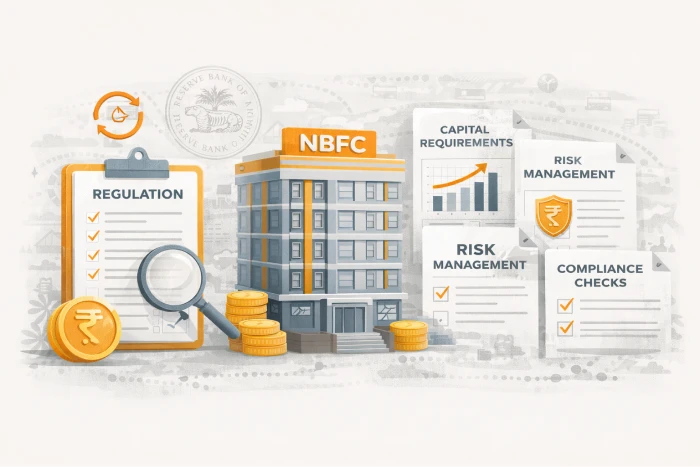
Stricter Capital Requirements
NBFCs must maintain higher capital reserves.
Benefit:
Improved financial stability
Reduced risk of defaults
Enhanced Governance and Compliance
RBI has strengthened oversight.
Includes:
Board-level accountability
Internal risk controls
Regular audits
Tighter Digital Lending Rules
NBFCs must follow digital lending guidelines.
Key Points:
Transparent disclosure of charges
Direct loan disbursal to borrower
No hidden fees
Improved Asset Classification Norms
Stricter rules for identifying bad loans.
Impact:
Better risk management
Healthier loan portfolios
Focus on Data Privacy and Security
NBFCs must comply with data protection norms.
Includes:
Consent-based data usage
Secure storage systems
Impact of NBFC Regulations on Borrowers
Safer Borrowing Environment
Reduced risk of fraud and unfair practices.
Better Transparency
Clear understanding of loan terms and costs.
Improved Trust in NBFCs
Stronger regulations increase credibility.
Slightly Stricter Eligibility
Some borrowers may face tighter checks.
At Saarathi.ai, we have observed that regulated NBFCs offer a better and more reliable borrowing experience.
Impact on Loan Approvals
Faster Yet More Controlled Approvals
Digital processes remain fast, but with stricter checks.
Better Risk-Based Pricing
Interest rates reflect borrower profiles more accurately.
Improved Loan Quality
Reduced chances of risky lending.
How Saarathi.ai Helps You Navigate NBFC Regulations
Understanding lender compliance can be complex. Saarathi.ai simplifies it.
Verified Lender Network
Access RBI-compliant NBFCs and banks.
Transparent Comparison
Compare personal loan offers on Saarathi.ai with full cost breakdown.
AI-Based Eligibility Check
Ask eligibility questions via Saarathi AI expert before applying.
Saarathi Bazaar Dashboard
Track your application in Saarathi Bazaar and manage offers.
Paperless Process
Complete your loan journey digitally and securely.
At Saarathi.ai, we have observed that borrowers benefit from comparing regulated lenders.
NBFC vs Bank Under New Regulations
Feature | NBFCs | Banks |
Approval Speed | Faster | Moderate |
Eligibility | Flexible | Strict |
Regulation Level | Increasing | Already strict |
Digital Experience | Advanced | Improving |
The gap between banks and NBFCs is narrowing.
Challenges for NBFCs
Increased Compliance Costs
Higher regulatory requirements increase expenses.
Need for Technology Investment
Digital compliance requires advanced systems.
Competition with Banks
Banks are also improving digital capabilities.
Future of NBFCs in India
NBFCs will continue to grow with stronger regulations.
Key Trends:
Increased digital adoption
Better risk management
Greater financial inclusion
India’s lending ecosystem will become more balanced.
Real-Life Scenario
Consider Kavya, a self-employed professional in India.
Situation:
Needed quick loan
Approach:
Used Saarathi.ai
Outcome:
Found RBI-compliant NBFC
Got transparent loan offer
Fast approval
This shows how regulations benefit borrowers.
FAQs
What are NBFC regulations in 2026?
Updated RBI rules to improve transparency and risk management.
Are NBFCs safe in India?
Yes, especially those regulated by the RBI.
Do NBFCs offer faster loans than banks?
Generally yes, with digital processes.
Are interest rates higher in NBFCs?
Usually slightly higher due to higher risk.
How do regulations affect borrowers?
They improve safety, transparency, and trust.
How can I find reliable NBFC loans?
You can compare personal loan offers on Saarathi.ai for safe options.
Conclusion
NBFC regulations in India in 2026 are designed to create a safer, more transparent, and more reliable lending environment. While they introduce stricter compliance for lenders, they ultimately benefit borrowers by improving trust and reducing risk.
As a borrower, choosing regulated NBFCs and comparing options is essential. Saarathi.ai helps you do this with AI-driven recommendations, transparent comparisons, and access to verified lenders.
Discover personalized loan options on Saarathi.ai today and make smarter borrowing decisions in a well-regulated financial ecosystem.