Long Tenure Loan Before Global Credit Tightening?
|
Global credit cycles move in waves. Periods of easy liquidity are often followed by tightening phases driven by inflation, rising bond yields, or central bank rate hikes. This raises a critical question for Indian borrowers in 2026: should you take a long tenure loan before the next global credit tightening cycle begins? While locking a loan early may protect you from rising rates, longer tenure also increases total interest outgo. The right decision depends on rate outlook, income stability, and your financial discipline. In this guide, we break down the pros, risks, and strategy.
What Is a Credit Tightening Cycle?
Credit tightening typically occurs when:
Inflation remains high
Central banks raise policy rates
Bond yields surge
Liquidity in financial markets reduces
When major economies tighten, emerging markets like India may see:
Capital outflows
Currency depreciation
Higher funding costs
The Reserve Bank of India responds based on domestic inflation and growth conditions.
Why Borrowers Consider Long Tenure Loans
Long tenure loans, especially 20 to 30 year home loans, are popular because:
EMIs are lower
Affordability improves
Cash flow flexibility increases
For example, a Rs 60 lakh loan over 30 years has significantly lower EMI than the same loan over 15 years.
You can compare home loan offers on Saarathi.ai to evaluate EMI differences across tenures.
Advantage of Borrowing Before Tightening
1. Lock Lower Benchmark Rates
If you believe rates are near the bottom:
Locking a loan now may protect against future hikes
Floating rate borrowers benefit if repo is stable
2. Faster Approvals
During tightening cycles, lenders often:
Tighten eligibility
Raise minimum credit score requirements
Reduce loan to value ratios
Borrowing before such tightening may offer smoother approval.
3. Property Price Advantage
Sometimes, real estate prices rise before rate hikes fully impact demand. Early borrowing may secure better property value.
The Hidden Risk of Long Tenure
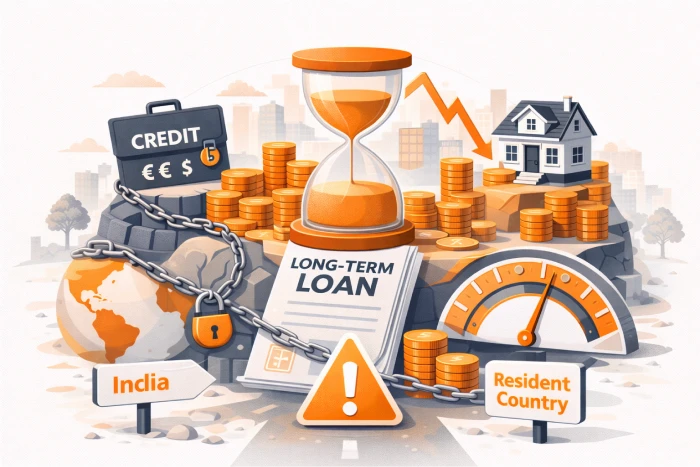
While EMI appears lower, total interest outgo increases sharply.
For example:
20 year loan vs 30 year loan
Same interest rate
Total interest paid over 30 years can be substantially higher
Long tenure increases sensitivity to rate changes.
If repo rises by 1 percent during tightening:
EMI may increase
Or tenure may extend further
As reported often by Economic Times, bond yield spikes quickly transmit into retail lending rates during global tightening phases.
Floating vs Fixed in Tightening Cycles
If tightening is expected:
Fixed rate loans provide EMI certainty
Floating rate loans may rise with repo hikes
However, fixed rates are often priced slightly higher initially.
You can compare home loan offers on Saarathi.ai to assess fixed, floating, and hybrid options.
When Taking Long Tenure Makes Sense
Choose long tenure before tightening if:
Your income is stable and likely to grow
EMI remains below 35 to 40 percent of income
You plan partial prepayments
You are comfortable refinancing later
Long tenure does not mean you must hold the loan for full duration. Prepayment flexibility reduces total interest burden.
When You Should Be Cautious
Avoid rushing into long tenure if:
Your job sector faces global slowdown risk
You have minimal emergency savings
Interest rates are already near peak
You rely on variable income
If tightening is already underway, locking long tenure floating loans may expose you to immediate EMI increase.
The Reserve Bank of India decisions often follow inflation data trends. Timing matters.
Business Loan Perspective
For MSMEs:
Long tenure reduces EMI pressure
But prolonged high rates increase interest burden
If your business cash flow is cyclical, liquidity may be more important than locking tenure.
You can compare business loan offers on Saarathi.ai to evaluate structured repayment plans aligned with cash flow.
Smart Strategy: Flexible Tenure Approach
Instead of focusing only on long tenure:
Choose longer tenure for lower EMI
Prepay aggressively when surplus arises
Maintain emergency fund of 6 months
This balances liquidity and cost.
Before applying, you can ask eligibility questions via Saarathi AI experts to understand the best structure based on your profile.
You can also track your application in Saarathi Bazaar and monitor approval progress transparently.
Real Scenario Example
Suppose:
Repo is stable at moderate level
Global bond yields start rising
Inflation shows early upward trend
If you take long tenure loan now:
EMI remains manageable
If rates rise later, you can prepay to offset
But if rates are already high and near peak, waiting for rate stabilization may be wiser.
Key Decision Checklist
Is inflation trending upward globally?
Is RBI signaling tightening?
Is your EMI below 40 percent of income?
Do you have 6 months emergency savings?
Can you handle 1 percent rate increase comfortably?
Answering these helps clarify timing.
FAQs
Is it smart to take a 30 year loan before rate hikes?
It can be, if rates are low and you plan prepayments.
Will EMIs increase immediately during tightening?
Floating loans may adjust when repo increases.
Is fixed rate safer before tightening?
Yes, if you expect sustained rate hikes.
Can I reduce tenure later?
Yes, through partial prepayment.
Should I delay borrowing until rates fall?
Timing rate cycles perfectly is difficult. Focus on affordability.
Conclusion
Taking a long tenure loan before the next global credit tightening cycle can be strategic if rates are relatively stable and your income outlook is strong. However, longer tenure increases total interest exposure and rate sensitivity.
The smarter approach is not just locking early, but maintaining financial flexibility through prepayments and liquidity buffers.
Discover personalized loan options on Saarathi.ai today and choose the right tenure strategy with confidence in a changing global credit cycle.