Joint Loan Default - Who Is Responsible for Repayment?
|
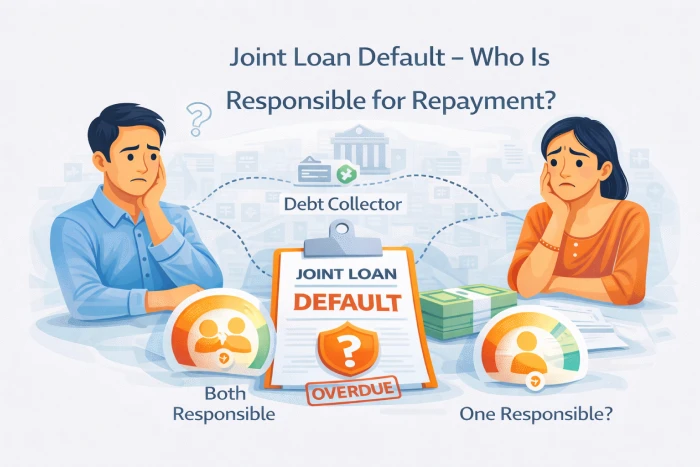
Joint loans are common in India, especially for home loans and large personal loans. But what happens if one borrower stops paying? Many people assume responsibility is shared equally, but the reality is more serious. In a joint loan, all borrowers are equally and fully responsible for repayment. This means if one person defaults, the other must step in to pay the full EMI. This can impact your CIBIL score, finances, and future loan eligibility. In this guide, we explain who is responsible, legal implications, and how to protect yourself using smarter strategies and tools like Saarathi.ai.
Who Is Responsible in a Joint Loan Default
Equal and Full Liability
In a joint loan:
All borrowers are co-equal owners of the debt
Each borrower is 100 percent liable for repayment
Lenders can recover the full amount from any one borrower
This concept is called joint and several liability.
Even if:
One borrower used the money
One borrower stopped paying
The lender can legally demand payment from you.
What Happens If One Borrower Stops Paying
Impact on Both Borrowers
If EMIs are missed:
Both credit scores are affected
Default is reported in both CIBIL reports
Future loan approvals become difficult
Recovery Actions
Lenders may:
Contact both borrowers
Send legal notices
Initiate recovery proceedings
Legal Consequences
In extreme cases:
Legal action can be taken
Assets linked to the loan may be at risk
At Saarathi.ai, we have observed that many borrowers underestimate the seriousness of joint liability until default occurs.
How CIBIL Score Is Affected
In joint loans:
Payment history is shared
Default affects all borrowers equally
Even if you paid your share informally:
If EMI is missed, both profiles are impacted
Common Joint Loan Scenarios
Spouse Joint Loan
Common in home loans
Both incomes considered
Both equally liable
Parent-Child Loan
Parent often primary borrower
Child co-applicant
Liability still equal
Business Partners
Used for business loans
Risk depends on business performance
What You Should Do If Co-Borrower Defaults
Step 1: Continue Paying EMIs
Protect your credit score at all costs.
Do not miss payments
Maintain financial discipline
Step 2: Communicate with Co-Borrower
Discuss:
Reason for default
Repayment plan
Written agreement if needed
Step 3: Inform the Lender
In some cases:
You can request restructuring
Explain financial difficulty
Step 4: Keep Records
Maintain proof of:
Payments made by you
Communication with co-borrower
Can You Remove Yourself from a Joint Loan
Loan Transfer or Refinancing
Options include:
Balance transfer to another lender
Refinancing in single borrower’s name
Condition:
New borrower must qualify independently
Foreclosure
Close the loan fully
End joint liability
Legal Separation (in case of spouses)
May require court involvement
Does not automatically remove liability
How to Reduce Financial Burden
Loan Restructuring
Request:
Lower EMI
Extended tenure
Balance Transfer
Move loan to:
Lower interest rate
Better terms
You can compare personal loan offers on Saarathi.ai to find suitable options.
Partial Prepayment
Reduce outstanding principal to lower EMI.
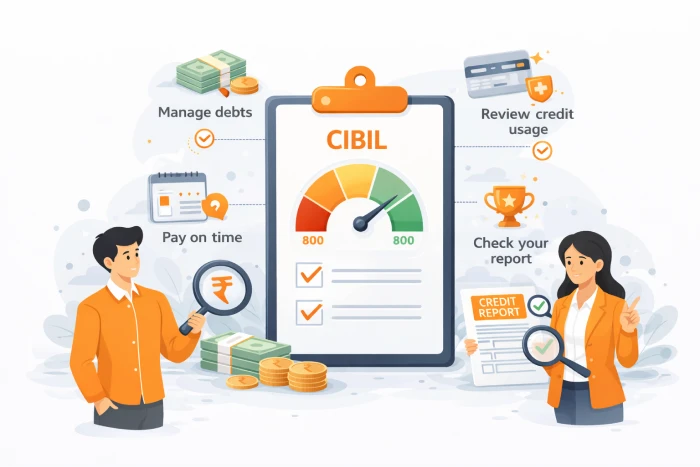
How to Protect Your CIBIL Score
Never Miss an EMI
This is the most critical step.
Monitor Your Credit Report
Check regularly for:
Payment updates
Outstanding balance
Avoid Additional Debt
Do not increase financial burden during this period.
You can ask eligibility questions via Saarathi AI expert to make informed decisions.
How Saarathi.ai Helps in Joint Loan Situations
AI-Based Lender Matching
Find lenders offering refinancing or restructuring options.
Saarathi Bazaar Dashboard
Track your application in Saarathi Bazaar and compare offers.
Smart Eligibility Insights
Understand your options before taking action.
Paperless Process
Apply quickly with minimal documentation.
Real Insight from Saarathi.ai
At Saarathi.ai, we have observed that borrowers who act quickly by refinancing or restructuring their loans can avoid long-term credit damage and financial stress.
Delaying action often leads to higher penalties and lower credit scores.
Common Mistakes to Avoid
Assuming only one borrower is responsible
Ignoring missed EMIs
Not communicating with co-borrower
Avoiding lender communication
Taking additional loans to cover EMIs
How to Avoid Such Issues in Future
Choose co-borrowers carefully
Understand legal liability clearly
Maintain written agreements
Monitor loan regularly
Impact of Lending Trends in 2026
Recent trends from CRISIL and Economic Times show:
Faster reporting of defaults
Increased use of AI for risk monitoring
Stronger recovery mechanisms
This makes responsible borrowing more important than ever.
FAQs
Who is responsible if a joint loan defaults?
All borrowers are equally responsible for full repayment.
Will default affect both CIBIL scores?
Yes, it impacts all co-borrowers.
Can I remove myself from a joint loan?
Only through refinancing, transfer, or closure.
Can the lender take legal action against me?
Yes, even if you were not the primary user of funds.
What should I do if a co-borrower stops paying?
Start paying EMIs yourself and explore restructuring options.
Can Saarathi.ai help in such cases?
Yes, it helps you find better loan options and manage your situation.
Conclusion
In a joint loan, responsibility does not get divided, it gets shared fully. If one borrower defaults, the other must step in to protect their financial future.
Understanding this risk and acting quickly can help you avoid long-term damage to your credit profile.
Discover personalized loan options on Saarathi.ai today and take control of your financial journey with smarter solutions and better support.