Is India Prepared If Another Global Supply Chain Crisis Hits?
|
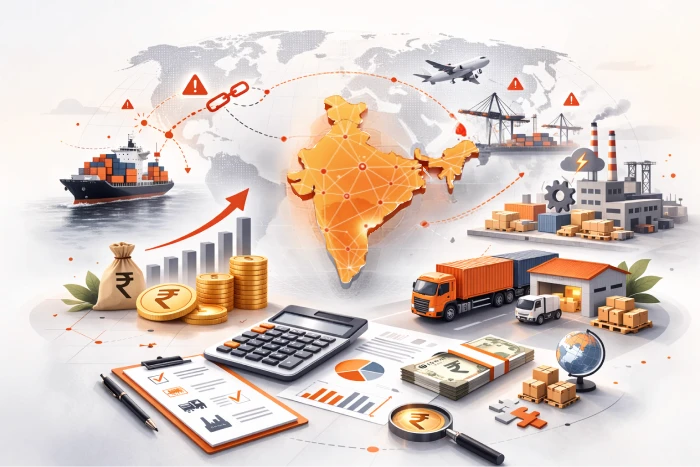
The COVID era exposed how vulnerable global supply chains can be. From semiconductor shortages to container shipping delays, disruptions quickly translated into higher prices and slower growth. If another global supply chain crisis hits in 2026 or 2027, is India prepared? And more importantly for households, how would it impact inflation, job stability, and loan EMIs? The answer lies in India’s manufacturing push, forex reserves, banking strength, and monetary policy response. In this article, we explain India’s preparedness, the risks that remain, and how borrowers can protect themselves during supply shocks.
What Causes a Global Supply Chain Crisis?
A supply chain crisis typically emerges due to:
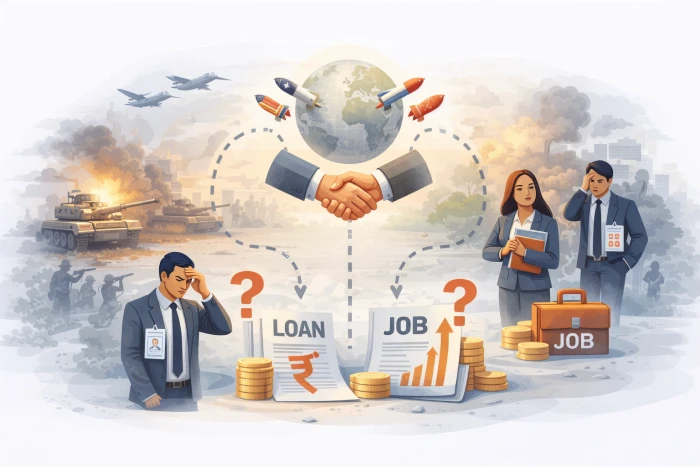
Geopolitical conflicts
Pandemic waves
Trade restrictions
Energy supply disruptions
Logistics bottlenecks
When production slows or transport routes are blocked, goods become scarce. Prices rise quickly.
India imports crude oil, electronics components, machinery, and certain critical raw materials. Disruptions in global supply can push input costs higher.
Immediate Economic Impact on India
1. Rising Inflation
If imports become expensive or scarce:
Fuel prices rise
Consumer goods become costlier
Manufacturing margins shrink
The Reserve Bank of India closely tracks inflation because it directly influences interest rate decisions.
2. Slower Industrial Output
Supply bottlenecks can reduce factory output. MSMEs dependent on imported inputs may face delays.
3. Currency Volatility
If imports surge while exports slow:
Current account deficit may widen
Rupee may weaken
Imported inflation increases
Is India Better Prepared Today?
Compared to 2020, India has strengthened its resilience in several ways.
1. Production Linked Incentive Schemes
India has expanded domestic manufacturing in sectors such as:
Electronics
Pharmaceuticals
Auto components
This reduces dependency on single country supply chains.
2. Stronger Forex Reserves
The Reserve Bank of India maintains substantial foreign exchange reserves. These help manage currency volatility during global shocks.
3. Banking Sector Stability
Banks and major NBFCs now maintain better capital adequacy and lower non performing assets compared to previous cycles.
Rating agencies such as CRISIL have noted stronger provisioning buffers and improved asset quality across leading lenders.
How Would Another Supply Crisis Affect Loan EMIs?
The impact on EMIs depends mainly on inflation.
If supply disruptions lead to:
Persistent inflation above 6 percent
Rising oil prices
Higher transportation costs
The Reserve Bank of India may tighten monetary policy.
Repo rate hikes lead to:
Higher floating home loan EMIs
Increased business loan costs
Tighter unsecured loan pricing
Even without immediate repo hikes, rising bond yields can increase funding costs for banks.
You can compare home loan offers on Saarathi.ai to check lenders offering competitive spreads during volatile cycles.
Sector Wise Impact on Jobs
IT and Services
If supply crisis affects global growth:
IT project demand may slow
Hiring may moderate
Manufacturing
Companies dependent on imported components may:
Reduce production
Delay expansion
Control hiring
Logistics and Warehousing
Interestingly, supply chain diversification can increase domestic logistics demand, supporting employment in that segment.
As often reported by Economic Times, supply disruptions tend to accelerate domestic manufacturing initiatives over the medium term.
What Happens to Personal Loans and Credit Cards?
Unsecured credit is sensitive to economic uncertainty.
During supply driven inflation:
Lenders may tighten risk filters
Minimum credit score thresholds may increase
Interest spreads may widen
You can compare personal loan offers on Saarathi.ai to see lender wise variations during uncertain periods.
India’s Structural Strengths
Despite vulnerabilities, India has certain advantages:
Large domestic consumption base
Diversified import sources
Expanding renewable energy capacity
Digital supply chain tracking improvements
Unlike smaller export dependent economies, India’s demand driven growth model offers cushioning.
What Borrowers Should Do If Supply Crisis Hits
1. Monitor Inflation Announcements
CPI data provides early signals of potential rate hikes.
2. Keep EMI Ratio Conservative
Maintain total EMIs below 40 percent of monthly income.
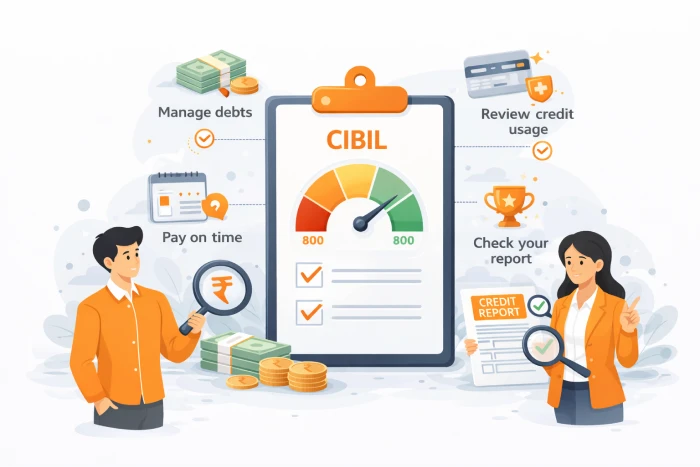
3. Strengthen Credit Score
Higher scores reduce risk premium during uncertain cycles.
You can ask eligibility questions via Saarathi AI expert before applying to understand your approval probability.
4. Consider Fixed Rate Option
If inflation risk rises sharply, fixed rate loans provide EMI predictability.
5. Track Application Progress Transparently
Use Saarathi Bazaar to track your application in Saarathi Bazaar and stay informed about documentation and approval timelines.
Could There Be Opportunities?
Supply chain realignment may:
Boost domestic manufacturing
Increase warehousing demand
Support infrastructure expansion
Over time, these shifts can strengthen India’s economic base.
Short term volatility does not always translate into long term weakness.
FAQs
Can a supply chain crisis increase my home loan EMI?
Yes, if it triggers sustained inflation and repo rate hikes.
Is India more prepared now compared to 2020?
Yes, due to stronger forex reserves, manufacturing incentives, and improved banking stability.
Will job losses increase?
Some sectors may face stress, but domestic demand and manufacturing diversification can offset impact.
Should I delay taking a loan?
If your income is stable and EMI ratio manageable, borrowing remains viable.
How can I reduce loan risk during economic shocks?
Maintain emergency savings, high credit score, and compare lenders carefully.
Conclusion
If another global supply chain crisis hits, India may face short term inflation and growth pressures. However, stronger forex reserves, manufacturing push, and improved banking resilience provide meaningful buffers.
For borrowers, the key risk channel is inflation driven interest rate hikes. Proactive planning, conservative EMIs, and smart lender comparison can reduce financial stress.
Discover personalized loan options on Saarathi.ai today and stay financially prepared, even in uncertain global supply conditions.