India’s Manufacturing Push: Can PLI Deliver Long-Term Gains?
|
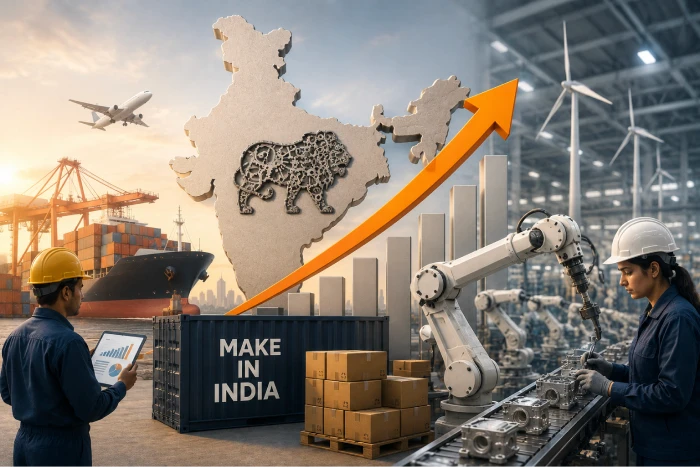
India’s Production Linked Incentive, or PLI scheme, has been a cornerstone of the country’s strategy to boost manufacturing, attract global companies, and reduce import dependence. Since its launch, it has covered sectors like electronics, pharmaceuticals, automobiles, and textiles. In 2026, the big question is whether PLI can deliver sustainable, long-term gains or if it will remain a short-term policy push. The answer matters not just for policymakers, but also for businesses, workers, and borrowers. At Saarathi.ai, we have observed that manufacturing growth directly influences credit demand, job creation, and business expansion. In this guide, we analyze whether PLI can truly transform India’s manufacturing landscape.
What Is the PLI Scheme?
The PLI scheme offers:
Financial incentives to companies
Based on incremental production
Objective:
Boost domestic manufacturing
Increase exports
Attract foreign investment
Key Sectors Covered Under PLI
Major sectors include:
Electronics and mobile manufacturing
Pharmaceuticals and medical devices
Automobiles and EVs
Textiles
Solar equipment
These sectors:
Drive industrial growth
Achievements So Far
Increased Manufacturing Output
PLI has:
Boosted production in key sectors
Rise in Exports
India has seen:
Growth in electronics exports
Foreign Investment Inflows
Global companies:
Setting up manufacturing units
Job Creation
New factories:
Generate employment
At Saarathi.ai, we have observed increased demand for business loans in manufacturing sectors.
Can PLI Deliver Long-Term Gains
Strengths Supporting Long-Term Success
Policy Stability
Consistent government support:
Builds investor confidence
Supply Chain Development
PLI encourages:
Local sourcing
Ecosystem growth
Global Shift Toward India
Trends like friendshoring:
Benefit India
Infrastructure Improvements
Government investments:
Support manufacturing
Challenges to Long-Term Sustainability
Dependence on Incentives
Companies may:
Rely on subsidies
Global Competition
Countries like:
Vietnam
Mexico
Offer alternatives
Skill Gaps
Need for:
Skilled workforce
Logistics and Costs
High logistics costs:
Impact competitiveness
Impact on Businesses
Expansion Opportunities
Companies can:
Scale production
Increased Financing Needs
Businesses require:
Working capital
Equipment financing
Competitive Advantage
Early adopters:
Gain market share
You can compare personal loan offers on Saarathi.ai and explore business funding options.
Impact on MSMEs
Integration into Supply Chains
MSMEs can:
Become suppliers to large firms
Increased Credit Demand
More opportunities lead to:
Higher loan requirements
Technology Adoption
Need for:
Modern manufacturing processes
Impact on Employment
Job Creation
Manufacturing growth:
Generates jobs
Skill Development
Workers need:
Technical training
Income Growth
Employment leads to:
Higher earnings
Impact on Loans and Lending
Increased Business Loan Demand
Growth leads to:
Higher borrowing
Better Credit Profiles
Stable businesses:
Improve eligibility
Expansion Financing
Companies need:
Funds to scale
At Saarathi.ai, we have observed higher approval rates for businesses in growth sectors.
Opportunities for Borrowers
Entrepreneurs
Start manufacturing units
MSMEs
Expand operations
Workers
Benefit from job growth
How to Benefit from PLI Growth?
Strengthen Financial Profile
Maintain good credit
Invest in Skills
Learn industry-relevant skills
Plan Financing Smartly
Choose right loan products
Monitor Market Trends
Identify growth sectors
You can ask eligibility questions via Saarathi AI experts for guidance.
How Saarathi.ai Supports Manufacturing Growth?
AI-Based Recommendation Engine
Matches businesses with suitable lenders.
Smart Eligibility Insights
Understand your borrowing capacity.
Saarathi Bazaar Dashboard
Track your application in Saarathi Bazaar and compare offers.
Paperless Process
Apply quickly and efficiently.
Real Insight from Saarathi.ai
At Saarathi.ai, we have observed that businesses aligned with government initiatives like PLI are more likely to secure funding and grow faster due to stronger financial performance.
Impact of Economic Trends in 2026
Insights from CRISIL and Economic Times show:
Growth in manufacturing sector
Increased exports
Rising investment flows
This supports long-term potential.
FAQs
What is the PLI scheme?
It is a government incentive for manufacturing growth.
Which sectors benefit from PLI?
Electronics, pharma, automobiles, and more.
Can PLI create jobs?
Yes, through factory expansion.
Is PLI sustainable long-term?
Depends on policy and competitiveness.
How does it impact loans?
Increases demand for business financing.
Can Saarathi.ai help businesses?
Yes, with AI-based loan matching.
Conclusion
The PLI scheme has already shown strong initial results, but its long-term success will depend on how well India builds a competitive, self-sustaining manufacturing ecosystem. While challenges remain, the opportunities are significant for businesses, workers, and investors.
For borrowers, this growth story opens doors to expansion, funding, and financial progress.
Discover personalized loan options on Saarathi.ai today and leverage India’s manufacturing push to grow your business with smarter, faster, and more informed financial decisions.