Income Tax Tips India 2026: Smart Saving for Salaried Professionals
|
Income tax planning is an important part of financial management for salaried professionals in India. With rising incomes and changing tax rules, understanding how to reduce tax liability legally can help individuals save significant money each year. Smart tax planning not only reduces taxable income but also encourages disciplined investments and long-term wealth creation.
In India, taxpayers can benefit from several deductions and exemptions under the Income Tax Act, including investments under Section 80C, health insurance under Section 80D, and retirement contributions through the National Pension System. At Saarathi.ai, we have observed that professionals who combine tax-efficient investments with smart financial planning are better positioned to manage loans, savings, and long-term financial goals. Understanding practical income tax saving strategies for 2026 can help salaried individuals improve their overall financial health.
Understand the Old vs New Tax Regime
One of the first steps in tax planning is deciding whether to choose the old tax regime or the new tax regime.
The old tax regime allows taxpayers to claim several deductions and exemptions such as:
Section 80C investment deductions
House Rent Allowance exemptions
Home loan interest deductions
Health insurance deductions under Section 80D
The new tax regime offers lower tax rates but removes most deductions.
For salaried professionals who actively invest and claim deductions, the old regime may still provide greater tax benefits. However, individuals with fewer deductions may find the new regime more beneficial.
Comparing both regimes carefully each financial year helps determine the most tax-efficient option.
Maximize Section 80C Deductions
Section 80C is one of the most widely used tax-saving provisions available to Indian taxpayers.
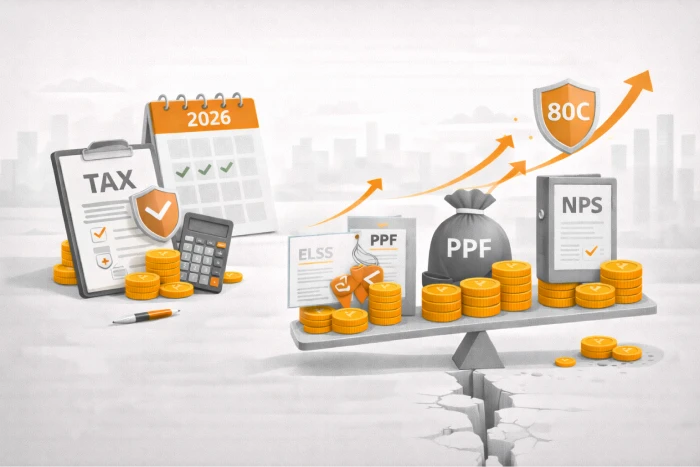
Under this section, individuals can claim deductions up to ₹1.5 lakh per financial year through eligible investments and expenses.
Common Section 80C options include:
Equity Linked Savings Schemes (ELSS)
Public Provident Fund (PPF)
National Savings Certificates
Tax-saving fixed deposits
Employee Provident Fund contributions
Life insurance premiums
Sukanya Samriddhi Yojana
Home loan principal repayment
Investing early in the financial year helps spread contributions across months rather than making large last-minute investments.
Use Additional Tax Benefits Through NPS
The National Pension System offers additional tax benefits beyond Section 80C.
Under Section 80CCD(1B), taxpayers can claim an extra deduction of ₹50,000 for contributions to NPS.
This makes NPS one of the most tax-efficient retirement investment options in India.
Tax benefits of NPS include:
₹1.5 lakh deduction under Section 80C
Additional ₹50,000 deduction under Section 80CCD(1B)
Employer contributions eligible under Section 80CCD(2)
For salaried professionals planning long-term retirement savings, NPS can significantly reduce taxable income.
Claim Health Insurance Deductions Under Section 80D
Health insurance not only protects families from medical expenses but also provides valuable tax deductions.
Under Section 80D, individuals can claim deductions for health insurance premiums paid for themselves and family members.
Maximum deduction limits include:
Category | Maximum Deduction
Self and family | ₹25,000
Parents below 60 | ₹25,000
Senior citizen parents | ₹50,000
This means taxpayers supporting senior citizen parents may claim deductions up to ₹75,000 annually.
Health insurance premiums are therefore both a financial protection tool and a tax-saving strategy.
Take Advantage of Home Loan Tax Benefits
Home loans offer multiple tax deductions that can significantly reduce taxable income.
Salaried professionals purchasing property may claim:
Section 80C deduction
Principal repayment up to ₹1.5 lakh per year.
Section 24 deduction
Interest payments up to ₹2 lakh annually for self-occupied property.
These deductions make home ownership financially beneficial from a tax perspective.
Many borrowers evaluate financing options carefully before purchasing property. Platforms allow users to compare home loan offers on Saarathi.ai to identify competitive interest rates and suitable lenders.
Utilize Standard Deduction for Salaried Employees
The standard deduction is available to salaried professionals and pensioners.
As per current tax provisions, salaried taxpayers can claim a standard deduction of ₹50,000 from their income.
This deduction automatically reduces taxable income without requiring any investment.
It simplifies tax filing while providing basic relief to salaried individuals.
Invest in Tax-Efficient Instruments
Several financial instruments provide tax advantages while supporting long-term wealth creation.
Examples include:
ELSS mutual funds
ELSS funds offer tax deductions under Section 80C with a lock-in period of three years.
Public Provident Fund
PPF provides tax-free interest and long-term savings benefits.
National Pension System
NPS supports retirement planning while offering additional tax deductions.
Tax-efficient investments allow individuals to reduce tax liability while building financial security.
Maintain Proper Documentation for Tax Filing
Accurate documentation is essential when claiming deductions.
Common documents required during tax filing include:
Investment proof for Section 80C
Health insurance premium receipts
Home loan interest certificates
Rent receipts for HRA claims
Form 16 provided by employers
Maintaining organized records simplifies the tax filing process and prevents errors.
Role of Digital Platforms in Financial Planning
Technology has made financial planning and tax management easier for professionals.
Digital financial platforms provide tools to evaluate financial products, manage loans, and track financial goals.
For example, individuals planning financial commitments can ask eligibility questions via Saarathi AI experts to understand loan eligibility, documentation requirements, and approval timelines instantly.
Saarathi.ai connects borrowers with more than 110 lenders across banks and NBFCs in India. The Saarathi Recommendation Engine matches borrowers with suitable lenders based on financial profiles.
Borrowers can also track your application in Saarathi Bazaar through a transparent dashboard that shows lender responses, documentation progress, and approval status.
These digital tools help individuals integrate tax planning, borrowing decisions, and financial management within a single ecosystem.
Common Tax Planning Mistakes Salaried Professionals Should Avoid
Many taxpayers make avoidable mistakes while planning taxes.
Waiting until the last minute
Last-minute investments often lead to poor financial decisions.
Ignoring tax-efficient investments
Focusing only on tax savings without considering returns may reduce long-term wealth.
Not comparing tax regimes
Choosing the wrong tax regime can increase tax liability.
Missing eligible deductions
Failure to claim available deductions leads to higher tax payments.
Proper tax planning throughout the financial year helps avoid these issues.
Frequently Asked Questions
What is the maximum deduction available under Section 80C?
Taxpayers can claim deductions up to ₹1.5 lakh per financial year under Section 80C.
What additional deduction does NPS provide?
NPS allows an additional deduction of ₹50,000 under Section 80CCD(1B) beyond the Section 80C limit.
Can home loans reduce taxable income?
Yes. Home loan principal repayment qualifies under Section 80C and interest payments up to ₹2 lakh can be claimed under Section 24.
Should salaried professionals choose the new or old tax regime?
The choice depends on available deductions. Individuals with significant deductions may benefit from the old regime, while others may prefer the simplified new regime.
When should tax planning begin?
Tax planning should begin at the start of the financial year rather than during the final months.
Conclusion
Effective tax planning allows salaried professionals to reduce tax liability while strengthening their long-term financial strategy. By utilizing deductions under Section 80C, investing in NPS, claiming health insurance benefits, and leveraging home loan deductions, taxpayers can significantly optimize their tax savings.
Starting tax planning early in the financial year provides flexibility to choose the right investments and financial strategies.
At Saarathi.ai, we believe that informed financial decisions lead to stronger financial outcomes. Whether you are planning investments, managing loans, or exploring financing options, digital tools can simplify your financial journey.
Discover personalized loan options and make smarter financial decisions with Saarathi.ai today.