If Inflation Persists Till 2027, Should You Lock Fixed Rate?
|
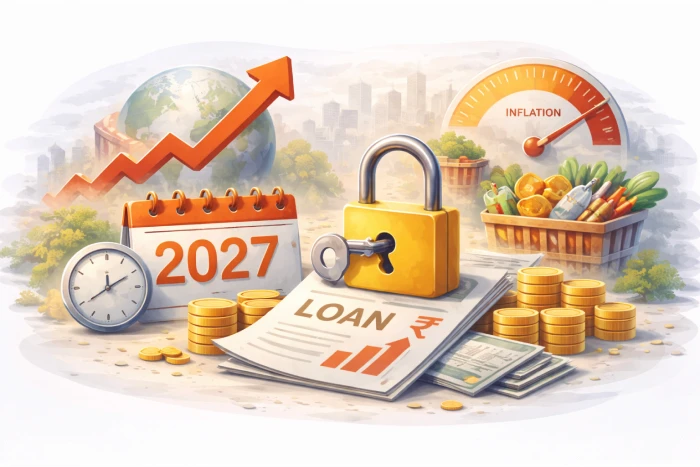
If global inflation persists till 2027, locking a fixed rate loan now could protect you from rising EMIs. However, the right decision depends on repo rate trends, bond yields, your income stability, and loan tenure. Inflation influences central bank policy worldwide, including decisions taken by the Reserve Bank of India. When inflation stays elevated, interest rates often remain higher for longer. In this guide, we break down how persistent global inflation affects Indian loan rates, whether fixed rate loans make sense in 2026, and how to evaluate your personal borrowing strategy before committing.
Why Persistent Global Inflation Matters
Global inflation can remain elevated due to:
Oil and commodity supply disruptions
Geopolitical tensions
Wage growth pressures
Supply chain realignments
Currency volatility
If inflation persists globally, major central banks maintain tighter monetary policies. This impacts capital flows into emerging markets like India.
The Reserve Bank of India adjusts policy based on domestic inflation, but global conditions influence liquidity and currency stability.
How Inflation Translates Into Higher Loan Rates
When inflation remains above the RBI comfort band of 2 to 6 percent:
RBI may maintain higher repo rates
Bond yields remain elevated
Banks’ cost of funds stays high
Lending rates remain firm
Floating rate loans linked to repo rates adjust automatically when the benchmark changes.
This directly affects:
Home loans
Loan against property
Some business loans
Personal loans, though often fixed rate, may become costlier for new borrowers in high inflation cycles.
At Saarathi.ai, we have observed that during prolonged inflationary phases, lenders widen risk spreads, especially for unsecured credit.
Fixed Rate vs Floating Rate: What Is the Difference?
Fixed Rate Loan
Interest rate remains constant for a defined period
EMI stays predictable
Usually priced slightly higher initially
May switch to floating after a few years
Floating Rate Loan
Linked to repo or external benchmark
EMI or tenure changes when rates move
Initially cheaper during low rate cycles
Risk of EMI increase in prolonged inflation
If global inflation persists till 2027, floating loans may stay expensive for longer.
Should You Lock a Fixed Rate Now?
The answer depends on three scenarios.
Scenario 1: Inflation Remains High Till 2027
If inflation stays elevated:
Repo rates remain high
Floating EMIs stay elevated
Bond yields remain firm
In this case, locking a competitive fixed rate today can provide stability.
Scenario 2: Inflation Peaks in 2026 and Falls
If inflation declines sharply:
RBI may cut rates
Floating loans become cheaper
Fixed borrowers may pay slightly higher cost
Timing becomes important. Predicting rate cycles perfectly is difficult.
Scenario 3: Volatile Inflation
If inflation fluctuates:
Rate cycles may remain unpredictable
Hybrid or partially fixed loans may offer balance
Impact on Different Loan Types
Home Loans
Home loans are long tenure loans, often 15 to 30 years. Even a 1 percent difference significantly impacts total interest paid.
You can compare home loan offers on Saarathi.ai to see fixed and floating rate options across multiple lenders.
Personal Loans
Personal loans are usually fixed rate. However, new borrowers may see higher pricing if inflation persists.
You can compare personal loan offers on Saarathi.ai to evaluate lender specific spreads.
Business Loans
MSMEs are sensitive to working capital cost. If inflation keeps borrowing costs high:
Profit margins may shrink
Cash flow planning becomes critical
How Bond Yields Influence Your Decision
Loan pricing is linked to government bond yields.
If foreign investors demand higher yields due to global inflation:
Cost of funds rises
Long term mortgage rates remain firm
As noted in financial coverage by Economic Times, bond market expectations often move before repo rate changes.
Understanding yield trends helps you anticipate loan cost direction.
Practical Evaluation Checklist
Before locking a fixed rate loan, evaluate:
Your job stability
EMI to income ratio below 40 percent
Emergency savings of 6 months
Prepayment flexibility
Conversion charges from fixed to floating
You can ask eligibility questions via Saarathi AI expert before finalizing your application to understand rate options tailored to your profile.
You can also track your application in Saarathi Bazaar and monitor rate revisions during processing.
When Fixed Rate Makes Strong Sense
Consider locking fixed rate if:
Inflation remains above 6 percent for several quarters
RBI signals prolonged tight policy
Bond yields stay elevated
You prefer EMI certainty over potential savings
For risk averse borrowers, predictability often outweighs speculation on future rate cuts.
When Floating Rate May Be Better
Floating may work if:
Inflation shows consistent downward trend
RBI signals upcoming rate cuts
You plan aggressive prepayments
Loan tenure is short
Floating loans provide flexibility during easing cycles.
What Are Experts Monitoring?
Financial analysts track:
CPI inflation trends
Oil price movements
Currency stability
Global central bank policy signals
The Reserve Bank of India provides forward guidance in monetary policy statements, which borrowers should follow closely.
FAQs
If inflation persists till 2027, will home loan rates stay high?
Yes, sustained high inflation usually keeps repo rates and mortgage rates elevated.
Is fixed rate always safer?
It provides EMI certainty but may cost slightly more if rates fall earlier than expected.
Can I switch from floating to fixed later?
Many lenders allow conversion with a fee. Check terms before signing.
Will personal loan rates also rise?
Yes, new personal loans may carry higher rates in prolonged inflation cycles.
How do I secure the best rate now?
Maintain a high credit score, compare lenders, and apply at the right time.
Conclusion
If global inflation persists till 2027, interest rates in India may remain elevated. Locking a fixed rate loan now can protect you from future EMI shocks, especially for long tenure home loans.
However, the right choice depends on your financial stability, risk tolerance, and rate outlook.
Instead of guessing market direction, focus on structured comparison, affordability, and flexibility.
Discover personalized loan options on Saarathi.ai today and choose the right fixed or floating rate strategy with confidence.