If Global Growth Slows, Should You Postpone Big Loans?
|
If the world enters a multi-year slow growth phase, many Indian borrowers may wonder whether it is wise to postpone taking a big loan such as a home loan, business loan, or loan against property. Slow global growth can influence job stability, interest rates, inflation, and lender risk appetite. However, postponing a loan is not always the right answer. The decision depends on your income security, EMI affordability, credit profile, and long term goals. In this guide, we break down how a prolonged global slowdown may affect Indian loan markets and how you can make a confident borrowing decision in 2026.
What Happens in a Multi-Year Slow Growth Phase?
A prolonged global slowdown typically leads to:
Lower global trade volumes
Slower IT and export demand
Reduced foreign investment flows
Volatile stock markets
As often reported by Economic Times, global slowdowns impact emerging markets through capital flows and demand channels.
For India, the impact depends on domestic consumption strength and policy response.
How Slow Growth Affects Interest Rates
Interest rates may move in two possible directions during a prolonged slowdown.
Scenario 1: Inflation Falls
If weak demand reduces inflation:
Central banks may cut rates
Bond yields may decline
Loan interest rates may fall
In this case, borrowing could become cheaper.
Scenario 2: Inflation Persists Due to Supply Issues
If slowdown coexists with supply disruptions:
Inflation may remain high
The Reserve Bank of India may keep repo rates elevated
EMIs may remain expensive
Therefore, slowdown does not automatically mean lower interest rates.
Impact on Job Stability
IT and Export Sectors
Prolonged weak demand in the US and Europe can:
Slow hiring
Reduce bonuses
Delay projects
Startups
Global funding may tighten, affecting valuations and hiring plans.
Domestic Consumption Sectors
India’s domestic demand driven economy may cushion some impact, especially in essential services and infrastructure.
If your income source depends heavily on global markets, job risk becomes a critical factor before taking a large loan.
Will Banks Tighten Loan Approvals?
During extended slow growth phases, lenders may become cautious.
Possible changes include:
Stricter income verification
Higher credit score requirements
Reduced loan to value ratios
Higher spreads for unsecured loans
The Reserve Bank of India regularly monitors financial stability and may issue guidance to manage risk build up.
You can compare home loan offers on Saarathi.ai to evaluate which lenders are maintaining competitive eligibility standards.
When You Should Consider Postponing a Big Loan
You may consider delaying if:
Your sector faces visible job instability
Your EMI to income ratio would exceed 45 percent
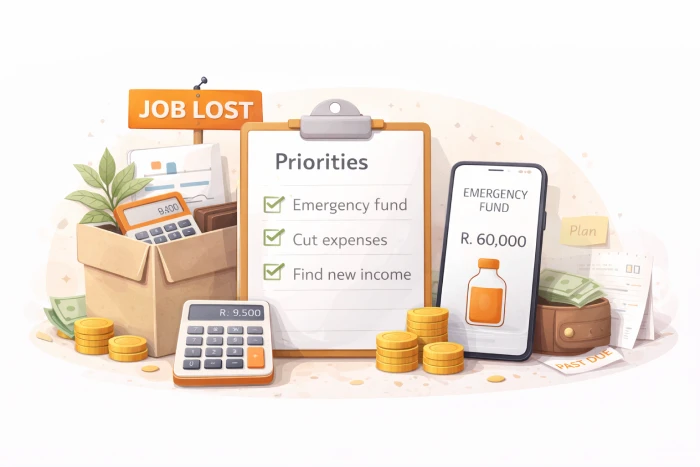
You lack 6 months of emergency savings
You rely heavily on variable income
In uncertain environments, financial flexibility is valuable.
When Taking a Loan Still Makes Sense
1. Stable Income and Strong Employer
If you work in:
Government sector
Diversified large companies
Essential domestic industries
Your income risk may be relatively lower.
2. Attractive Property Pricing
Slow growth often moderates real estate price escalation.
Developers may offer:
Flexible payment plans
Discounts
Reduced booking amounts
You can compare home loan offers on Saarathi.ai to secure competitive rates while prices remain stable.
3. Falling Interest Rate Cycle
If inflation falls and RBI signals rate cuts, locking a loan during early easing cycles can be advantageous.
Impact on Business Loans
MSMEs may experience:
Slower customer demand
Delayed payments
Working capital stress
However, borrowing for productivity improvements or cost reduction can strengthen long term resilience.
You can compare business loan offers on Saarathi.ai to find structured funding aligned with your cash flow profile.
How to Decide Smartly
1. Calculate EMI Comfort Zone
Keep EMIs within 35 to 40 percent of monthly income.
2. Stress Test Your Budget
Ask yourself:
Can I manage EMIs if income drops by 20 percent?
Can I handle a 1 percent interest rate increase?
3. Strengthen Credit Score
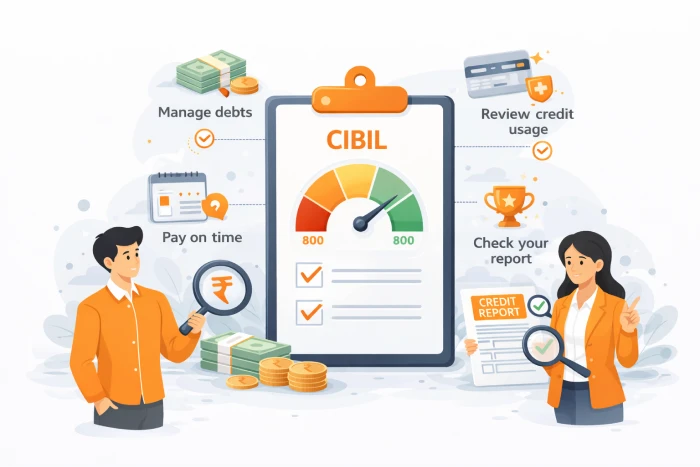
Maintain a score above 750 for better negotiation power.
You can ask eligibility questions via Saarathi AI expert before applying to understand realistic loan limits.
4. Track Application Transparently
Use Saarathi Bazaar to track your application in Saarathi Bazaar and stay updated on documentation and approval stages.
Long Term Perspective
India’s structural growth drivers remain strong:
Young population
Urbanization
Infrastructure investment
Digital adoption
Even during global slowdowns, domestic consumption often provides stability.
The key risk is over leveraging during uncertain income periods.
FAQs
Should I delay a home loan during a global slowdown?
If your income is stable and EMI manageable, borrowing can still make sense.
Will interest rates fall in a slowdown?
They may fall if inflation declines. However, rate direction depends on multiple factors.
Are banks stricter during slow growth?
Yes, lenders may tighten risk assessment in uncertain environments.
Is it risky to take a business loan now?
Assess cash flow visibility and demand stability before committing.
How can I reduce loan risk?
Maintain emergency savings, strong credit score, and conservative EMI ratios.
Conclusion
If the world enters a multi-year slow growth phase, postponing a big loan is not automatically necessary. The right decision depends on income stability, sector exposure, affordability, and interest rate outlook.
Slow growth can create both risks and opportunities. Property prices may stabilize, and interest rates may decline if inflation eases. At the same time, job uncertainty may increase in certain sectors.
Focus on financial discipline, stress test your budget, and compare lenders carefully.
Discover personalized loan options on Saarathi.ai today and make a confident borrowing decision, even in a slower global economy.