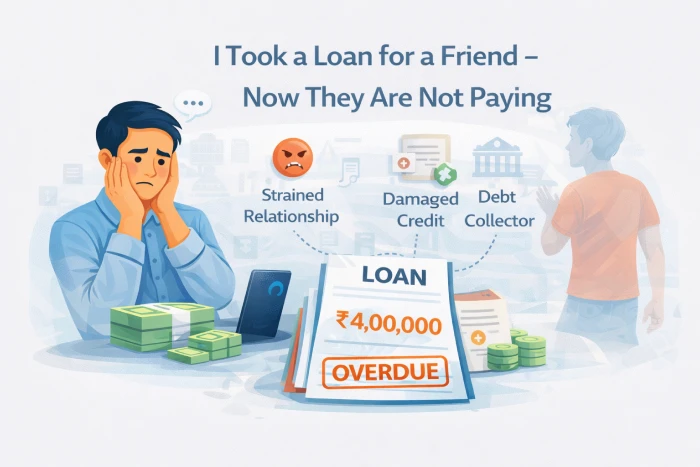
I Took a Loan for a Friend - Now They Are Not Paying
|
Helping a friend by taking a loan in your name can feel like the right thing to do at the time. But if they stop paying, the burden falls entirely on you. In India, the person whose name is on the loan is legally responsible for repayment, regardless of who actually used the money. This situation can affect your CIBIL score, financial stability, and future loan eligibility. In this guide, we explain what happens legally, how to protect yourself, and the steps you should take immediately to minimize damage using practical strategies and support tools like Saarathi.ai.
Who Is Legally Responsible for the Loan
The answer is simple but important.
If the loan is in your name:
You are 100 percent responsible
The lender will hold you accountable
Your credit report will reflect any defaults
Even if:
Your friend promised to pay
You have informal agreements
Legally, the lender recognizes only the borrower.
Immediate Risks You Face
Impact on Your CIBIL Score
Missed payments will:
Lower your score significantly
Stay in your report for years
Affect future loan approvals
Legal Consequences
If EMIs are not paid:
You may receive recovery calls
Legal notices can be issued
Recovery action may be initiated
Financial Stress
You may face:
Increased debt burden
Difficulty managing your own expenses
At Saarathi.ai, we have observed that such situations can quickly escalate if not handled early.
What You Should Do Immediately
Step 1: Start Paying EMIs Yourself
Even if unfair, protecting your credit score is critical.
Pay EMIs on time
Avoid defaults
Maintain your credit profile
Step 2: Talk to Your Friend Clearly
Have a direct conversation:
Set repayment expectations
Agree on timeline
Document the agreement if possible
Step 3: Collect Proof of Payments
Maintain records of:
EMI payments made by you
Any money received from your friend
This can help in legal action if needed.
Step 4: Inform the Lender (If Necessary)
In some cases:
You can explain the situation
Request restructuring or temporary relief
Legal Options in India
Civil Recovery
You can file a civil case to recover money from your friend.
Requirements:
Proof of agreement
Payment records
Communication evidence
Police Complaint (In Case of Fraud)
If there was clear intention to cheat:
You can file a complaint
Provide supporting evidence
Written Agreement Helps
If you had:
Signed agreement
Promissory note
Your case becomes stronger.
Can You Transfer the Loan to Your Friend
In most cases, no.
Loan transfer is not allowed unless:
Lender approves balance transfer
New borrower meets eligibility criteria
Alternative:
Your friend can take a new loan in their name and close yours
How to Reduce Financial Burden
Loan Restructuring
You can request:
Lower EMI
Extended tenure
This reduces monthly pressure.
Balance Transfer
Move your loan to another lender with:
Lower interest rate
Better terms
You can compare personal loan offers on Saarathi.ai to find better options.
Partial Prepayment
If possible:
Reduce outstanding principal
Lower EMI burden
How to Protect Your CIBIL Score
Never Miss an EMI
Even one missed payment can hurt your score.
Monitor Your Credit Report
Check regularly for:
Payment status
Outstanding balance
Avoid Additional Loans
Do not increase your debt burden unnecessarily.
You can ask eligibility questions via Saarathi AI expert before making financial decisions.
How Saarathi.ai Helps in Such Situations
Smart Loan Restructuring Options
Find lenders offering better terms to reduce your burden.
AI-Based Recommendations
Get matched with lenders who can help you refinance your loan.
Saarathi Bazaar Dashboard
Track your application in Saarathi Bazaar and compare options transparently.
Paperless Process
Apply quickly without lengthy paperwork.
Real Insight from Saarathi.ai
At Saarathi.ai, we have observed that borrowers who act early by restructuring or refinancing their loans can significantly reduce financial stress and protect their credit scores.
Ignoring the problem often leads to bigger financial and legal issues.
Common Mistakes to Avoid
Ignoring EMIs assuming friend will pay later
Not keeping payment records
Avoiding communication
Taking additional loans to cover losses
Not exploring refinancing options
How to Avoid Such Situations in Future
Never take loans in your name for others
If necessary, use formal agreements
Consider co-borrower structure instead
Evaluate risks before committing
Impact of Financial Trends in 2026
Recent trends from CRISIL and Economic Times highlight:
Increased digital tracking of credit behavior
Faster reporting of defaults
Stronger recovery mechanisms
This makes it even more important to manage such situations responsibly.
FAQs
Am I legally responsible if my friend does not pay?
Yes, if the loan is in your name.
Can I remove the loan from my CIBIL report?
No, unless it is transferred or fully repaid.
Can I take legal action against my friend?
Yes, through civil recovery or fraud complaints.
Will this affect my future loan eligibility?
Yes, if EMIs are missed or delayed.
Can I transfer the loan to my friend?
Usually not, unless the lender approves.
Can Saarathi.ai help reduce my burden?
Yes, by helping you find better loan options and refinancing solutions.
Conclusion
Taking a loan for a friend can turn into a serious financial challenge if repayments stop. While the situation may feel unfair, the responsibility remains with you as the borrower.
The best approach is to act quickly, protect your credit score, explore restructuring options, and take legal steps if necessary.
Discover personalized loan options on Saarathi.ai today and take control of your financial situation with smarter solutions and better support.