Hybrid Lending Models: Future of Credit Distribution
|
The lending landscape in India is undergoing a major transformation. Traditional banks, NBFCs, and fintech platforms are no longer operating in isolation. Instead, they are collaborating to create hybrid lending models that combine the strengths of each. In 2026, this approach is emerging as the future of credit distribution, offering faster approvals, better risk assessment, and improved customer experience. Guided by frameworks from the Reserve Bank of India, hybrid lending is making borrowing more accessible and efficient. In this guide, we explain how hybrid lending works and why it is shaping the future of loans in India.
What Is Hybrid Lending?
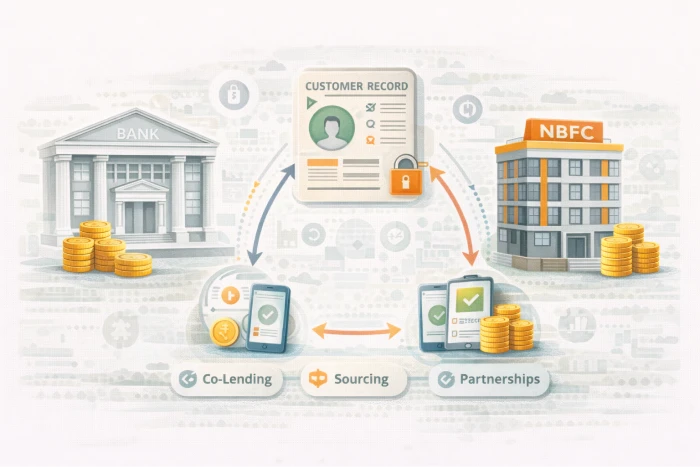
Hybrid lending is a model where multiple players work together to deliver loans.
Typically Involves:
Banks or NBFCs as lenders
Fintech platforms for technology and customer interface
DSAs or partners for customer acquisition
This creates a seamless and efficient lending ecosystem.
Why Hybrid Lending Models Are Growing
The shift toward hybrid models is driven by practical needs.
Need for Speed and Efficiency
Traditional lending alone cannot meet modern expectations.
Hybrid Advantage:
Faster processing through digital tools
Reduced paperwork
Combining Strengths of Different Players
Each participant brings unique capabilities.
Example:
Banks: Low-cost funds
NBFCs: Flexible eligibility
Fintech: Technology and speed
Together, they create a stronger system.
Rise of Digital Lending Ecosystem
Digital adoption has made collaboration easier.
Key Drivers:
AI-based underwriting
Account Aggregator framework
Digital KYC
Regulatory Support
The Reserve Bank of India supports structured collaboration with clear guidelines.
Focus:
Transparency
Data protection
Fair lending
How Hybrid Lending Works in Practice
Let us understand the process.
Step-by-Step Flow:
Borrower applies through a digital platform
Fintech analyzes profile using AI
Loan is matched with suitable lender
Bank or NBFC approves and funds the loan
Platform manages customer experience
This ensures speed and reliability.
Benefits of Hybrid Lending for Borrowers
Faster Loan Approvals
Digital processes reduce delays.
Better Loan Options
Access to multiple lenders in one place.
Higher Approval Chances
Smart matching improves eligibility outcomes.
Transparent Comparison
Clear visibility of rates and charges.
At Saarathi.ai, we have observed that hybrid models significantly improve borrower experience.
Benefits for Lenders
Improved Customer Reach
Access to wider borrower base.
Better Risk Assessment
Use of AI and data analytics.
Reduced Operational Costs
Digital processes lower expenses.
Enhanced Efficiency
Faster processing and disbursal.
Role of Saarathi.ai in Hybrid Lending
Saarathi.ai is a prime example of hybrid lending in action.
AI-Based Recommendations
The Saarathi Recommendation Engine matches borrowers with suitable lenders.
Multi-Lender Access
Compare personal loan offers on Saarathi.ai across banks and NBFCs.
Saarathi Bazaar Dashboard
Track your application in Saarathi Bazaar and manage offers.
Expert Assistance
Ask eligibility questions via Saarathi AI expert.
Paperless Process
Complete your loan journey digitally.
At Saarathi.ai, we have observed that hybrid models deliver better results than standalone systems.
Challenges in Hybrid Lending
Coordination Between Multiple Players
Requires seamless integration.
Data Privacy Concerns
Multiple entities handling data increases complexity.
Regulatory Compliance
All participants must follow RBI guidelines.
Technology Integration
Systems must work together efficiently.
Future of Hybrid Lending in India
Hybrid lending is expected to dominate the market.
Key Trends:
Greater AI adoption
More personalized loan products
Increased financial inclusion
Faster approvals
India’s lending ecosystem will become more interconnected and efficient.
Hybrid Lending vs Traditional Models
Feature | Hybrid Lending | Traditional Lending |
Speed | Fast | Slow |
Flexibility | High | Limited |
Technology Use | Advanced | Moderate |
Customer Experience | Seamless | Fragmented |
Real-Life Scenario
Consider Vikram, a small business owner in India.
Situation:
Needed quick business loan
Approach:
Applied via Saarathi.ai
Outcome:
Matched with suitable NBFC
Fast approval
Smooth digital process
This shows the effectiveness of hybrid lending.
FAQs
What is hybrid lending?
A model combining banks, NBFCs, and fintech platforms.
Why is hybrid lending growing?
Due to speed, efficiency, and better customer experience.
Is hybrid lending safe?
Yes, when all entities are RBI-compliant.
Who funds the loan in hybrid models?
Banks or NBFCs provide the funds.
How does it benefit borrowers?
Faster approvals and better options.
Where can I access hybrid lending?
You can compare personal loan offers on Saarathi.ai easily.
Conclusion
Hybrid lending models are redefining credit distribution in India by combining the strengths of banks, NBFCs, and fintech platforms. This approach delivers faster approvals, better transparency, and improved access to credit for borrowers.
As the ecosystem evolves, hybrid lending will become the standard for delivering loans efficiently and responsibly. Saarathi.ai is at the forefront of this transformation, offering AI-driven recommendations, transparent comparisons, and a seamless digital experience.
Discover personalized loan options on Saarathi.ai today and experience the future of credit distribution.