How to Start Investing in India in 2026: A Beginner’s Step-by-Step Guide
|
Investing is one of the most effective ways to build long-term wealth and financial security. Yet many Indians hesitate to begin because they believe investing requires large amounts of money or deep financial expertise. The truth is much simpler. In 2026, starting your investment journey in India has become easier than ever thanks to digital platforms, simple financial products, and improved financial awareness.
This beginner-friendly guide explains how to start investing in India in 2026 step by step. You will learn how to set financial goals, choose the right investment options, manage risks, and build a portfolio suited to your income and lifestyle. At Saarathi.ai, we have observed that people who combine smart borrowing with disciplined investing often build wealth faster and maintain stronger financial stability.
If you are just beginning your financial journey, this guide will help you move from confusion to confidence.
Why Investing Is Important in 2026
Inflation continues to reduce the purchasing power of money. According to Reserve Bank of India data, inflation in India typically ranges between 4 to 6 percent annually. If your savings remain in a basic savings account earning around 2 to 3 percent interest, your money effectively loses value over time.
Investing allows your money to grow faster than inflation.
Key benefits of investing include:
Wealth creation through compounding
Achieving life goals such as buying a house or funding education
Building retirement security
Creating financial independence
Protection against inflation
For many Indians, financial planning also involves balancing loans and investments. For example, while planning property investments, many borrowers first compare home loan offers on Saarathi.ai to understand affordability before allocating funds toward other investments.
Step 1 - Set Clear Financial Goals
Before selecting any investment product, define why you want to invest. Financial goals give direction to your investment strategy.
Short-Term Goals
These typically have a time horizon of 1 to 3 years.
Examples include:
Emergency fund
Travel plans
Buying electronics or vehicles
Starting a small business
Medium-Term Goals
These usually span 3 to 7 years.
Examples include:
Down payment for a home
Child’s education planning
Expanding a business
Long-Term Goals
Long-term goals generally extend beyond 7 years.
Examples include:
Retirement planning
Building wealth
Financial independence
When financial goals are clear, it becomes easier to choose the right investments and loan structures. Many users also ask eligibility questions via Saarathi AI experts to understand how investments can align with future borrowing plans such as home loans or business loans.
Step 2 - Understand Your Risk Appetite
Every investment carries some level of risk. Your ability to handle market fluctuations determines the type of investments suitable for you.
Risk appetite generally falls into three categories.
Conservative Investors
Prefer stable returns and minimal volatility.
Typical investments include:
Fixed deposits
Government bonds
Debt mutual funds
Moderate Investors
Comfortable with moderate market fluctuations.
Typical investments include:
Hybrid mutual funds
Index funds
Balanced portfolios
Aggressive Investors
Focus on long-term growth and accept short-term volatility.
Typical investments include:
Equity mutual funds
Direct stocks
sector-focused funds
Your income stability, age, and financial commitments influence your risk tolerance.
For instance, individuals planning major purchases such as property often evaluate home financing options first by reviewing loan eligibility and offers, then adjust their investment allocations accordingly.
Step 3 - Build an Emergency Fund First
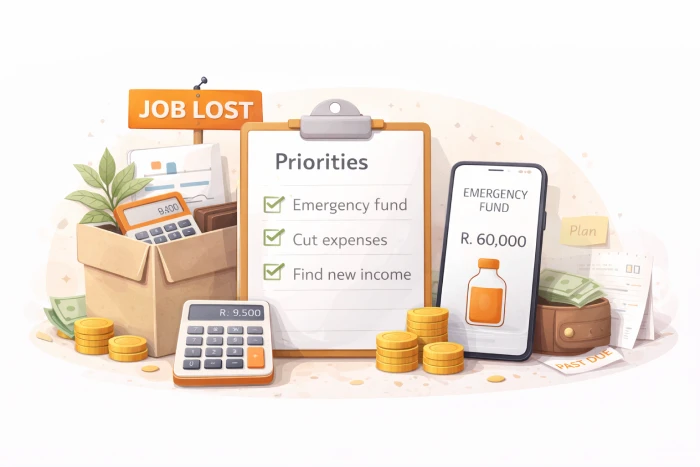
Before making market investments, build an emergency fund that covers at least 6 months of living expenses.
This fund protects you from financial shocks such as:
Medical emergencies
Job loss
Business downturns
Unexpected family expenses
Emergency funds should remain in highly liquid and safe instruments such as:
Savings accounts
Liquid mutual funds
Short-term deposits
According to financial planning insights published by Economic Times, households with emergency savings are significantly less likely to rely on high-interest credit during emergencies.
Step 4 - Understand the Major Investment Options in India
India offers a wide variety of investment opportunities suited for beginners.
Mutual Funds
Mutual funds pool money from multiple investors and invest in diversified portfolios managed by professionals.
Common types include:
Equity mutual funds
Debt mutual funds
Hybrid funds
Index funds
ELSS tax-saving funds
Systematic Investment Plans (SIPs) allow investors to start with as little as ₹500 per month.
Direct Equity (Stocks)
Investing in stocks means purchasing ownership in publicly listed companies.
Advantages include:
Potential for high returns
Dividend income
Long-term wealth creation
However, stock investing requires research and discipline.
Public Provident Fund (PPF)
PPF is a government-backed long-term savings scheme offering tax benefits and stable returns.
Features include:
15-year lock-in period
Tax-free interest
Section 80C tax deductions
National Pension System (NPS)
NPS is a retirement-focused investment scheme regulated by the Pension Fund Regulatory and Development Authority.
Benefits include:
Market-linked returns
Tax advantages
Low management fees
Exchange-Traded Funds (ETFs)
ETFs track market indices such as Nifty 50 and trade on stock exchanges like regular shares.
They offer:
Low expense ratios
Diversification
Liquidity
Step 5 - Start With SIPs for Consistent Investing
One of the easiest ways to start investing in India is through Systematic Investment Plans.
SIPs allow investors to invest fixed amounts regularly in mutual funds.
Advantages of SIP investing include:
Rupee cost averaging
Disciplined investing habits
Reduced impact of market timing
Low entry barrier
For example, investing ₹5,000 monthly in an equity mutual fund with an average annual return of 12 percent could grow significantly over long periods due to compounding.
Financial experts widely recommend SIPs as the starting point for new investors.
Step 6 - Diversify Your Investment Portfolio
Diversification helps reduce risk by spreading investments across different asset classes.
A balanced beginner portfolio might look like this:
Asset Class | Allocation Example
Equity Mutual Funds | 40%
Index Funds | 20%
Debt Funds | 20%
PPF or Government Schemes | 10%
Gold or ETFs | 10%
Diversification reduces the impact of poor performance from any single asset.
Many investors also maintain liquidity by carefully balancing loans and investments. For example, borrowers who track their loan offers through your application in Saarathi Bazaar often plan investment allocations after understanding their EMI commitments.
Step 7 - Learn About Tax Implications
Taxes affect investment returns, so understanding them is essential.
Equity Investments
Short-term capital gains tax: 15 percent for holdings under 1 year
Long-term capital gains tax: 10 percent above ₹1 lakh gains annually
Debt Investments
Debt mutual funds and fixed income investments are taxed based on income slab rates depending on holding periods and current tax regulations.
Tax-Saving Investments
Popular tax-saving instruments include:
ELSS mutual funds
PPF
NPS
Tax-saving fixed deposits
These fall under Section 80C deductions up to ₹1.5 lakh annually.
Refer to the official RBI website for updated financial regulations and guidelines regarding financial products and lending frameworks.
Step 8 - Avoid Common Beginner Mistakes
Many first-time investors make avoidable mistakes that hurt long-term returns.
Common mistakes include:
Trying to time the market
Investing without clear goals
Lack of diversification
Panic selling during market corrections
Ignoring tax planning
Successful investors focus on consistency and long-term strategy rather than short-term speculation.
Step 9 - Use Digital Platforms and Financial Tools
Digital financial platforms have made investing and borrowing significantly easier in India.
Modern fintech platforms provide:
Portfolio tracking
AI-powered recommendations
Instant loan comparisons
Paperless applications
At Saarathi.ai, borrowers can compare personal loan offers on Saarathi.ai from multiple lenders in minutes. This transparency helps individuals plan investments and credit decisions together without financial surprises.
The Saarathi Recommendation Engine analyzes borrower profiles to suggest the most suitable lenders and loan products, making financial planning faster and more efficient.
Step 10 - Review and Rebalance Your Investments Regularly
Investing is not a one-time activity. Regular monitoring ensures your portfolio stays aligned with financial goals.
Review your investments every 6 to 12 months.
During reviews, check for:
Portfolio performance
Asset allocation balance
Changes in financial goals
Tax planning opportunities
If certain investments grow significantly, rebalancing ensures your portfolio remains diversified and risk levels stay appropriate.
FAQs
Frequently Asked Questions
How much money do I need to start investing in India?
You can start investing with as little as ₹500 through SIPs in mutual funds. The key is consistency rather than large initial investments.
What is the safest investment option for beginners in India?
Government-backed schemes like PPF and diversified mutual funds are generally considered safer options for beginners compared to direct stock investments.
Is SIP better than lump sum investing?
For beginners, SIP investing is usually better because it reduces market timing risks and promotes disciplined investing.
Can I invest while repaying a loan?
Yes. Many individuals balance investments and loans simultaneously. Understanding EMI obligations first helps determine how much money can be safely invested each month.
How long should I stay invested?
Long-term investments typically generate better returns. Equity investments are generally recommended for a time horizon of at least 5 to 7 years.
Conclusion
Starting your investment journey in India in 2026 does not require complex strategies or large amounts of money. The most important steps are setting clear financial goals, understanding your risk tolerance, building an emergency fund, and investing consistently through diversified instruments.
Digital platforms have made financial planning easier than ever. Investors can now manage borrowing, investing, and financial planning through integrated platforms that provide transparency and guidance.
At Saarathi.ai, we have observed that individuals who combine responsible borrowing with disciplined investing build stronger financial foundations. Whether you are planning a home purchase, business expansion, or long-term wealth creation, having visibility into loan options helps you plan smarter.
Discover personalized loan options on Saarathi.ai today and take the next step toward building a secure financial future.