How to prepare financially for medical emergencies?
|
A medical emergency does not just affect your health. It can shake your entire financial foundation. One hospitalization can cost anywhere from Rs 50,000 to several lakhs depending on the city and treatment. In India 2026, rising healthcare inflation makes financial preparation more important than ever.
If you are wondering how to prepare financially for medical emergencies, the answer lies in a combination of insurance, emergency savings, EMI planning, and disciplined credit management.
At Saarathi.ai, we have observed that borrowers who plan ahead for medical risks rarely fall into high-interest debt traps. This guide will help you create a strong financial shield against unexpected medical expenses.
Why Medical Emergencies Cause Financial Stress
Medical costs rise faster than general inflation.
Common expenses include:
Hospitalization charges
ICU costs
Surgery fees
Medicines
Diagnostics
Post-hospital recovery
According to public financial awareness materials promoted by the Reserve Bank of India, emergency preparedness is critical to avoid borrowing at high interest during crises.
Without preparation, families often:
Use credit cards heavily
Take high-interest personal loans
Liquidate long-term investments
Delay critical treatments
Planning avoids these difficult choices.
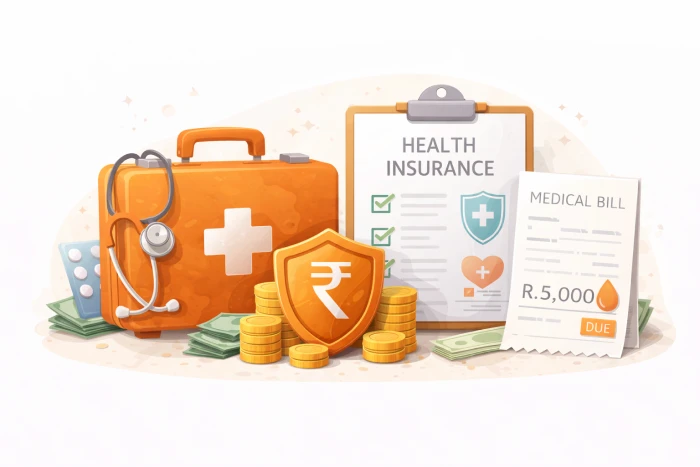
Step 1: Buy Adequate Health Insurance
Health insurance is your first line of defense.
What You Should Have:
Individual or family floater health insurance
Coverage of at least Rs 5-10 lakhs in metro cities
Critical illness rider if possible
Employer insurance alone is not enough. If you lose your job, coverage may end.
At Saarathi.ai, we often advise borrowers to secure insurance before increasing EMIs or taking new financial commitments.
What to Check in Policy:
Waiting period
Room rent limits
Network hospitals
Claim settlement ratio
Sub-limits on diseases
Insurance reduces out-of-pocket burden significantly.
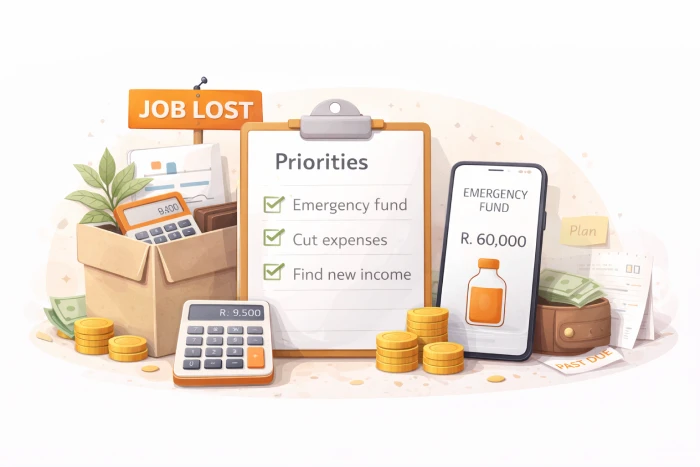
Step 2: Build a Dedicated Medical Emergency Fund
Apart from general emergency savings, maintain a small medical buffer.
Target:
Minimum 3 months of essential expenses
Plus additional Rs 50,000 to Rs 1,00,000 for immediate hospital deposits
Keep this money in:
High interest savings account
Liquid mutual fund
Short-term FD
Do not invest medical emergency funds in equity markets.
Step 3: Include EMIs in Emergency Planning
Many people plan for medical bills but forget loan obligations.
If you have:
Home loan EMI
Personal loan EMI
Car loan EMI
You must ensure your emergency plan covers at least 2-3 EMI cycles.
Lenders calculate FOIR, meaning Fixed Obligation to Income Ratio. If EMIs exceed 40-50 percent of income, your risk during emergencies increases.
If your EMI burden is high, you can compare personal loan offers on Saarathi.ai to explore refinancing options that reduce monthly pressure.
Step 4: Avoid High-Interest Panic Borrowing
During emergencies, speed matters. But panic borrowing creates long-term problems.
Avoid:
Rolling credit card balances
Multiple loan applications
Informal borrowing at high interest
At Saarathi.ai, we have observed that borrowers who compare options carefully save significantly on interest costs.
You can ask eligibility questions via Saarathi AI before applying to avoid unnecessary hard inquiries and protect your credit score.
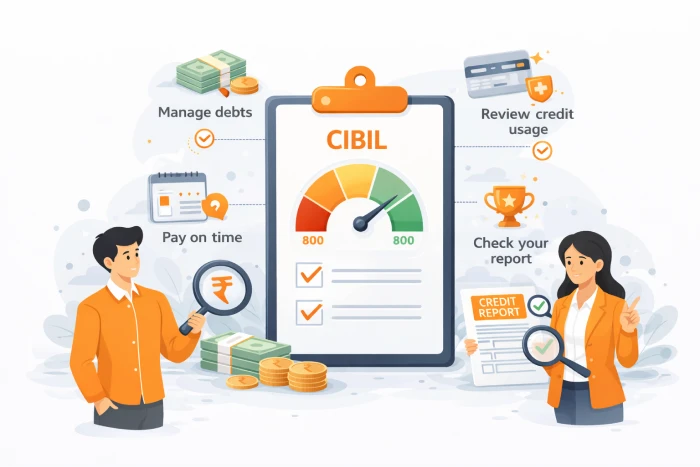
Step 5: Maintain Strong Credit Health
Medical emergencies often require quick funding.
A healthy credit profile ensures:
Faster loan approvals
Lower interest rates
Higher eligibility
To protect your credit score:
Pay EMIs on time
Keep credit utilization below 30 percent
Avoid unnecessary applications
Monitor credit report regularly
According to CRISIL data on consumer credit behavior, disciplined repayment significantly improves borrowing flexibility during emergencies.
Step 6: Create a Health Expense Buffer Plan
Example:
Monthly Essentials Including EMIs: Rs 65,000
Emergency Fund Target: 6 months
Rs 65,000 x 6 = Rs 3,90,000
Additional Medical Buffer: Rs 1,00,000
Total Safety Net: Rs 4,90,000
Allocation:
Rs 1,50,000 in savings account
Rs 2,00,000 in liquid fund
Rs 1,40,000 in short-term FD
This layered approach ensures liquidity and safety.
Step 7: Plan for Parents and Dependents
Medical emergencies are more common with aging parents.
Consider:
Separate health insurance for parents
Higher coverage for senior citizens
Critical illness add-ons
If dependents rely on your income, your emergency fund should lean toward 6-9 months expenses.
Step 8: Understand the Role of Personal Loans in Emergencies
Sometimes insurance and savings are insufficient.
In such cases, a personal loan can bridge the gap.
Before borrowing:
Calculate real disposable income
Ensure EMI is manageable
Compare lenders
With Saarathi.ai:
AI-based lender matching reduces rejection risk
Transparent comparison across 110+ lenders
Fully paperless journey
Real-time tracking in Saarathi Bazaar
This ensures fast yet responsible borrowing.
Step 9: Keep Documentation Ready
During emergencies, paperwork delays can increase stress.
Keep ready:
Insurance policy copies
ID and address proof
Medical records
Bank account details
Digital copies stored securely reduce chaos.
Step 10: Rebuild Financial Cushion After Recovery
Once emergency passes:
Replenish emergency fund first
Clear high-interest debt
Resume investments gradually
Avoid lifestyle inflation
Restoring your safety net prevents future vulnerability.
Common Mistakes to Avoid
Relying only on employer health insurance
Keeping emergency fund fully in stocks
Ignoring EMI obligations
Taking multiple loans without comparison
Delaying insurance purchase
Real-Life Scenario
Monthly Income: Rs 95,000
Essentials Including EMIs: Rs 70,000
Medical Emergency Cost: Rs 3,00,000
If you have:
Insurance Coverage: Rs 2,50,000
Emergency Savings: Rs 1,00,000
Out-of-pocket burden reduces significantly.
If no insurance and no savings:
The entire Rs 3,00,000 may go to credit card or high-interest personal loan, creating long-term financial strain.
Planning makes the difference.
How Medical Preparedness Strengthens Loan Stability
When you are financially prepared:
EMIs continue without disruption
Credit score remains stable
Loan eligibility remains strong
At Saarathi.ai, our AI Recommendation Engine evaluates your repayment capacity carefully before suggesting lenders, ensuring you do not overextend during vulnerable periods.
FAQs
1. How much medical emergency fund should I keep?
At least 3-6 months of essential expenses plus additional medical buffer of Rs 50,000 to Rs 1,00,000.
2. Is health insurance enough?
Insurance covers major costs, but you still need savings for deductibles and immediate expenses.
3. Should I use credit cards for hospital bills?
Only if you can repay in full quickly. Avoid long-term rollover.
4. Does a medical emergency affect credit score?
Only if EMIs or credit payments are delayed.
5. Can I get a personal loan quickly during an emergency?
Yes, but compare options carefully to avoid high interest.
6. How often should I review insurance coverage?
Annually or after major life changes like marriage or childbirth.
Conclusion
Medical emergencies are unpredictable. Financial preparedness is not.
Key Takeaways:
Buy adequate health insurance
Build separate medical emergency buffer
Include EMIs in planning
Maintain strong credit health
Avoid panic borrowing
Rebuild savings after crisis
Preparedness protects both your health and your financial future. When you need fast, responsible financing, discover personalized loan options on Saarathi.ai. Compare lenders, track applications in Saarathi Bazaar, and get AI-powered expert guidance in a transparent, paperless journey.