How to calculate your real monthly disposable income?
|
Do you really know how much money you have left each month after all commitments? Many Indians confuse salary with spending power. But your real monthly disposable income is what remains after taxes, EMIs, fixed bills, and essential expenses.
Understanding this number is critical in 2026, when rising living costs, digital spending, and easy loan access are reshaping household finances. At Saarathi.ai, we have observed that borrowers who clearly calculate their disposable income make smarter loan decisions and face fewer repayment issues. This guide explains how to calculate your real monthly disposable income accurately and use it to strengthen your financial stability.
What Is Real Monthly Disposable Income?
Disposable income is the money available after mandatory deductions.
Real monthly disposable income goes deeper. It considers:
Net income after tax
All fixed obligations
Essential living costs
Existing EMIs
Insurance premiums
It shows what you can actually save, invest, or spend freely.
According to data published by the Reserve Bank of India, household financial liabilities have steadily increased in recent years. That makes understanding disposable income more important than ever.
Step 1: Start with Net Take-Home Income
Do not use your CTC or gross salary.
Include:
Salary after tax and PF
Business profits after expenses
Freelance income
Rental income
Side income
If income fluctuates, calculate a 6-month average.
Example:
Gross Salary: Rs 80,000
Tax + PF deductions: Rs 10,000
Net Income: Rs 70,000
Your starting point is Rs 70,000.
At Saarathi.ai, we always recommend using conservative income estimates when checking eligibility through our AI expert tool. This prevents overcommitting to EMIs.
Step 2: Subtract Fixed Financial Obligations
These are non-negotiable monthly commitments.
Include:
Home loan EMI
Personal loan EMI
Car loan EMI
Insurance premiums
School fees
Rent
Example:
Home EMI: Rs 18,000
Car EMI: Rs 8,000
Insurance: Rs 3,000
Rent: Rs 15,000
Total Fixed Obligations: Rs 44,000
Remaining: Rs 26,000
If your EMIs alone exceed 40-50 percent of income, lenders may consider your FOIR high. At Saarathi.ai, our AI Recommendation Engine evaluates this before suggesting suitable lenders from 110+ banks and NBFCs.
You can compare personal loan offers on Saarathi.ai to check if refinancing reduces your EMI burden.
Step 3: Subtract Essential Living Expenses
These are basic survival costs.
Include:
Groceries
Electricity and water
Transport and fuel
Mobile and internet
Basic household supplies
Example:
Groceries: Rs 8,000
Utilities: Rs 4,000
Fuel: Rs 5,000
Internet and mobile: Rs 1,500
Total Essentials: Rs 18,500
Remaining after essentials: Rs 7,500
Now you are seeing your real position.
Step 4: Adjust for Irregular Monthly Expenses
Many people forget this step.
Irregular but predictable costs:
Annual insurance renewals
School admission fees
Festival spending
Medical checkups
Travel plans
If annual expense is Rs 60,000, divide by 12.
Monthly adjustment: Rs 5,000
Subtract this from the remaining Rs 7,500.
Real Disposable Income: Rs 2,500
This is your true surplus.
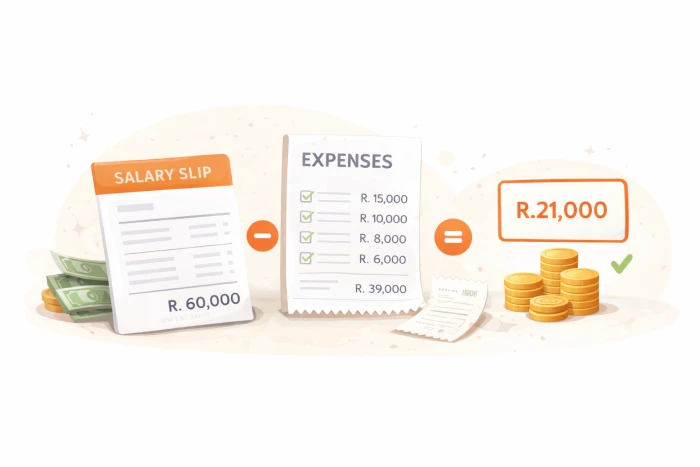
The Simple Formula
Real Disposable Income = Net Income - Fixed Obligations - Essential Expenses - Monthly Adjusted Annual Costs
If the number is negative, you are spending more than you earn.
Why Most People Miscalculate Disposable Income
1. Ignoring Annual Costs
Festival and insurance spending cause sudden cash crunch.
2. Overestimating Variable Income
Counting expected bonuses leads to overconfidence.
3. Ignoring Credit Card EMIs
Minimum due payments distort real obligations.
4. Not Reviewing Bank Statements
Digital payments hide spending patterns.
According to CRISIL reports, urban consumption growth combined with rising unsecured borrowing has increased financial stress in younger demographics. Proper income calculation reduces this risk.
How Disposable Income Affects Loan Eligibility
Lenders evaluate:
FOIR ratio
Debt to income ratio
Stability of surplus income
Credit score
If your disposable income is low:
Loan approval chances drop
Interest rates may increase
EMI approval amount reduces
At Saarathi.ai, we have observed that applicants with a clear surplus above 20 percent of income get smoother approvals.
You can ask eligibility questions via Saarathi AI before applying to avoid unnecessary hard inquiries on your credit report.
Ideal Disposable Income Percentage
As a general rule:
20-30 percent of income should remain as surplus
Savings should ideally be at least 20 percent
EMIs should not cross 40-50 percent
Example Healthy Scenario:
Net Income: Rs 1,00,000
EMIs + Fixed: Rs 40,000
Essentials: Rs 25,000
Adjusted Annual Costs: Rs 5,000
Disposable Income: Rs 30,000
This gives flexibility for investments and emergencies.
What If Your Disposable Income Is Too Low?
If surplus is under 10 percent:
1. Reduce EMI Burden
Balance transfer
Longer tenure
Lower interest rates
You can compare personal loan offers on Saarathi.ai in a fully paperless process and track your application in Saarathi Bazaar.
2. Cut Lifestyle Inflation
Reduce subscriptions
Limit dining
Delay gadget upgrades
3. Increase Income
Upskill
Freelance
Negotiate salary
4. Build Emergency Fund
Target 3-6 months expenses to avoid new debt.
Sample Real-Life Calculation
Monthly Net Income: Rs 85,000
Fixed Obligations
Rent: Rs 20,000
Personal Loan EMI: Rs 15,000
Insurance: Rs 3,000
Total: Rs 38,000
Essential Living
Groceries: Rs 9,000
Utilities: Rs 4,000
Fuel: Rs 6,000
Total: Rs 19,000
Remaining: Rs 28,000
Annual Adjusted Costs
Travel fund: Rs 3,000
Festival fund: Rs 2,000
Total: Rs 5,000
Real Disposable Income: Rs 23,000
Disposable Percentage: 27 percent
This is financially stable.
How Saarathi.ai Helps You Plan Smarter
Knowing your disposable income helps you:
Choose correct EMI amount
Avoid overborrowing
Improve credit score
Secure lower interest rates
With Saarathi.ai, you get:
AI-based lender matching
Transparent comparison
Access to 110+ lenders
Paperless documentation
Real-time tracking in Saarathi Bazaar
Our AI Recommendation Engine ensures you apply only where your income profile fits best.
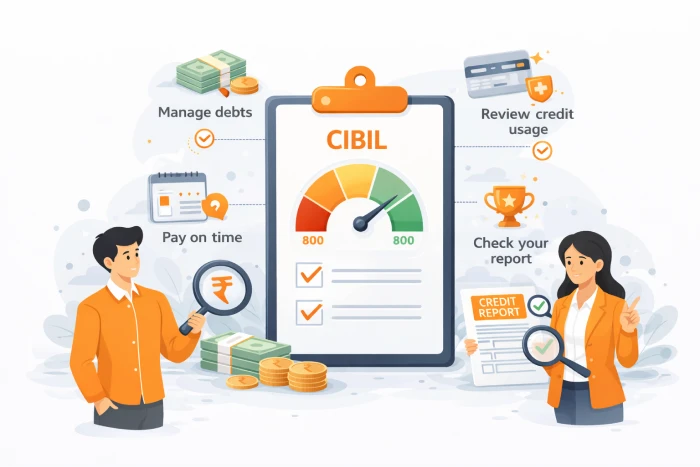
The Link Between Disposable Income and Credit Score
If disposable income is healthy:
EMIs are paid on time
Credit utilization stays below 30 percent
Fewer defaults occur
This strengthens your credit profile.
A stronger score means better negotiation power and faster approvals.
FAQs
1. What is the difference between disposable income and savings?
Disposable income is the surplus after all mandatory expenses. Savings are the portion you intentionally set aside.
2. How much disposable income is safe?
At least 20 percent of net income provides comfort and financial flexibility.
3. Should I include SIP as an expense?
Yes. Treat investments as fixed commitments for disciplined wealth creation.
4. Can I take a loan if disposable income is low?
Possible, but risky. Check eligibility using AI tools before applying.
5. How often should I calculate disposable income?
Review monthly or whenever income or expenses change.
6. Does disposable income affect home loan approval?
Yes. Lenders assess repayment capacity based on surplus income and FOIR.
Conclusion
Your salary does not define your financial strength. Your real monthly disposable income does.
Key Takeaways:
Use net income only
Subtract fixed obligations and essentials
Adjust for annual costs
Maintain at least 20 percent surplus
Keep EMIs under control
Review monthly
When you understand your real disposable income, you borrow smarter and build wealth confidently. Discover personalized loan options on Saarathi.ai today. Compare offers, track your application in Saarathi Bazaar, and get AI-powered expert guidance in a transparent, paperless journey.