How to build a monthly budget that actually works?
|
A monthly budget is not about restricting your life. It is about controlling your money so it does not control you. If you are wondering how to build a monthly budget that actually works, the answer lies in simplicity, consistency, and smart financial planning. In India 2026, rising living costs, EMIs, and lifestyle upgrades make budgeting more important than ever.
At Saarathi.ai, we have observed that borrowers who maintain a disciplined monthly budget get faster loan approvals, better interest rates, and lower financial stress. Whether you are planning for a personal loan, home loan, or business expansion, a strong budget is your foundation. This guide will help you build a practical monthly budget that fits real Indian incomes and expenses.
Why Most Budgets Fail
Before building one that works, let us understand why many budgets collapse within a few weeks.
1. Unrealistic Expectations
People often cut all entertainment, dining, and shopping. This leads to frustration and overspending later.
2. Ignoring Irregular Expenses
Annual insurance premiums, school fees, festival spending, or car servicing are often forgotten.
3. No Tracking System
Writing numbers once and never reviewing them makes the budget useless.
4. No Loan Planning
EMIs without proper planning strain monthly cash flow and reduce savings.
According to data from the Reserve Bank of India, household debt levels in India have steadily increased in recent years. This makes structured financial planning even more critical.
A working budget must be flexible, realistic, and aligned with your financial goals.
Step 1: Calculate Your Real Monthly Income
Start with your net income, not your salary package.
Include:
Salary after tax
Freelance or side income
Rental income
Business profits
Family contributions
Do not include:
Expected bonuses
Possible incentives
Future raises
If your income fluctuates, take an average of the last six months.
At Saarathi.ai, we recommend borrowers use conservative income estimates when checking eligibility through our AI expert tool. This ensures accurate loan planning without overcommitment.
You can quickly assess affordability before applying by using tools to compare personal loan offers on Saarathi.ai.
Step 2: Track Every Expense for 30 Days
Before creating categories, track your actual spending.
Divide expenses into three groups:
Fixed Expenses
Rent or home loan EMI
Car loan EMI
Insurance premiums
School fees
Internet bills
Variable Expenses
Groceries
Electricity
Transport
Fuel
Dining out
Lifestyle and Discretionary
Subscriptions
Shopping
Travel
Entertainment
Many Indians underestimate daily expenses like UPI payments, food delivery, and quick shopping apps. These small spends add up significantly.
Tracking tools:
Excel or Google Sheets
Budgeting apps
Bank statements
Saarathi Bazaar dashboard to monitor EMIs and financial commitments
You can track your active loan offers and EMIs easily in Saarathi Bazaar, giving you full transparency over financial obligations.
Step 3: Use the 50-30-20 Rule with Indian Adjustments
The popular 50-30-20 rule works well, but needs slight adjustments for Indian households.
Standard Model
50 percent Needs
30 percent Wants
20 percent Savings
However, in India where EMIs are common, a practical version is:
55 percent Needs including EMIs
20 percent Wants
25 percent Savings and Investments
Example Monthly Budget for Rs 60,000 Income
Category | Allocation | Amount |
Needs + EMIs | 55% | Rs 33,000 |
Wants | 20% | Rs 12,000 |
Savings | 25% | Rs 15,000 |
If your EMIs exceed 40 percent of income, it may impact future loan approvals. At Saarathi.ai, we have observed that lenders prefer a balanced FOIR, typically under 50 percent.
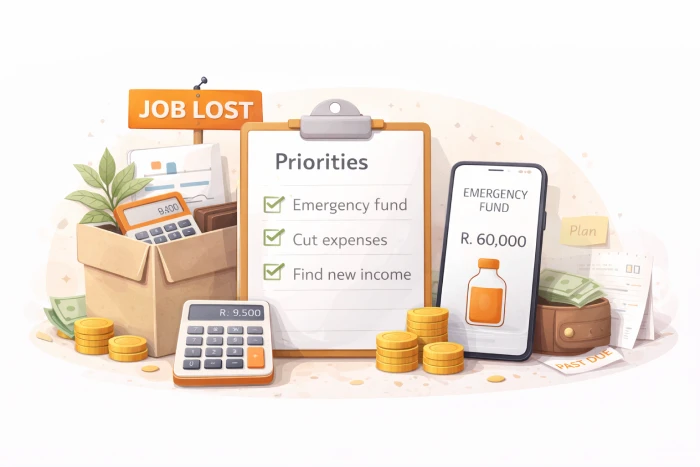
Step 4: Build an Emergency Fund First
Before investing aggressively, build an emergency corpus.
Target:
Minimum 3 months of expenses
Ideal 6 months of expenses
Keep it in:
High interest savings account
Liquid mutual fund
Short term FD
This fund prevents unnecessary personal loans during emergencies.
If you already have high-interest debt, consider consolidating through better options. You can compare personal loan offers on Saarathi.ai to reduce EMI burden with competitive rates.
Step 5: Plan EMIs Strategically
Loans are not bad. Poor planning is.
Before taking a loan:
Check EMI to income ratio
Keep buffer for lifestyle inflation
Factor future expenses like marriage, education, or relocation
Use Saarathi.ai to:
Check eligibility instantly
Get AI-based lender recommendations
Compare 110+ banks and NBFCs
Track your application in Saarathi Bazaar
Our AI Recommendation Engine analyses your income, credit profile, and repayment capacity to suggest optimal lenders. This prevents loan rejection and protects your credit score.
According to CRISIL reports, disciplined repayment behavior significantly improves creditworthiness and future borrowing capacity.
Step 6: Automate Savings and Investments
If you wait to save what remains at month end, you will save nothing.
Instead:
Set SIP on salary date
Auto transfer to savings account
Schedule recurring deposits
Priority order:
Emergency fund
Insurance
Retirement planning
Wealth creation
Automating savings ensures consistency.
Step 7: Budget for Annual and Festival Expenses
Indian households have seasonal spending spikes:
Diwali shopping
Wedding gifts
School admissions
Insurance renewals
Travel during holidays
Create a “Sinking Fund”.
For example:
If you expect Rs 60,000 annual festival expense, save Rs 5,000 monthly.
This avoids credit card debt or emergency borrowing.
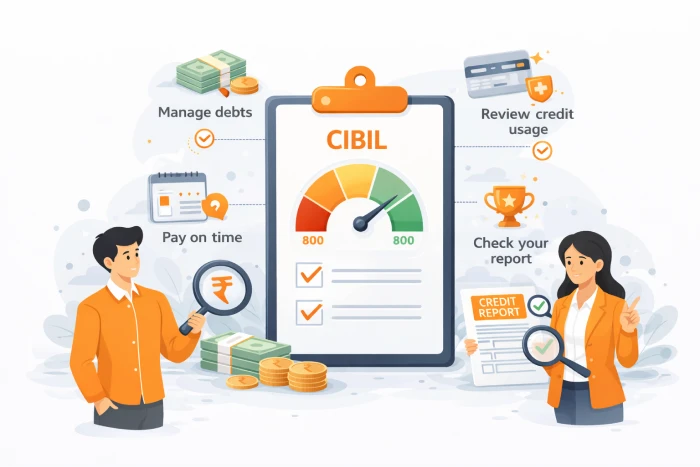
Step 8: Improve Your Credit Score While Budgeting
A strong budget improves your credit profile.
To maintain a healthy score:
Pay EMIs on time
Keep credit utilisation below 30 percent
Avoid frequent loan applications
Monitor credit report
You can ask eligibility questions via Saarathi AI before applying for a loan. This prevents unnecessary hard inquiries.
A good credit score leads to:
Lower interest rates
Higher loan eligibility
Faster approvals
Better negotiation power
Step 9: Review Your Budget Monthly
A budget is not a one-time document.
Review every month:
Income changes
Expense variations
Unexpected costs
New financial goals
Ask yourself:
Did I overspend?
Did I save enough?
Can I reduce fixed costs?
Even renegotiating rent or refinancing loans can improve monthly cash flow.
You can track your application and repayment details in Saarathi Bazaar for full visibility and financial discipline.
Step 10: Align Budget with Financial Goals
Budgeting without goals feels restrictive.
Define clear goals:
Buy a home in 3 years
Start a business
Child education fund
Retirement corpus
Debt-free life
When your budget aligns with goals, it becomes empowering.
If you are planning a home purchase, explore home loan solutions through Saarathi.ai and compare lenders easily in one place.
Common Budgeting Mistakes Indians Make
Ignoring inflation impact
Overusing credit cards
Depending on future income
Taking multiple unsecured loans
Not having insurance
According to coverage in Economic Times, rising consumer spending combined with easy digital credit access has increased financial stress in urban households. Structured budgeting reduces that risk.
Smart Digital Tools That Help
In 2026, budgeting is easier due to technology.
Use:
UPI transaction history
Expense tracking apps
Auto debit features
AI loan comparison platforms like Saarathi.ai
At Saarathi.ai, we have observed that customers who use AI-based lender comparison reduce rejection rates significantly and save on interest costs.
Our fully paperless journey ensures:
Faster approvals
Transparent charges
Real-time tracking
Secure documentation
This integrates smoothly with your monthly financial planning.
Sample Practical Budget for Salaried Professional in India
Monthly Income: Rs 80,000
Fixed Costs
Rent: Rs 20,000
EMI: Rs 12,000
Utilities: Rs 5,000
Insurance: Rs 3,000
Total Fixed: Rs 40,000
Variable
Groceries: Rs 8,000
Fuel: Rs 5,000
Dining: Rs 4,000
Subscriptions: Rs 2,000
Total Variable: Rs 19,000
Savings and Investments
SIP: Rs 10,000
Emergency fund: Rs 6,000
Travel fund: Rs 5,000
Total Savings: Rs 21,000
This structure ensures balance without extreme restrictions.
How Budgeting Helps in Loan Approval
Lenders check:
FOIR ratio
Existing EMIs
Repayment capacity
Credit behavior
If your budget shows surplus income, approval chances increase.
With Saarathi.ai:
AI matches you to suitable lenders
You avoid unnecessary rejections
You get transparent comparison
You track everything in one dashboard
This reduces stress and improves financial clarity.
FAQs
1. What is the best budgeting method in India?
The modified 50-30-20 rule works well, adjusted for EMI commitments and family responsibilities.
2. How much of salary should go to EMIs?
Ideally keep total EMIs under 40-50 percent of monthly income for financial stability and better loan eligibility.
3. Should I save before paying EMIs?
EMIs must be paid on time to protect credit score. Build emergency savings alongside regular repayments.
4. How can I reduce my monthly EMI burden?
You can refinance at lower rates or compare lenders through Saarathi.ai to find better interest options.
5. Is budgeting necessary if I earn a high salary?
Yes. Higher income often leads to lifestyle inflation. Budgeting ensures wealth creation, not just higher spending.
6. Can budgeting improve my credit score?
Yes. Consistent EMI payments and controlled spending improve credit profile over time.
Conclusion
Building a monthly budget that actually works is about clarity, discipline, and smart digital tools.
Key Takeaways:
Track real income and expenses
Follow a realistic allocation rule
Plan EMIs carefully
Build emergency savings
Automate investments
Review monthly
Use AI-powered platforms for better loan decisions
A strong budget is the first step toward financial freedom. If you are planning a loan or want better interest rates, discover personalized loan options on Saarathi.ai today. Compare offers, track applications in Saarathi Bazaar, and get expert guidance from our AI assistant in a fully paperless journey.