How to Balance Loans and Investments Smartly?
|
Managing loans while building investments is a common financial challenge for many Indians. Whether it is a home loan, personal loan, or business loan, borrowers often wonder if they should focus on repaying debt first or continue investing for long-term wealth creation. The truth is that both can be managed together with a well-planned financial strategy.
Balancing loans and investments smartly allows individuals to maintain financial stability, manage EMIs comfortably, and still build wealth for future goals such as retirement, education, or property ownership. At Saarathi.ai, we have observed that borrowers who plan their finances carefully are better positioned to handle interest rate changes, inflation, and unexpected expenses. Understanding how to manage debt while investing can significantly improve long-term financial health.
Why Balancing Loans and Investments is Important
Loans are often necessary for achieving major life goals. Buying a home, expanding a business, or covering important personal expenses often requires borrowing.
At the same time, ignoring investments while repaying loans may delay wealth creation.
Balancing both is important for several reasons:
Investments help build long-term wealth through compounding
Loans enable access to assets and opportunities
Proper financial planning reduces stress during economic changes
Diversified financial strategies improve overall stability
When individuals balance debt repayment with strategic investments, they can benefit from both asset growth and responsible credit management.
Understand the Cost of Your Loan
The first step in balancing loans and investments is understanding the true cost of borrowing.
Loan cost depends mainly on the interest rate and loan tenure.
For example, if a loan interest rate is higher than the expected investment return, prioritizing loan repayment may be the smarter choice.
Common loan interest ranges in India include:
Loan Type | Typical Interest Range
Home Loan | 8 percent to 10 percent
Personal Loan | 11 percent to 18 percent
Business Loan | 12 percent to 20 percent
If an investment is expected to generate returns significantly higher than the loan interest rate, investing while paying EMIs may be beneficial.
Digital platforms can help borrowers compare interest rates across lenders. Many borrowers begin by using tools to compare personal loan offers on Saarathi.ai and identify competitive rates before committing to a loan.
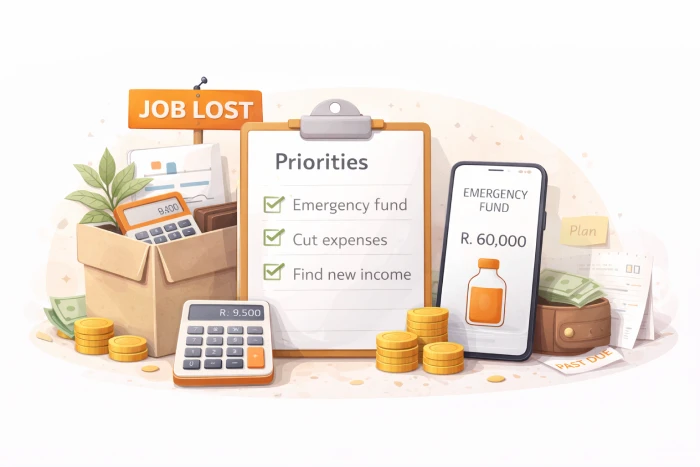
Build an Emergency Fund First
Before focusing on investments or aggressive loan repayment, building an emergency fund is essential.
An emergency fund protects individuals from unexpected financial shocks such as job loss, medical emergencies, or sudden expenses.
Financial planners typically recommend maintaining savings equal to three to six months of living expenses.
Emergency funds should be kept in liquid and low-risk instruments such as:
Savings accounts
Liquid mutual funds
Short-term deposits
This financial cushion ensures that loan EMIs and essential expenses can still be managed during difficult situations.
Prioritize High-Interest Debt
Not all loans carry the same financial burden.
High-interest loans such as credit card debt or personal loans can significantly increase financial pressure if not managed carefully.
When balancing loans and investments, consider prioritizing repayment of high-interest debt first.
Reasons include:
Interest costs accumulate quickly
Debt can grow rapidly if payments are delayed
Financial stress increases over time
Reducing high-interest liabilities early frees up income that can later be invested for wealth creation.
Continue Long-Term Investments
While aggressive loan repayment may be necessary in some cases, completely stopping investments can reduce long-term financial growth.
Long-term investments benefit from compounding, which requires time in the market.
Examples of long-term investments include:
Equity mutual funds
Retirement plans such as NPS
Public Provident Fund (PPF)
Systematic Investment Plans (SIPs)
Even small monthly investments can grow significantly over time.
At Saarathi.ai, we have observed that individuals who continue disciplined investing while managing loans often build stronger financial portfolios.
Maintain a Healthy EMI-to-Income Ratio
A key factor in balancing loans and investments is maintaining a healthy EMI-to-income ratio.
Financial experts often recommend keeping total EMIs below 35 to 40 percent of monthly income.
This ensures that sufficient income remains available for:
Investments
Emergency savings
Daily expenses
Insurance coverage
If EMIs exceed this range, individuals may struggle to invest or manage unexpected costs.
Borrowers can use AI-powered tools to ask eligibility questions via Saarathi AI expert and estimate suitable loan amounts before applying.
Use Tax Benefits to Your Advantage
Certain loans and investments provide tax benefits that can improve overall financial efficiency.
Examples include:
Home loans
Home loan borrowers may receive deductions on principal repayment under Section 80C and interest payments under Section 24 of the Income Tax Act.
Tax-saving investments
Investments such as ELSS, PPF, and NPS provide deductions under Section 80C and Section 80CCD.
Using both tax-saving investments and eligible loan deductions can reduce taxable income while supporting long-term financial planning.
Consider Loan Prepayment Strategically
Loan prepayment can reduce interest costs and shorten loan tenure.
However, investors should consider opportunity costs before using surplus funds for early repayment.
Key questions to evaluate include:
Does the loan have prepayment penalties?
Are investment returns expected to exceed loan interest rates?
Will prepayment reduce financial flexibility?
For example, if a home loan interest rate is relatively low, investing surplus funds may generate better long-term returns.
However, for high-interest loans, prepayment may provide immediate financial relief.
Role of Digital Platforms in Financial Decision Making
Digital financial marketplaces are helping Indians manage loans and investments more efficiently.
Technology-driven platforms offer transparent comparisons, AI recommendations, and faster approvals.
Saarathi.ai connects borrowers with more than 110 banks and NBFCs across India, enabling them to compare loan options quickly.
Users can track your application in Saarathi Bazaar while reviewing loan offers, documentation progress, and approval status in a single dashboard.
The Saarathi Recommendation Engine also helps match borrowers with lenders based on financial profiles, improving approval chances and simplifying the borrowing journey.
Paperless documentation and AI assistance reduce delays and improve transparency in the loan process.
Practical Example of Balancing Loans and Investments
Consider a professional earning Rs. 1 lakh per month with the following financial structure:
Monthly income: Rs. 1,00,000
Home loan EMI: Rs. 30,000
Monthly expenses: Rs. 40,000
Remaining amount: Rs. 30,000
This amount could be allocated strategically:
Rs. 10,000 for SIP investments
Rs. 10,000 for emergency fund contributions
Rs. 10,000 for additional loan repayment
This balanced approach supports wealth creation while gradually reducing debt.
Frequently Asked Questions
Should I invest or repay loans first?
The answer depends on interest rates. High-interest loans should typically be repaid first, while low-interest loans can be managed alongside investments.
Is it safe to invest while paying a home loan?
Yes. Many financial planners recommend continuing long-term investments while paying home loan EMIs because home loans usually have relatively lower interest rates.
What is a healthy EMI-to-income ratio?
Financial experts generally recommend keeping EMIs below 35 to 40 percent of monthly income to maintain financial flexibility.
Can investments help manage loan payments?
Yes. Passive income from investments such as dividends or rental income can help support loan EMI payments.
How can digital platforms help borrowers choose the right loan?
Digital platforms provide lender comparisons, eligibility checks, and transparent application tracking, helping borrowers make informed decisions.
Conclusion
Balancing loans and investments is an essential part of modern financial planning. Loans enable individuals to achieve major life goals, while investments help build long-term wealth and financial security.
By managing EMIs responsibly, prioritizing high-interest debt, maintaining emergency savings, and continuing disciplined investments, individuals can create a stable financial future.
Using tax benefits and strategic loan prepayments can further improve financial outcomes.
At Saarathi.ai, we believe smarter financial decisions begin with better information and transparent tools. Whether you are managing loans, planning investments, or exploring new financial opportunities, digital platforms can simplify the journey.
Discover personalized loan options, compare lenders, and build a smarter financial future with Saarathi.ai today.