How to Avoid Falling Into a Debt Trap?
|
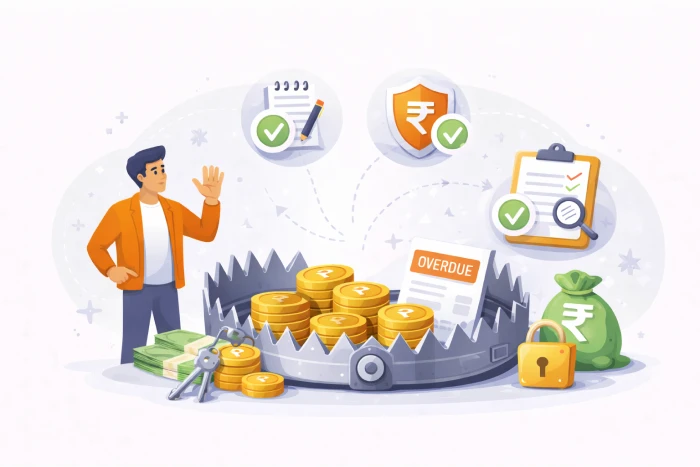
A debt trap happens when your loan repayments become so overwhelming that you borrow more money just to repay existing EMIs. Over time, interest piles up, financial stress increases, and your credit score suffers. In India’s fast-growing digital lending environment, easy access to credit is a blessing, but only when used responsibly.
So, how do you avoid falling into a debt trap? The answer lies in disciplined borrowing, smart EMI planning, understanding loan terms, and using technology to compare options before committing. At Saarathi.ai, we have observed that borrowers who evaluate affordability before applying are far less likely to struggle with repayments. This guide will help you identify warning signs and build a safe borrowing strategy in 2026.
What Is a Debt Trap?
A debt trap occurs when:
You take new loans to repay old ones
EMIs consume a large portion of income
Interest accumulates faster than principal repayment
You rely on credit cards for daily expenses
This cycle can escalate quickly if not managed carefully.
According to financial stability insights published by the Reserve Bank of India, rising household leverage needs disciplined borrowing behavior to avoid systemic stress.
Early Warning Signs of a Debt Trap
Recognizing red flags early can save you from long-term damage.
1. EMI Burden Above 50 Percent of Income
If more than half your monthly income goes toward EMIs, your financial flexibility reduces sharply.
Ideal debt-to-income ratio:
Below 35 to 40 percent is considered healthy.
2. Minimum Credit Card Payments Only
Paying only the minimum due increases interest dramatically.
3. Multiple Personal Loans
Unsecured loans often carry high interest rates between 12 to 20 percent.
4. Using One Loan to Repay Another
This is a classic sign of debt stress.
At Saarathi.ai, we have observed that borrowers juggling 3 to 4 unsecured loans face repayment strain within months.
Why Do People Fall Into Debt Traps?
1. Easy Digital Credit Access
Instant approvals without affordability checks can encourage over-borrowing.
2. Lack of Financial Planning
Many borrowers calculate EMI but ignore total interest cost.
3. Lifestyle Inflation
Upgrading lifestyle based on expected future income increases risk.
4. Emergency Without Backup
Medical or job emergencies force high-interest borrowing.
Financial coverage in The Economic Times often highlights how poor budgeting contributes to household debt stress.
Smart Ways to Avoid a Debt Trap
1. Follow the 40 Percent EMI Rule
Keep total EMIs under 40 percent of monthly net income.
Example:
Monthly income: Rs 80,000
Safe EMI limit: Rs 32,000
Before applying, use AI-based eligibility tools like ask eligibility questions via Saarathi AI to assess affordability instantly.
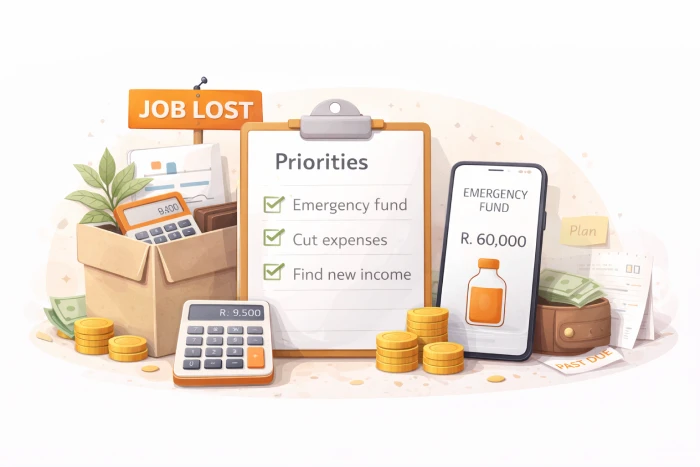
2. Build an Emergency Fund
Maintain at least 6 months of expenses in savings.
This reduces dependence on high-interest loans during crises.
3. Compare Before You Borrow
Interest rates, processing fees, and foreclosure charges vary widely.
Instead of applying randomly, compare personal loan offers on Saarathi.ai to evaluate transparent lender terms.
4. Choose Tenure Wisely
Long tenure lowers EMI but increases total interest.
Short tenure increases EMI but reduces interest burden.
Balance EMI comfort with long-term savings.
5. Avoid Multiple Unsecured Loans
If you already have one personal loan, avoid stacking another unless income has increased significantly.
Reports by CRISIL suggest unsecured retail credit growth needs careful risk management at borrower level.
Debt Trap Example: How It Happens
Let us consider a scenario:
Personal Loan 1: Rs 5 lakh at 15 percent
Credit Card Outstanding: Rs 1.5 lakh at 36 percent annualized
Unable to manage EMIs, the borrower takes another personal loan to close the card. Now:
Higher total debt
Extended tenure
Additional processing fees
This cycle can continue if income does not improve.
What To Do If You Are Already in a Debt Trap?
If you are struggling, act immediately.
Step 1: List All Debts
Write down:
Outstanding amount
Interest rate
EMI
Tenure remaining
Step 2: Prioritize High-Interest Loans
Pay off highest interest loans first.
Step 3: Consider Balance Transfer
If eligible, shift high-interest loans to lower rates.
Step 4: Avoid New Credit
Pause discretionary spending.
Step 5: Negotiate with Lender
Request restructuring if needed.
The Reserve Bank of India has frameworks for loan restructuring in genuine hardship cases.
At Saarathi.ai, we guide borrowers through refinancing and structured repayment options transparently via tracking your application in Saarathi Bazaar.
Secured vs Unsecured: Which Is Safer?
Secured loans offer lower interest but carry asset risk.
Unsecured loans are faster but expensive.
If you need large funding and have stable income, secured options like loan against property may reduce overall interest burden.
However, never pledge assets unless repayment capacity is strong.
Psychological Aspects of Debt
Debt stress affects:
Sleep quality
Work productivity
Family relationships
Financial peace comes from planning, not borrowing impulsively.
Avoid comparing lifestyle with peers. Focus on sustainable growth.
Budgeting Formula to Stay Safe
Use this simple framework:
50 percent income: Essentials
30 percent income: Lifestyle
20 percent income: Savings and investments
EMIs should ideally fit within the essentials category.
If EMIs exceed this, re-evaluate your commitments.
Technology Can Help Prevent Debt Traps
Digital tools reduce guesswork.
On Saarathi.ai, you get:
AI-powered affordability checks
Transparent lender comparisons
Clear breakdown of EMI and total interest
Paperless application tracking
Smart alerts via Saarathi Bazaar dashboard
At Saarathi.ai, we believe responsible borrowing begins with clarity and comparison.
Common Myths About Debt
Myth 1: More loans improve credit score
Only disciplined repayment improves score.
Myth 2: Minimum payment is enough
It prolongs debt and increases interest.
Myth 3: Salary increase will fix everything
Without budgeting, expenses rise too.
Myth 4: Debt is normal in modern life
Planned debt is fine. Uncontrolled debt is risky.
Practical Checklist Before Taking Any Loan
Ask yourself:
Do I really need this loan?
Can I repay comfortably if income drops temporarily?
Have I compared at least three lenders?
Do I understand total interest payable?
Is my emergency fund intact?
If any answer is uncertain, pause and reassess.
FAQs
1. What is the biggest cause of debt traps?
Over-borrowing without income planning is the main cause.
2. Is debt consolidation helpful?
Yes, if it reduces overall interest and simplifies repayment.
3. How much EMI is safe?
Ideally below 35 to 40 percent of monthly income.
4. Does missing one EMI create a debt trap?
One delay may not, but repeated defaults worsen the situation.
5. Can AI tools help prevent debt stress?
Yes, affordability calculators and transparent comparisons reduce risk of over-borrowing.
Conclusion
Avoiding a debt trap is about discipline, awareness, and smart decisions.
Key takeaways:
Keep EMIs below 40 percent of income.
Maintain an emergency fund.
Avoid stacking unsecured loans.
Compare interest rates and total cost carefully.
Act early if repayment stress begins.
Debt can be a powerful financial tool when managed wisely. If you are planning a loan, explore personalized, AI-driven recommendations on Saarathi.ai today. Compare transparently, borrow responsibly, and build a stronger financial future in 2026.