How RBI is Regulating Fintech Companies in India?
|
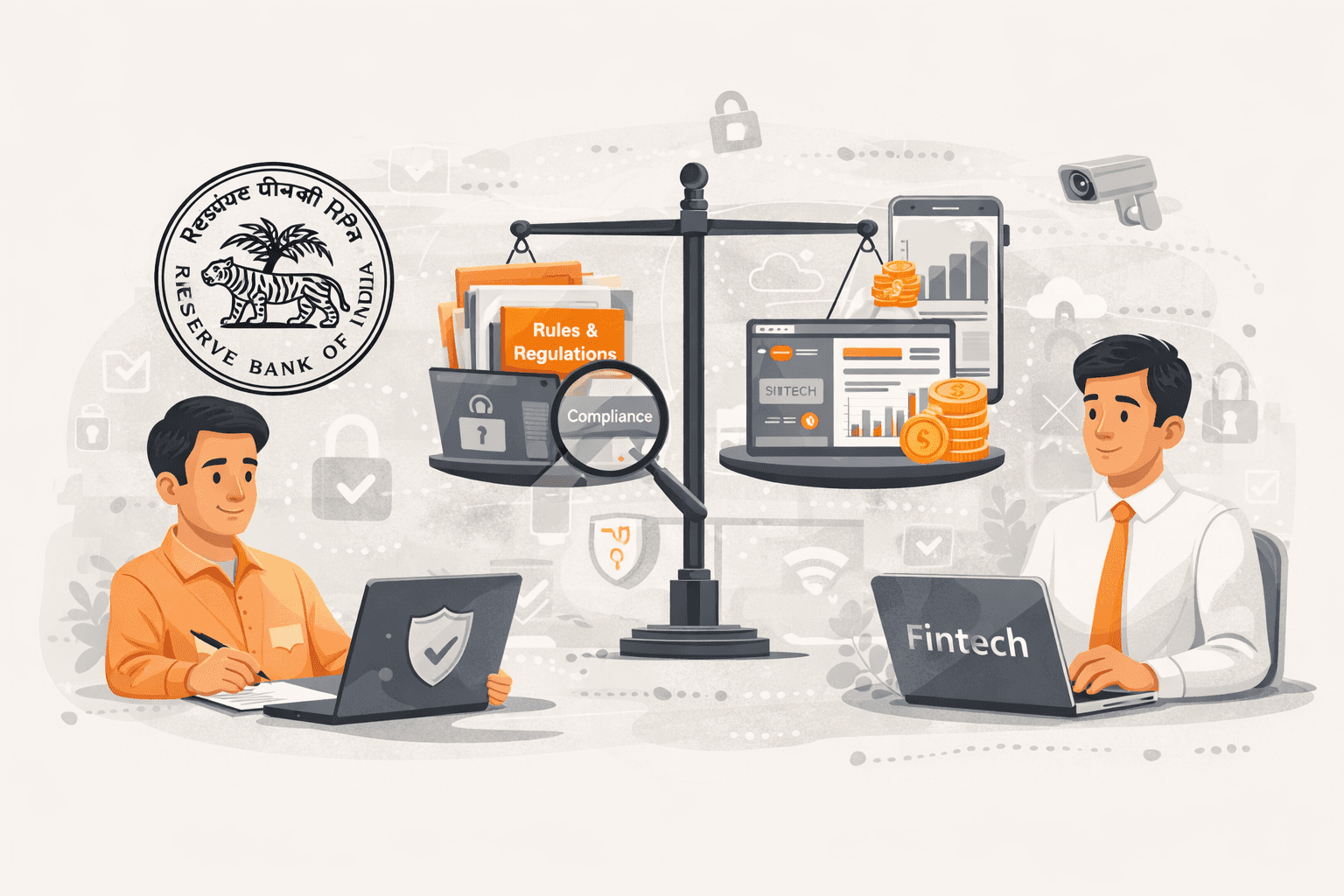
Fintech companies have transformed how Indians borrow, invest, and manage money. From instant loans to AI-driven approvals, fintech has made financial services faster and more accessible. However, rapid growth also raised concerns around data privacy, transparency, and unregulated practices. To address these issues, the Reserve Bank of India has introduced a structured regulatory framework for fintech companies. In 2026, these regulations aim to balance innovation with consumer protection. In this guide, we explain how RBI regulates fintech companies and what it means for borrowers.
What Are Fintech Companies?
Fintech companies use technology to provide financial services.
Common Services:
Digital lending
Payment solutions
Investment platforms
Credit scoring
They often partner with banks and NBFCs to deliver these services.
Why RBI Is Regulating Fintech Companies
The rapid expansion of fintech created new risks.
Key Concerns:
Unauthorized lending apps
Misuse of customer data
Hidden charges and lack of transparency
Aggressive recovery practices
To ensure a safe ecosystem, RBI introduced stricter oversight.
Key RBI Regulations for Fintech in 2026
Mandatory Partnership with Regulated Entities
Fintech companies cannot lend independently.
Requirement:
Must partner with RBI-regulated banks or NBFCs
Impact:
Ensures accountability
Protects borrowers
Digital Lending Guidelines
RBI has defined rules for digital loan processes.
Key Points:
Direct disbursal to borrower’s bank account
Transparent disclosure of charges
No hidden fees
Data Privacy and Consent Framework
Customer data protection is a top priority.
Rules:
Explicit user consent required
Limited data access
No unauthorized sharing
Key Fact Statement (KFS) Requirement
Fintech platforms must provide clear loan details.
Includes:
Interest rate
Total cost
EMI structure
This improves transparency.
Grievance Redressal Mechanism
Fintech companies must offer proper complaint handling.
Includes:
Customer support
Escalation channels
Ban on Unauthorized Lending Apps
RBI is actively identifying and restricting illegal apps.
Benefit:
Reduces fraud
Improves trust in digital lending
Impact of RBI Regulations on Borrowers
Safer Borrowing Environment
Reduced risk of fraud and misuse.
Better Transparency
Clear understanding of loan costs and terms.
Improved Data Security
Stronger protection of personal information.
Reduced Misleading Offers
No hidden charges or unclear conditions.
At Saarathi.ai, we have observed that these regulations have increased borrower confidence in digital platforms.
Impact on Fintech Companies
Increased Compliance Requirements
Fintechs must follow strict guidelines.
Focus on Responsible Lending
Better risk assessment and transparency.
Collaboration with Banks and NBFCs
Partnerships are now essential.
Improved Credibility
Regulated fintechs gain more trust.
Role of Technology in Compliance
Fintech companies use technology to meet regulatory standards.
Includes:
AI-based risk assessment
Automated compliance checks
Secure data management systems
How Saarathi.ai Aligns with RBI Regulations
Saarathi.ai operates within a fully compliant and transparent framework.
Verified Lender Network
Access 110 plus RBI-compliant banks and NBFCs.
Transparent Comparison
Compare personal loan offers on Saarathi.ai with full cost visibility.
AI-Based Eligibility Check
Ask eligibility questions via Saarathi AI expert before applying.
Saarathi Bazaar Dashboard
Track your application in Saarathi Bazaar securely.
Paperless and Secure Process
End-to-end digital journey with data protection.
At Saarathi.ai, we have observed that compliance-driven platforms deliver better user experience and trust.
Challenges in Fintech Regulation
Balancing Innovation and Control
Too much regulation may slow innovation.
Keeping Up with Technology
Rapid changes require continuous updates.
Managing Data Privacy Risks
Ensuring secure handling of large data volumes.
Future of Fintech Regulation in India
RBI is expected to continue refining its approach.
Key Trends:
More AI governance
Stronger data protection laws
Increased collaboration with fintech
India’s fintech ecosystem will become more robust and secure.
Real-Life Scenario
Consider Arjun, a salaried professional in India.
Situation:
Needed a quick loan
Approach:
Used Saarathi.ai
Outcome:
Accessed RBI-compliant lenders
Received transparent loan offers
Avoided unregulated apps
This highlights the importance of choosing trusted platforms.
FAQs
Are fintech companies regulated by RBI?
Yes, especially when they partner with banks or NBFCs.
Can fintech companies lend directly?
No, they must work with regulated entities.
How does RBI protect borrowers?
Through transparency rules, data protection, and strict guidelines.
Are all loan apps safe?
No, only those linked to RBI-regulated lenders.
What is a Key Fact Statement?
A document showing loan cost and terms clearly.
How can I borrow safely online?
Use trusted platforms and verify lender credentials.
Conclusion
RBI’s regulation of fintech companies in 2026 is a major step toward creating a safer, more transparent, and reliable digital lending ecosystem. By enforcing strict guidelines on data privacy, transparency, and lending practices, RBI ensures that borrowers are protected while allowing innovation to continue.
Saarathi.ai aligns with these regulations by offering verified lenders, transparent comparisons, and AI-driven insights. Discover personalized loan options on Saarathi.ai today and experience safe, compliant, and smarter borrowing.