How much emergency fund do you really need?
|
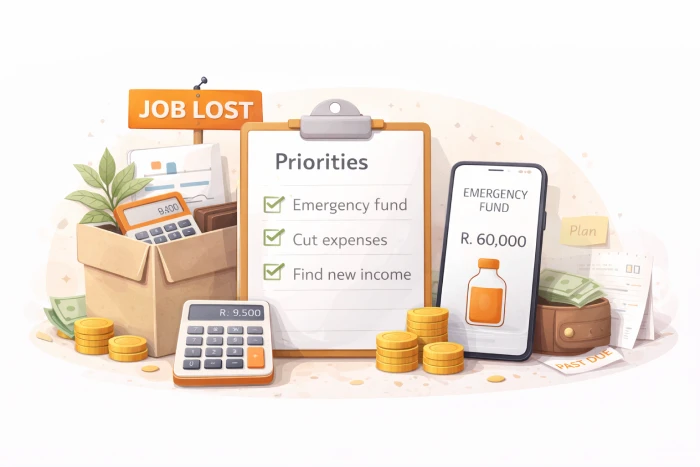
Medical emergencies. Job loss. Business slowdown. Sudden travel. Life rarely sends a calendar invite before expenses arrive. That is why building an emergency fund is one of the most important financial decisions you can make in 2026.
But how much emergency fund do you really need? Is 3 months enough? Should it be 6 months? Or more?
At Saarathi.ai, we have observed that borrowers with a strong emergency fund rarely default on EMIs and often qualify for better loan terms. An emergency cushion protects your credit score, reduces stress, and prevents high-interest borrowing. This guide will help you calculate the right emergency fund amount based on your income, EMIs, and lifestyle.
What Is an Emergency Fund?
An emergency fund is money set aside exclusively for unexpected financial shocks.
It is not for:
Vacations
Shopping
Upgrading gadgets
Planned expenses
It is strictly for:
Medical emergencies
Job loss
Business income disruption
Urgent home or vehicle repairs
Family emergencies
According to guidance shared by the Reserve Bank of India in financial literacy materials, maintaining a financial buffer is essential to avoid debt traps during economic uncertainty.
The Standard Rule: 3 to 6 Months of Expenses
Most financial experts suggest:
Minimum 3 months of essential expenses
Ideally 6 months of essential expenses
However, in India 2026, rising EMIs and cost of living mean your emergency fund calculation must include more than just rent and groceries.
Step 1: Calculate Your Essential Monthly Expenses
Include only survival expenses:
Rent or home loan EMI
Groceries
Utilities
Insurance premiums
School fees
Existing loan EMIs
Basic transport
Example:
Rent: Rs 20,000
EMIs: Rs 15,000
Groceries: Rs 8,000
Utilities: Rs 4,000
Insurance: Rs 3,000
Transport: Rs 5,000
Total Essentials: Rs 55,000
This is your base monthly number.
Step 2: Multiply by Your Risk Category
Salaried Employee in Stable Job
Target: 3-6 months
Rs 55,000 x 6 = Rs 3,30,000
Private Sector Employee in Volatile Industry
Target: 6 months minimum
Rs 55,000 x 6 = Rs 3,30,000
Freelancer or Business Owner
Target: 6-12 months
Rs 55,000 x 9 = Rs 4,95,000
At Saarathi.ai, we have observed that self-employed borrowers benefit from a larger cushion due to income variability.
Why EMIs Increase Your Required Emergency Fund
Many people forget to include EMIs in emergency planning.
Lenders calculate FOIR, meaning Fixed Obligation to Income Ratio. Ideally EMIs should remain below 40-50 percent of income. But during job loss, even 30 percent EMI becomes stressful.
If your EMIs are high:
Increase emergency fund target
Consider refinancing to lower monthly burden
You can compare personal loan offers on Saarathi.ai to reduce interest rates and manage EMIs better.
The Hidden Risks of Not Having an Emergency Fund
Without a buffer:
Credit cards become fallback
Personal loans are taken in panic
High interest compounds quickly
Credit score gets damaged
According to CRISIL research on retail credit trends, unsecured borrowing increases sharply during financial stress periods.
An emergency fund prevents emotional borrowing decisions.
Should You Build an Emergency Fund Before Investing?
Yes.
Priority order:
Basic emergency fund of 3 months
Health and term insurance
Additional emergency fund to 6 months
Long-term investments like SIPs
If you invest aggressively without a cushion, you may withdraw investments during market downturns, locking in losses.
Where Should You Keep Your Emergency Fund?
The fund must be:
Liquid
Low risk
Easily accessible
Options:
High interest savings account
Liquid mutual fund
Short-term fixed deposit
Avoid:
Equity investments
Long lock-in instruments
Real estate
The goal is safety, not high returns.
How to Build Emergency Fund Faster
1. Automate Monthly Transfers
Transfer fixed amount on salary day.
2. Use Windfalls Wisely
Bonuses, tax refunds, or side income can accelerate your goal.
3. Reduce Lifestyle Inflation
Avoid upgrading expenses until the emergency fund target is complete.
4. Track Real Disposable Income
Disposable Income = Net Income - Fixed Costs - Essentials - Annual Adjusted Expenses
If surplus exists, allocate the majority to the emergency fund first.
You can track active loans and obligations in Saarathi Bazaar to get a clear view of monthly commitments.
What If You Already Have Loans?
If you are paying EMIs:
Build at least 3 months fund immediately
Then continue EMIs regularly
Avoid prepayment until emergency fund is secure
At Saarathi.ai, we advise borrowers to maintain liquidity before aggressively closing loans, unless interest rates are extremely high.
You can ask eligibility questions via Saarathi AI before restructuring loans to ensure decisions align with your cash flow.
Real-Life Example
Net Monthly Income: Rs 90,000
Essential Expenses
Rent: Rs 22,000
Personal Loan EMI: Rs 18,000
Groceries: Rs 9,000
Utilities: Rs 4,000
Insurance: Rs 3,000
Transport: Rs 6,000
Total: Rs 62,000
Target Emergency Fund:
6 months x Rs 62,000 = Rs 3,72,000
If self-employed, consider 9 months:
Rs 62,000 x 9 = Rs 5,58,000
This number protects financial stability during income disruption.
When Can You Reduce Emergency Fund?
You may reduce target if:
You have dual household income
Your job is government or highly stable
EMIs are very low
You have strong family support
But never go below 3 months.
When Should You Increase It?
Increase to 9-12 months if:
You are self-employed
Industry is unstable
EMIs exceed 40 percent
You have dependents
You are planning a career break
How Emergency Fund Improves Loan Eligibility
Lenders indirectly assess financial stability.
If you:
Maintain strong savings
Avoid EMI delays
Keep credit utilization low
Your credit score improves.
At Saarathi.ai, our AI Recommendation Engine matches you with lenders suited to your financial profile, increasing approval chances.
A stable financial cushion also gives you confidence to choose appropriate EMI amounts.
Common Mistakes to Avoid
Counting investments as emergency fund
Using fund for non-emergency expenses
Ignoring inflation
Keeping entire fund in one illiquid instrument
Stopping savings after reaching minimum target
FAQs
1. Is 3 months emergency fund enough?
For stable salaried employees, yes as a minimum. Ideally aim for 6 months.
2. Should I include EMIs in emergency fund calculation?
Yes. EMIs are mandatory obligations and must be included.
3. Can I use credit cards instead of an emergency fund?
Not advisable. Credit card interest is very high and increases debt quickly.
4. How long does it take to build an emergency fund?
Depends on savings rate. If you save 20 percent monthly, it may take 12-18 months.
5. Should I pause SIP to build an emergency fund?
Yes, if you do not have at least 3 months of cushion yet.
6. Does an emergency fund help in loan approval?
Indirectly yes. It prevents missed EMIs and protects credit score.
Conclusion
An emergency fund is not optional in 2026. It is financial survival insurance.
Key Takeaways:
Minimum 3 months expenses
Ideal 6 months or more
Include EMIs in calculation
Keep funds liquid and low risk
Build before aggressive investing
Increase target if income is irregular
Financial stability begins with preparedness. Once your emergency fund is secure, you can plan loans and investments confidently. Discover personalized loan options on Saarathi.ai today. Compare lenders, track your application in Saarathi Bazaar, and get AI-powered expert guidance in a fast, transparent, paperless journey.