How Middle East Conflicts Affect Gold Loans and Inflation?
|
Geopolitical conflicts in the Middle East often trigger immediate reactions in global oil and gold markets. For India, which imports a large share of crude oil and has a deep cultural affinity for gold, such conflicts can influence inflation, gold prices, and loan dynamics. This raises an important question: how do Middle East tensions affect Indian gold loans and overall inflation in 2026? The answer lies in the oil inflation link, safe haven demand for gold, and the Reserve Bank of India’s policy response. In this article, we break down the economic chain reaction and what it means for borrowers.
Why the Middle East Matters to India
The Middle East plays a critical role in:
Global crude oil supply
Energy shipping routes
Gold trading flows
India imports more than 80 percent of its crude oil requirements. When conflicts disrupt supply or create uncertainty:
Oil prices rise
Shipping costs increase
Commodity markets turn volatile
At the same time, investors move money into gold as a safe haven asset, pushing gold prices higher.
Oil Price Shock and Inflation
When crude oil prices surge due to geopolitical tensions:
Petrol and diesel prices increase
Transportation costs rise
Food inflation accelerates
Manufacturing input costs increase
This feeds into headline inflation.
The Reserve Bank of India monitors fuel driven inflation closely. If inflation crosses the 2 to 6 percent comfort band for a sustained period, monetary tightening becomes likely.
Higher repo rates eventually affect loan EMIs across home loans and business loans.
Why Gold Prices Rise During Conflict
Gold is considered a safe haven during uncertainty.
During Middle East conflicts:
Investors shift from equities to gold
Central banks may increase gold reserves
Currency volatility increases demand for gold
Higher global gold prices usually translate into higher domestic gold prices in India, especially if the rupee weakens simultaneously.
Impact on Indian Gold Loans
Gold loans are secured loans backed by gold ornaments or coins.
When gold prices rise:
1. Higher Loan Eligibility
Loan amount is linked to gold value.
If gold price increases:
Borrowers can access higher loan amounts
Loan to value ratio improves
This can benefit short term liquidity needs.
You can compare gold backed personal loan options on Saarathi.ai and evaluate competitive interest rates from multiple lenders.
2. Lower Default Risk for Lenders
Rising gold prices improve collateral value, reducing lender risk.
This may:
Keep gold loan interest rates relatively stable
Encourage faster approvals
However, if inflation rises sharply, overall funding costs for lenders may increase.
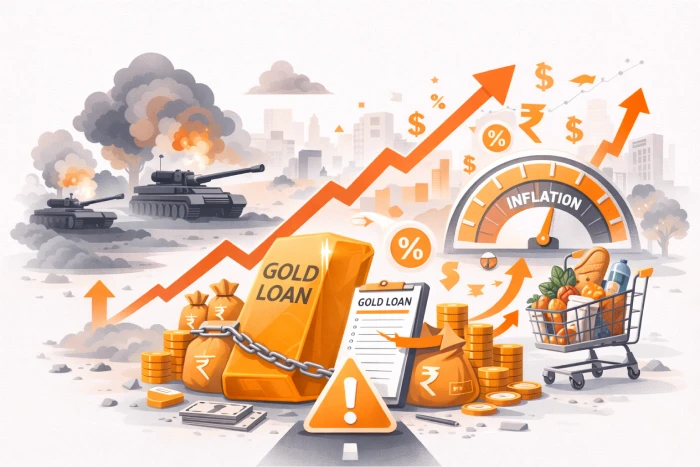
The Double Impact: Gold Up, EMIs Up
There is a paradox.
On one side:
Gold prices rise
Gold loan eligibility improves
On the other side:
Oil prices rise
Inflation increases
The Reserve Bank of India may hike repo rates
Floating EMIs on home loans increase
So while gold borrowers may benefit from higher collateral value, other loan borrowers may face higher EMIs.
Currency Depreciation Effect
Middle East conflicts can:
Increase global oil prices
Widen India’s current account deficit
Put pressure on the rupee
If the rupee weakens:
Gold becomes even more expensive in India
Imported inflation intensifies
The Reserve Bank of India may intervene in forex markets to smooth volatility.
Impact on Other Loan Types
Home Loans
If inflation remains elevated:
Repo rate hikes may follow
Floating home loan EMIs increase
You can compare home loan offers on Saarathi.ai to check lender spreads and refinancing options.
Business Loans
MSMEs dependent on fuel and logistics may face:
Higher operating costs
Working capital pressure
Increased borrowing needs
You can compare business loan offers on Saarathi.ai to find structured funding aligned with your cash flow.
Should You Take a Gold Loan During Geopolitical Conflict?
Gold loans are useful when:
Short term liquidity is required
Gold prices are high
You want quick approval
However:
Monitor interest rates carefully
Avoid long tenure gold loans
Use them for short term needs only
Gold price volatility can reverse if tensions ease.
Practical Borrower Strategy
Monitor crude oil trends
Track gold price movement
Maintain EMI to income ratio below 40 percent
Build emergency savings of 6 months
Avoid over leveraging during volatile cycles
Before applying, you can ask eligibility questions via Saarathi AI expert to understand suitable loan options.
You can also track your application in Saarathi Bazaar for complete transparency.
FAQs
Why does gold price rise during Middle East conflicts?
Investors treat gold as a safe haven during geopolitical uncertainty.
Can gold loans become cheaper during conflict?
Interest rates may remain stable if collateral value increases, but funding cost pressure can influence pricing.
Will home loan EMIs rise?
If oil driven inflation triggers repo hikes, floating EMIs may increase.
Is it good to pledge gold when prices are high?
Higher prices increase the eligible loan amount, but repayment discipline is essential.
Does the RBI control gold prices?
No. Gold prices are market driven, influenced by global demand and currency movement.
Conclusion
Geopolitical conflicts in the Middle East create a dual impact for Indian borrowers. Rising oil prices increase inflation risk and potential EMI pressure, while rising gold prices enhance collateral value for gold loans.
Understanding this balance helps you make informed borrowing decisions.
Discover personalized loan options on Saarathi.ai today and stay financially prepared, even during global geopolitical uncertainty.