GST Reforms: What Businesses Still Struggle With
|
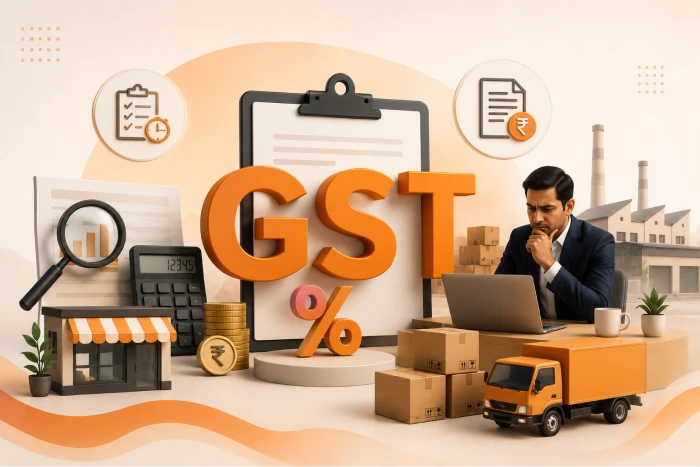
The Goods and Services Tax, or GST, was introduced to simplify India’s indirect tax system and create a unified national market. While it has improved transparency and streamlined taxation, businesses in 2026 still face several practical challenges in compliance, cash flow, and operations. Frequent updates, complex filings, and working capital pressure continue to impact especially MSMEs. Understanding these issues is crucial for better financial planning and smoother business operations. At Saarathi.ai, we have observed that GST-related cash flow challenges often increase demand for business loans. In this guide, we explore what businesses still struggle with despite GST reforms.
What GST Aims to Achieve?
GST was designed to:
Simplify tax structure
Eliminate cascading taxes
Improve transparency
Boost ease of doing business
It replaced:
Multiple indirect taxes
Key GST Reforms So Far
Digital Filing System
Online return filing
E-invoicing introduced
Input Tax Credit (ITC)
Businesses can claim tax credit
Rate Rationalization
Efforts to simplify tax slabs
Compliance Simplification
Reduced number of returns
Despite these improvements, challenges remain.
Major Challenges Businesses Still Face
Complex Compliance Requirements
Businesses must:
File multiple returns
Maintain detailed records
Problem:
Time-consuming and confusing
Frequent Rule Changes
GST rules:
Change often
Impact:
Difficulty in staying updated
Input Tax Credit Issues
Challenges include:
Delays in ITC claims
Mismatches in invoices
Result:
Working capital blockage
Cash Flow Pressure
Businesses must:
Pay GST before receiving payments
Impact:
Strain on liquidity
At Saarathi.ai, we have observed increased working capital loan demand due to this issue.
Technical Glitches
GST portal issues:
Filing delays
System errors
Affect:
Compliance timelines
Classification and Rate Confusion
Different tax rates for similar products:
Cause confusion
Risk:
Wrong tax filing
Impact on MSMEs
Higher Compliance Burden
Small businesses struggle with:
Documentation
Filing requirements
Working Capital Challenges
Delayed payments and ITC issues:
Increase financial stress
Need for Professional Support
Many MSMEs require:
Tax consultants
Impact on Businesses
Increased Operational Costs
Compliance requires:
Time and resources
Financial Planning Challenges
Cash flow management becomes:
More complex
Risk of Penalties
Errors can lead to:
Fines and penalties
Impact on Loans and Financing
Increased Demand for Working Capital Loans
Businesses need funds to:
Manage GST payments
Better Financial Discipline
GST records:
Improve transparency
Improved Credit Assessment
Digital records help lenders:
Evaluate businesses
You can compare personal loan offers on Saarathi.ai and explore business funding options.
Opportunities Created by GST
Formalization of Economy
More businesses:
Enter formal sector
Better Access to Credit
Transparent records:
Improve loan eligibility
Digital Transformation
Businesses adopt:
Technology and automation
How Businesses Can Overcome GST Challenges?
Maintain Proper Records
Keep invoices updated
Use Accounting Software
Automate compliance
Plan Cash Flow
Manage GST payments efficiently
Stay Updated
Follow rule changes
Seek Expert Advice
Consult professionals
You can ask eligibility questions via Saarathi AI experts for guidance.
How Saarathi.ai Supports Businesses Facing GST Challenges?
AI-Based Recommendation Engine
Matches businesses with suitable lenders.
Smart Eligibility Insights
Understand your funding capacity.
Saarathi Bazaar Dashboard
Track your application in Saarathi Bazaar and compare offers.
Paperless Process
Apply quickly and efficiently.
Real Insight from Saarathi.ai
At Saarathi.ai, we have observed that businesses maintaining clean GST records and managing cash flow effectively are more likely to secure loans and grow sustainably.
Impact of Economic Trends in 2026
Insights from CRISIL and Economic Times show:
Continued GST simplification efforts
Increased compliance adoption
Growth in MSME financing
This is improving the ecosystem gradually.
FAQs
What is GST?
It is a unified indirect tax system in India.
What are major GST challenges?
Compliance, ITC issues, and cash flow pressure.
Why do businesses face cash flow problems?
Due to upfront tax payments.
Does GST affect loans?
Yes, it influences credit assessment.
Can MSMEs manage GST easily?
With proper tools and support.
Can Saarathi.ai help businesses?
Yes, with AI-based funding solutions.
Conclusion
While GST has brought significant improvements to India’s tax system, challenges remain for businesses, especially in compliance and cash flow management. Understanding these issues and planning accordingly can help businesses operate more smoothly.
With the right strategies and financial support, businesses can turn GST challenges into growth opportunities.
Discover personalized loan options on Saarathi.ai today and manage your business finances smarter with faster, flexible, and transparent funding solutions.