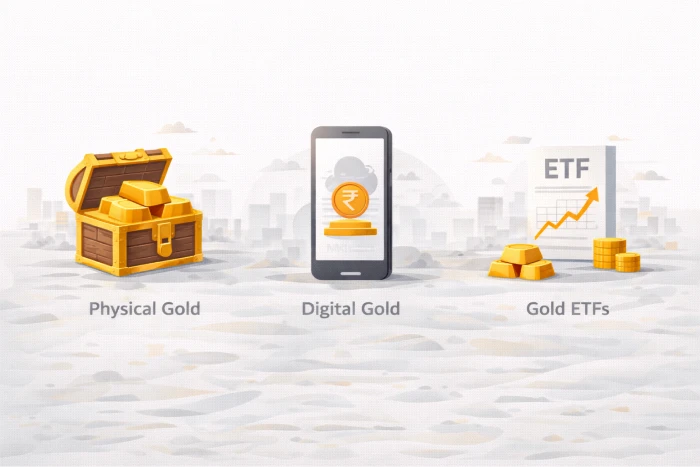
Gold Investment in India: Physical Gold vs Digital Gold vs Gold ETFs
|
Gold has always held a special place in Indian households. Beyond its cultural significance during weddings and festivals, gold is also widely considered a reliable investment asset. Many investors use gold to diversify their portfolios, hedge against inflation, and protect wealth during economic uncertainty.
However, investing in gold today is very different from the past. While physical gold remains popular, modern financial platforms have introduced digital gold and gold exchange traded funds as alternative investment options.
Each option offers different advantages in terms of safety, liquidity, storage, and returns. Choosing the right type of gold investment depends on your financial goals, risk tolerance, and convenience preferences.
At Saarathi.ai, we have observed that investors who understand the differences between various gold investment options are better positioned to diversify their portfolios effectively. This guide explains the key differences between physical gold, digital gold, and gold ETFs to help you make informed investment decisions.
Why Gold Remains a Popular Investment in India
Gold continues to be one of the most trusted investment assets in India for several reasons.
Key benefits of investing in gold include:
Protection against inflation
Portfolio diversification
Global demand and liquidity
Cultural acceptance and long-term value
Hedge against economic uncertainty
According to market insights frequently reported by Economic Times, gold prices often perform well during periods of financial instability or currency fluctuations.
Financial planners generally recommend allocating a small portion of the investment portfolio to gold for diversification.
Physical Gold Investment
Physical gold refers to buying gold in tangible forms such as jewelry, coins, or bars.
Common Forms of Physical Gold
Investors typically buy physical gold in the following forms:
Gold jewelry
Gold coins
Gold bars
Temple or traditional ornaments
Jewelry purchases remain the most common form of gold investment in India due to cultural and social traditions.
Advantages of Physical Gold
Physical gold offers several benefits.
Ownership of a tangible asset
Easy access for personal use
High emotional and cultural value
Widely accepted across markets
Many families also consider gold jewelry as a form of wealth preservation that can be passed across generations.
Limitations of Physical Gold
Despite its popularity, physical gold also has several drawbacks.
Making charges on jewelry purchases
Risk of theft or loss
Storage and security costs
Difficulty verifying purity in some cases
Additionally, resale values may be lower due to deductions in making charges.
Digital Gold Investment
Digital gold allows investors to buy gold online without physically storing it themselves.
In digital gold platforms, investors purchase gold that is stored securely in insured vaults by the service provider.
Investors can buy small quantities of gold online and track their holdings digitally.
Advantages of Digital Gold
Digital gold offers several benefits for modern investors.
Easy online purchase
Low minimum investment amounts
Secure storage in insured vaults
Ability to sell gold instantly through digital platforms
Digital gold allows investors to start with very small investments, making it accessible for beginners.
Limitations of Digital Gold
While convenient, digital gold also has certain limitations.
Limited regulatory oversight compared to other financial instruments
Platform dependency for transactions
Possible storage fees depending on the provider
Investors should choose reputable platforms when purchasing digital gold.
Gold Exchange Traded Funds (Gold ETFs)
Gold ETFs are financial instruments that track the price of gold and trade on stock exchanges.
Instead of buying physical gold, investors purchase units of a gold ETF through a trading account.
Each ETF unit represents a specific quantity of gold.
Advantages of Gold ETFs
Gold ETFs offer several benefits for investors.
High transparency
Regulated by financial authorities
No storage or security concerns
High liquidity through stock exchanges
Lower transaction costs compared to physical gold
Gold ETFs are widely used by investors who want exposure to gold without handling physical assets.
Limitations of Gold ETFs
Gold ETFs also have certain considerations.
Requires a Demat and trading account
Subject to market trading hours
Expense ratios charged by fund managers
Despite these factors, gold ETFs remain one of the most efficient ways to invest in gold.
Comparison Between Physical Gold, Digital Gold, and Gold ETFs
Understanding the key differences between these gold investment options helps investors choose the most suitable one.
Feature | Physical Gold | Digital Gold | Gold ETFs
Ownership | Physical asset | Digitally stored gold | Financial instrument
Storage | Personal storage | Stored in vaults | No storage needed
Liquidity | Moderate | High | Very high
Minimum Investment | High | Very low | Moderate
Regulation | Limited | Limited | Regulated by SEBI
Transaction Convenience | Offline | Online | Online through stock exchange
This comparison shows that each gold investment method serves different investor preferences.
Which Gold Investment Option Is Best?
The best gold investment option depends on your financial goals.
Physical gold is suitable for:
Cultural purchases such as weddings
Long-term family wealth preservation
Personal jewelry use
Digital gold is suitable for:
Small and flexible investments
Convenient online purchases
Short-term gold accumulation
Gold ETFs are suitable for:
Long-term portfolio diversification
Investors comfortable with stock markets
Lower cost and higher liquidity
Financial planners often recommend gold ETFs for investors seeking efficient and transparent gold exposure.
How Much Gold Should You Include in Your Portfolio?
While gold can play an important role in diversification, it should generally form only a portion of a balanced investment portfolio.
Many financial experts suggest allocating around 5 to 10 percent of total investments to gold.
Example diversified portfolio allocation:
Asset Type | Allocation Example
Equity Investments | 40 percent
Mutual Funds | 30 percent
Debt Instruments | 15 percent
Gold Investments | 10 percent
Cash and Savings | 5 percent
This approach helps balance growth potential with stability.
Balancing Gold Investments With Financial Planning
Investment decisions often interact with other financial priorities such as property purchases or business expansion.
For instance, individuals planning real estate investments often compare home loan offers on Saarathi.ai before allocating additional capital toward investment assets like gold.
Similarly, investors facing short-term liquidity needs may compare personal loan offers on Saarathi.ai rather than selling long-term investments prematurely.
Users can also ask eligibility questions via Saarathi AI expert to understand borrowing capacity and repayment structures.
Once loan applications are submitted, borrowers can track your application in Saarathi Bazaar to monitor lender offers and approval progress in real time.
This financial visibility helps individuals maintain balanced investment and borrowing strategies.
Frequently Asked Questions
Is gold a good investment in India?
Yes. Gold can provide portfolio diversification and protection against inflation and economic uncertainty.
What is the safest way to invest in gold?
Gold ETFs and sovereign gold bonds are considered among the safest regulated options for gold investment.
Can I invest in gold with small amounts?
Yes. Digital gold platforms allow investors to start with very small amounts.
Is digital gold better than physical gold?
Digital gold offers convenience and secure storage, while physical gold provides tangible ownership.
Are gold ETFs better than physical gold?
Gold ETFs offer higher liquidity, lower storage concerns, and better transparency compared to physical gold investments.
Conclusion
Gold continues to play a significant role in investment strategies across India. While traditional physical gold remains culturally important, modern investment options such as digital gold and gold ETFs provide greater convenience and flexibility.
Each gold investment option offers unique advantages. Physical gold provides tangible ownership, digital gold offers easy online access, and gold ETFs provide regulated and efficient market exposure.
At Saarathi.ai, we have observed that investors who diversify across multiple asset classes, including gold, equities, and fixed-income instruments, build stronger financial resilience over time.
Whether you are planning investments, purchasing property, or managing financial commitments, understanding financing options is equally important.
Discover personalized loan options on Saarathi.ai today and take the next step toward building a strong and financially secure future.