Can a Global Banking Crisis Like 2008 Happen Again And Are Indian NBFCs Safe?
|
The question many borrowers and investors are asking in 2026 is simple: can a global banking crisis like 2008 happen again, and are Indian NBFCs safe if it does? With rising global interest rates, geopolitical tensions, and periodic stress in international banking systems, concerns are natural. The 2008 financial crisis reshaped global finance, but India’s regulatory ecosystem has evolved significantly since then. In this article, we break down what triggered the last crisis, what has changed globally, how Indian NBFCs are regulated today, and what borrowers should do to stay financially prepared. If you are planning a home loan, personal loan, or business loan, this guide will help you make informed decisions in uncertain times.
What Happened in the 2008 Global Banking Crisis?
The 2008 financial crisis began in the United States housing market. Banks issued high-risk subprime mortgages to borrowers with weak credit profiles. These loans were bundled into complex financial products and sold globally.
When housing prices fell, borrowers defaulted. Financial institutions faced massive losses. The collapse of Lehman Brothers in September 2008 triggered panic across global markets. Credit froze. Major banks required government bailouts. Stock markets crashed.
Key triggers of the crisis:
Excessive risk-taking by banks
Poor credit underwriting standards
Weak regulatory oversight
Over-leveraging and opaque derivatives
Global interconnectedness of financial systems
According to reports from the Reserve Bank of India, Indian banks were relatively insulated because of conservative lending norms and limited exposure to toxic derivatives. However, India still felt the indirect impact through reduced exports, slower growth, and market volatility.
Can a Global Banking Crisis Happen Again?
Short answer: Yes, but the nature and impact may differ.
Financial systems are cyclical. Periods of rapid credit growth often lead to asset bubbles. When bubbles burst, stress emerges. However, regulatory frameworks today are much stronger than in 2008.
What Has Changed Since 2008?
Stronger capital requirements under Basel III norms
Better stress testing of banks
Stricter liquidity coverage ratios
Enhanced risk management practices
Improved transparency in financial disclosures
Global regulators conduct regular stress tests. Central banks monitor systemic risks more closely. Financial institutions must now hold higher capital buffers to absorb shocks.
Even during the COVID-19 pandemic, coordinated central bank action prevented a full-scale banking collapse. This shows resilience has improved.
That said, new risks exist:
Cybersecurity threats
Climate-related financial risks
Shadow banking stress
Global debt accumulation
So while another crisis is possible, the probability of a 2008-style uncontrolled collapse is lower due to stronger oversight.
Understanding NBFCs in India
Non-Banking Financial Companies, or NBFCs, play a critical role in India’s credit ecosystem. They provide loans to individuals and MSMEs that may not always qualify through traditional banks.
NBFCs offer:
Personal loans
Business loans
Loan against property
Vehicle loans
MSME financing
At Saarathi.ai, we have observed that NBFCs often provide faster approvals and flexible documentation compared to traditional banks. This makes them popular among salaried professionals, self-employed individuals, and small business owners.
But are they safe during global financial stress?
How Are Indian NBFCs Regulated?
Indian NBFCs are regulated by the Reserve Bank of India. Over the past decade, regulation has tightened significantly.
After the IL&FS crisis in 2018, the RBI introduced stricter norms for large NBFCs, including:
Higher capital adequacy requirements
Tighter asset-liability management norms
Liquidity coverage ratio mandates
Scale-based regulation framework
Under the scale-based regulation model introduced in 2022, larger NBFCs are subject to bank-like supervision.
According to analysis by CRISIL, capital buffers of major Indian NBFCs have improved steadily over recent years. Asset quality metrics have also strengthened after the pandemic recovery phase.
Additionally, RBI conducts:
Regular inspections
Stress testing
Exposure monitoring
Governance audits
This layered oversight significantly reduces systemic risk.
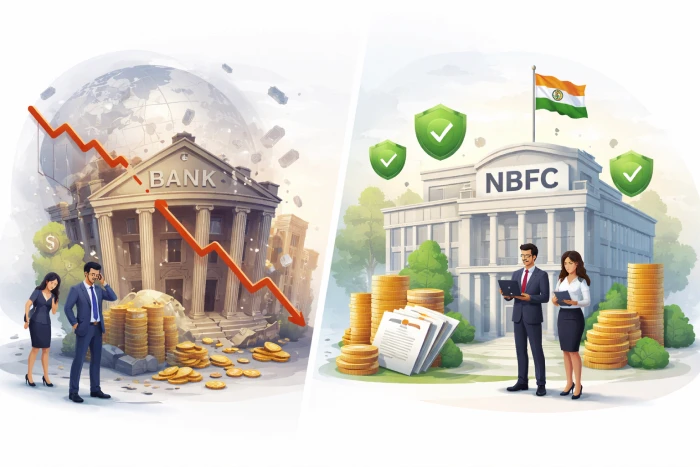
Key Differences Between 2008 Global Banks and Indian NBFCs Today
Let us compare structurally.
Risk Exposure
2008 US Banks:
High exposure to complex derivatives
Heavy reliance on short-term wholesale funding
Indian NBFCs:
Primarily domestic lending exposure
Regulated borrowing structures
Increased scrutiny after 2018 liquidity events
Capital Buffers
Post-2008 global reforms require strong capital ratios. Indian NBFCs, especially large ones, maintain improved Tier-1 capital positions.
Asset Quality
Indian lenders now use:
AI-driven credit scoring
Bureau data integration
GST-based cash flow assessments for MSMEs
At Saarathi.ai, our AI-based Recommendation Engine evaluates borrower profiles across 110+ lenders to reduce mismatch risk. This lowers default probability by improving product fit.
Are Indian NBFCs Safe If a Global Crisis Occurs?
The safety of NBFCs depends on three factors:
Liquidity access
Asset quality
Regulatory support
Liquidity Backstops
During stress events, the RBI has historically provided liquidity windows to stabilize markets. For example, special liquidity schemes were introduced during the pandemic to support NBFCs and housing finance companies.
Domestic Focus
Indian NBFCs are largely focused on domestic retail and MSME lending rather than exotic global derivatives. This reduces contagion risk from foreign financial markets.
Improved Governance
Post-IL&FS reforms strengthened board oversight and risk frameworks.
While smaller NBFCs with weak capital may face pressure during extreme stress, systemically important NBFCs are better capitalized and monitored.
As reported in the Economic Times, credit growth in retail and MSME segments remains healthy in 2026, supported by improved underwriting standards.
What Borrowers Should Do During Financial Uncertainty
Financial crises impact liquidity, interest rates, and loan approvals. Here is how you can protect yourself.
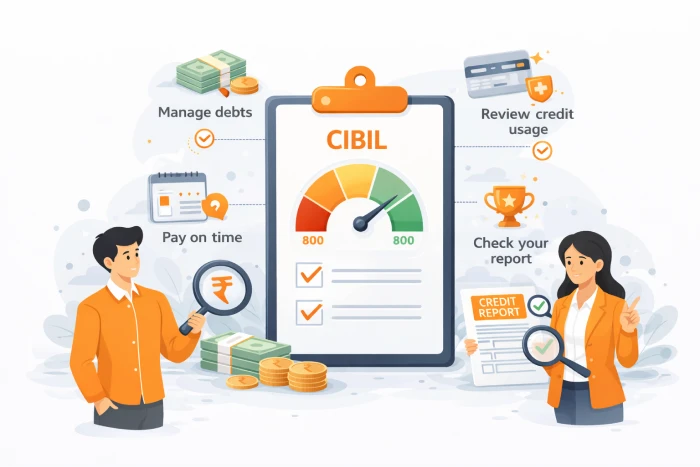
1. Maintain a Healthy Credit Score
A credit score above 750 improves approval chances even during tight credit cycles.
Tips:
Pay EMIs on time
Keep credit utilization below 30 percent
Avoid multiple loan inquiries
2. Compare Lenders Before Applying
During volatile periods, interest rates and eligibility criteria may vary significantly between banks and NBFCs.
You can compare personal loan offers on Saarathi.ai to see real-time options from multiple lenders in one dashboard.
3. Lock Interest Rates Early
If rates are rising, consider locking fixed-rate options.
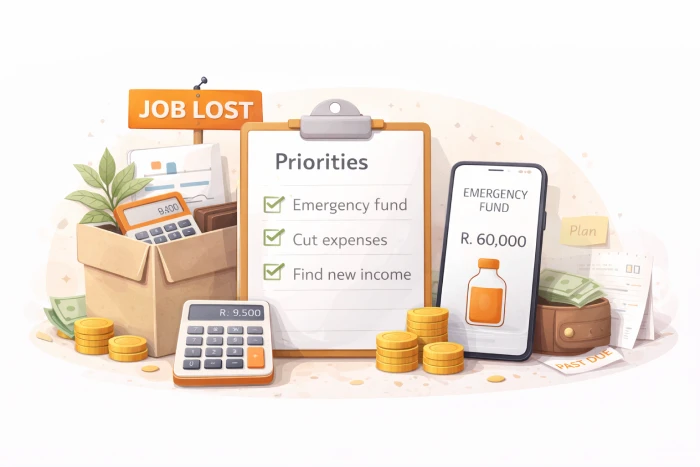
4. Maintain Emergency Funds
Keep at least 6 months of EMI and expenses as buffer.
5. Track Your Application Transparently
With Saarathi Bazaar, you can track your application in Saarathi Bazaar and monitor documentation, approvals, and disbursal status in one place.
Role of AI and Digital Lending in Crisis Resilience
Digital lending platforms reduce systemic friction.
At Saarathi.ai, we have observed that paperless documentation, AI eligibility checks, and digital verification accelerate approval cycles. Faster decision-making improves liquidity circulation in the economy.
Benefits of digital ecosystems:
Lower operational costs
Faster risk assessment
Reduced manual errors
Real-time compliance monitoring
You can ask eligibility questions via Saarathi AI expert before formally applying. This prevents unnecessary rejections that may impact your credit profile.
In a crisis scenario, efficient credit matching reduces stress across the system.
What Signals Indicate Rising Global Risk?
Borrowers should monitor:
Rapid global interest rate hikes
Large bank failures abroad
Sharp stock market crashes
Currency volatility
Liquidity tightening
However, panic decisions often cause more damage than actual economic shocks.
India’s macro fundamentals in 2026 remain relatively stable compared to many advanced economies:
Controlled inflation range
Strong domestic demand
Expanding digital credit penetration
Growing MSME financing
These structural strengths reduce systemic vulnerability.
FAQs
Can another 2008 financial crisis happen?
Yes, financial crises are cyclical. However, stronger global regulations and capital buffers reduce the probability of a similar scale collapse.
Are Indian NBFCs riskier than banks?
NBFCs may carry higher risk in some segments, but large systemically important NBFCs are tightly regulated by RBI. Many maintain strong capital and liquidity buffers.
What happens to my loan if an NBFC faces stress?
Loan contracts remain valid. In extreme cases, portfolios may be transferred to other institutions under regulatory supervision.
Is it safe to take a loan during economic uncertainty?
Yes, if you have stable income, manageable EMI ratios below 40 percent of income, and emergency savings.
How can I check my loan eligibility safely?
Use digital platforms like Saarathi.ai to assess eligibility across multiple lenders without impacting your credit score unnecessarily.
Conclusion
A global banking crisis like 2008 is unlikely in the same form due to stronger regulation and better risk management. Indian NBFCs today operate under stricter RBI supervision, improved capital frameworks, and enhanced transparency.
That said, economic cycles are natural. Borrowers should focus on financial discipline, credit health, and lender comparison rather than panic.
Digital platforms powered by AI add resilience by improving credit matching and transparency. If you are planning a personal loan, home loan, or business loan, informed decisions matter more than market noise.
Discover personalized loan options on Saarathi.ai today and make confident borrowing decisions in any economic climate.