Business Loan Tax Benefits for MSMEs in India
|
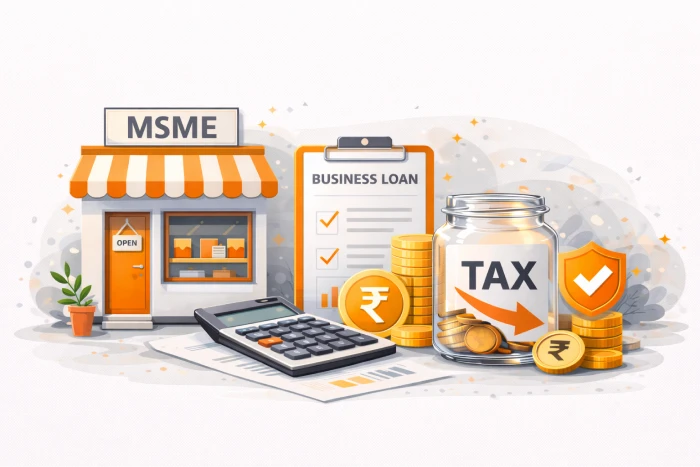
Micro, Small, and Medium Enterprises (MSMEs) play a crucial role in India’s economic growth. These businesses often rely on external financing to expand operations, purchase equipment, manage working capital, or invest in infrastructure. Business loans provide essential financial support for these activities while also offering potential tax advantages.
While the principal repayment of a business loan does not qualify for tax deductions, the interest paid on the loan can often be treated as a business expense. This allows MSMEs to reduce taxable profits and manage their overall tax liability more efficiently. At Saarathi.ai, we have observed that MSME owners who understand how business loan interest affects taxes are better able to plan finances and improve cash flow management.
How Business Loans Help MSMEs Grow
Business loans provide access to capital that can help small businesses scale their operations.
Common uses of business loans include:
Expanding business operations
Purchasing machinery or equipment
Managing working capital
Hiring employees
Upgrading technology
Opening new business locations
These investments can improve productivity, increase revenue potential, and strengthen long-term business growth.
However, understanding the tax implications of business loans is equally important.
Are Business Loans Tax Deductible?
Business loans themselves are not considered taxable income.
Similarly, the principal repayment of the loan is not eligible for tax deductions.
However, the interest paid on business loans can usually be claimed as a deductible business expense.
This deduction reduces taxable business profits.
Example:
Business income before interest deduction: ₹12 lakh
Interest paid on business loan: ₹2 lakh
Taxable income after deduction: ₹10 lakh
By reducing taxable income, businesses may lower their overall tax liability.
Conditions for Claiming Business Loan Interest Deduction
To claim tax deductions on business loan interest, certain conditions must be met.
The loan must be used for business purposes
Funds should be used for activities directly related to business operations.
The borrower must maintain proper financial records
Documentation must show how the loan amount was used.
Interest payments must be clearly recorded
Lenders usually provide interest certificates or loan statements.
Meeting these conditions ensures that deductions are accepted during tax filing.
Types of Business Loans Eligible for Tax Deductions
Several types of business loans can qualify for interest deductions if used for business purposes.
Term loans
These loans are typically used for large investments such as equipment purchase or infrastructure expansion.
Working capital loans
Working capital loans help businesses manage day-to-day operational expenses.
Equipment financing
Loans used to purchase machinery or business equipment may qualify for interest deductions.
Loan against property for business
If a loan against property is used to fund business activities, the interest may qualify as a deductible business expense.
Many MSMEs evaluate financing options carefully before borrowing. Business owners often compare business loan offers on Saarathi.ai to identify lenders offering competitive interest rates and faster approvals.
Additional Tax Benefits Through Asset Depreciation
When businesses use loan funds to purchase assets such as machinery or equipment, they may also claim depreciation benefits under the Income Tax Act.
Depreciation allows businesses to deduct a portion of the asset's value annually.
This means MSMEs may receive two financial advantages:
Interest deduction on the loan
Depreciation deduction on the purchased asset
These combined deductions can significantly reduce taxable profits.
Importance of Proper Documentation
Maintaining accurate financial records is essential when claiming tax deductions on business loan interest.
Important documents include:
Loan sanction letter
Loan repayment statements
Interest certificates from lenders
Business expense records
Asset purchase invoices
These records help demonstrate that the loan funds were used for legitimate business activities.
Many MSMEs also work with chartered accountants to ensure compliance with tax regulations.
How MSMEs Can Plan Borrowing Strategically
Borrowing should be aligned with business growth strategies rather than short-term financial needs.
Business owners should consider several factors before taking loans:
Loan purpose and expected returns
Interest rate and repayment structure
Impact on business cash flow
Tax implications of loan interest
Careful planning ensures that borrowed funds contribute to long-term business growth while maintaining financial stability.
Role of Digital Platforms in MSME Financing
Technology is transforming how MSMEs access financing and manage financial decisions.
Digital lending platforms allow business owners to compare lenders, evaluate eligibility, and track loan applications more efficiently.
For example, entrepreneurs can ask eligibility questions via Saarathi AI expert to understand documentation requirements, loan eligibility, and approval timelines instantly.
Saarathi.ai connects borrowers with more than 110 banks and NBFCs across India. The Saarathi Recommendation Engine matches borrowers with lenders suited to their financial profiles.
MSME owners can also track your application in Saarathi Bazaar through a transparent dashboard that shows documentation progress, lender responses, and approval status.
These digital tools simplify the loan process while helping businesses make informed financial decisions.
Common Mistakes MSMEs Should Avoid
Business owners sometimes make mistakes when managing loans and tax deductions.
Using business loans for personal expenses
This can invalidate tax deductions on interest payments.
Failing to maintain financial records
Without proper documentation, deductions may not be accepted during tax filing.
Borrowing without repayment planning
Poor cash flow management can create financial stress.
Ignoring professional tax advice
Consulting tax professionals helps ensure compliance and accurate deductions.
Avoiding these mistakes improves financial stability for MSMEs.
Frequently Asked Questions
Are business loans taxable income?
No. Business loans are not treated as taxable income.
Can business loan interest be deducted from taxable income?
Yes. Interest paid on loans used for business purposes can usually be deducted as a business expense.
Is principal repayment of business loans tax deductible?
No. Principal repayment does not qualify for tax deductions.
Can depreciation be claimed on assets purchased using loan funds?
Yes. Businesses may claim depreciation on assets purchased with loan funds.
Do MSMEs need documentation for tax deductions?
Yes. Loan statements, interest certificates, and expense records are required for claiming deductions.
Conclusion
Business loans are an important financing tool for MSMEs seeking to grow and expand operations. While the principal repayment of these loans does not offer tax deductions, the interest paid can usually be claimed as a business expense.
This deduction helps reduce taxable income and improve financial efficiency for businesses.
When combined with asset depreciation benefits, business loans can become a strategic financial tool for MSME growth.
At Saarathi.ai, we believe informed financial decisions help entrepreneurs build stronger businesses. Whether you are expanding operations, managing working capital, or exploring financing options, digital platforms can simplify your financial journey.
Discover personalized loan options and empower your business growth with Saarathi.ai today.