Why personal loan rates vary so much?
|
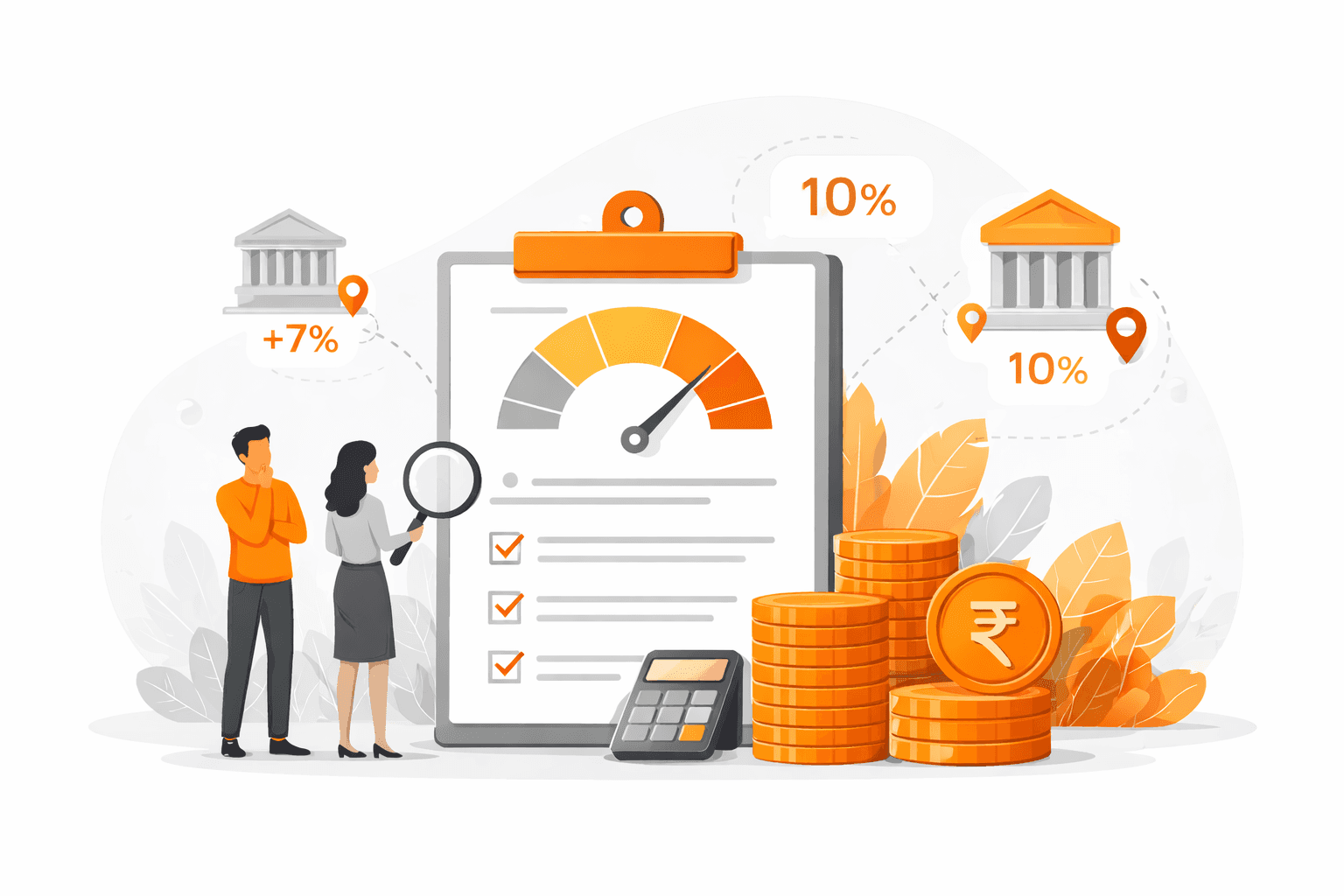
If you have ever checked personal loan offers from different banks or NBFCs, you may have noticed a wide gap in interest rates. One lender may offer 10.50% per annum, while another quotes 18% or even higher. This difference is not random. Personal loan interest rates in India vary because lenders assess risk differently, consider borrower profiles carefully, and respond to economic signals like RBI policy rates.
At Saarathi.ai, we have observed that two applicants with similar income can still receive different loan offers due to factors like credit score, employer profile, repayment history, and lender-specific policies. In this guide, we explain why personal loan rates vary so much and how you can secure the lowest possible rate through smart comparison and AI-driven recommendations.
What Is a Personal Loan Interest Rate?
A personal loan interest rate is the cost you pay for borrowing money. It is expressed as a percentage per annum and directly impacts your EMI. Since personal loans are unsecured, meaning no collateral is required, lenders charge higher rates compared to secured loans like home loans.
According to the Reserve Bank of India, lending rates are influenced by repo rate movements, cost of funds, and borrower risk profile. However, each bank and NBFC applies its own pricing model.
Top Reasons Why Personal Loan Rates Vary
1. Your Credit Score and Credit History
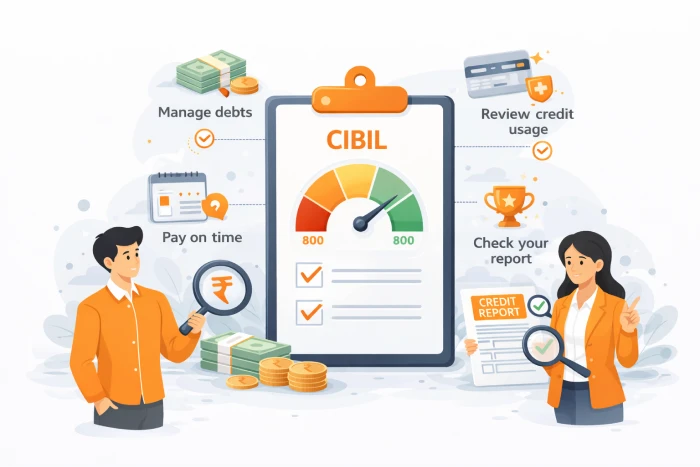
Your credit score is the biggest factor affecting your rate. Most lenders rely on scores from TransUnion CIBIL.
General impact of credit score on rates:
750 and above: Lowest interest rates
700 to 749: Competitive rates
650 to 699: Higher rates
Below 650: Very high rates or rejection
At Saarathi.ai, we often see borrowers with scores above 780 receiving 2-4% lower rates compared to those in the 680 range.
Lenders check:
Payment history
Credit utilization ratio
Number of recent loan inquiries
Existing EMIs
A single missed EMI can push your interest rate higher.
2. Income Level and Stability
Higher income usually means lower risk. Lenders prefer borrowers with:
Stable monthly salary
Low EMI-to-income ratio
Long employment history
For example, a salaried employee earning Rs 1.2 lakh per month with a 3-year job history may get better rates than someone earning Rs 60,000 with frequent job changes.
3. Type of Employer
Many lenders categorize employers into risk bands:
Government employees
PSU employees
MNC employees
Private company employees
Self-employed professionals
Self-employed non-professionals
Government and reputed MNC employees often receive preferential rates because income stability is higher.
At Saarathi.ai, our AI Recommendation Engine identifies lenders that offer special pricing for specific employer categories, helping you avoid unnecessary high-rate applications.
4. Loan Amount and Tenure
Interest rates may vary based on:
Loan size
Repayment tenure
Sometimes, higher loan amounts attract better rates because lenders earn more interest in absolute terms. However, longer tenures may carry slightly higher rates due to increased risk exposure.
5. Lender Type: Bank vs NBFC
Rates can differ significantly between banks and NBFCs.
Banks generally offer lower rates but stricter eligibility
NBFCs may charge higher rates but offer flexible approvals
As reported by CRISIL, NBFCs often serve higher-risk segments and price loans accordingly.
If your credit profile is strong, banks might be cheaper. If your score is moderate, NBFCs may approve faster but at a higher cost.
6. RBI Repo Rate and Economic Conditions
The repo rate set by the Reserve Bank of India influences lending rates across India.
When repo rate increases:
Cost of funds rises
Personal loan rates may increase
When repo rate decreases:
Lenders may reduce rates
For example, during inflation control cycles, RBI rate hikes usually push unsecured loan rates upward.
7. Internal Risk-Based Pricing Models
Each lender uses a risk-based pricing model. Two borrowers with similar income may get different rates because:
One has higher credit card utilization
One has recent loan inquiries
One works in a higher-risk industry
Risk-based pricing means interest rates are customized, not standardized.
8. Existing Relationship with the Bank
If you already have:
Salary account
Fixed deposits
Previous loans with good repayment
Your bank may offer preferential rates as a pre-approved personal loan.
Relationship-based pricing is common among large private banks.
9. Market Competition and Campaign Offers
During festive seasons like Diwali or financial year-end, lenders may run special campaigns. Economic coverage in The Economic Times often highlights festive loan offers and competitive rate cuts.
These promotional rates can temporarily reduce the interest gap between lenders.
Illustration: How Rate Differences Impact EMI
Let us see how a small rate difference affects EMI.
Loan amount: Rs 5 lakh
Tenure: 5 years
Interest Rate | EMI | Total Interest Paid |
10.5% | Lower EMI | Significantly lower interest |
14% | Higher EMI | Much higher total cost |
18% | Very high EMI | Substantial interest burden |
Even a 3% difference can increase total interest by tens of thousands of rupees.
This is why comparing offers before applying is critical.
You can easily compare personal loan offers on Saarathi.ai to find the most competitive rate tailored to your profile.
Why Two People Get Different Rates from the Same Lender
Consider this scenario:
Borrower A:
Credit score 780
EMI-to-income ratio 25%
Stable MNC job
Borrower B:
Credit score 690
EMI-to-income ratio 45%
Multiple recent loan inquiries
Even if both apply to the same bank, Borrower A may get 11%, while Borrower B may get 16%.
This variation reflects risk-based pricing.
At Saarathi.ai, we use AI-driven matching to connect you with lenders most likely to offer favorable terms, instead of letting you apply blindly.
Hidden Factors That Influence Rates
Many borrowers overlook these elements:
High credit card utilization
Co-applicant profile
City of residence
Industry risk
Existing personal loans
For example, applicants in metro cities sometimes receive better offers due to higher competition among lenders.
Our Saarathi Recommendation Engine analyzes 100+ data points to personalize offers and reduce the chance of rate shock.
How to Get the Lowest Personal Loan Interest Rate
1. Improve Your Credit Score
Pay EMIs on time
Keep credit utilization below 30%
Avoid multiple loan inquiries
2. Reduce Existing EMIs
Lower your EMI-to-income ratio before applying.
3. Choose the Right Tenure
Shorter tenure reduces total interest, though EMI will be higher.
4. Compare Before You Apply
Instead of applying separately to multiple banks, use a unified dashboard like Saarathi Bazaar to track your application in Saarathi Bazaar and avoid multiple hard inquiries.
5. Use AI-Based Eligibility Checks
Before applying, ask eligibility questions via Saarathi AI to understand:
Expected interest range
Approval probability
Suitable lender category
This avoids rejection-related score drops.
Why Saarathi.ai Makes a Difference
At Saarathi.ai, we connect borrowers with 110+ banks and NBFCs through a fully digital and paperless journey.
Key benefits:
AI-based lender matching
Transparent comparison of interest rates
Faster approvals
One dashboard for tracking offers
No hidden rate surprises
Whether you are exploring a personal loan for medical emergencies, weddings, travel, or debt consolidation, you can compare personal loan offers on Saarathi.ai in minutes.
Our experience shows that borrowers who compare digitally save up to 2-4% in interest compared to direct single-lender applications.
Common Myths About Personal Loan Interest Rates
Myth 1: All banks offer similar rates
Reality: Risk-based pricing makes rates highly personalized.
Myth 2: Higher income guarantees lowest rate
Reality: Credit score and repayment behavior matter more.
Myth 3: Pre-approved means lowest rate
Reality: Pre-approved loans may not always be the cheapest option.
FAQs
1. Why is my personal loan interest rate higher than advertised?
Advertised rates are usually for applicants with excellent credit scores and strong profiles. Your personalized rate depends on risk assessment.
2. Does checking my eligibility reduce my credit score?
Soft eligibility checks do not impact your score. Multiple hard applications can reduce it.
3. Are NBFC personal loan rates always higher than banks?
Not always. NBFCs may price higher due to risk segments, but they can also offer competitive deals during campaigns.
4. How much credit score is required for the lowest rate?
Generally, 750 and above improves your chances of securing the best rates.
5. Can I negotiate personal loan interest rates?
Yes, especially if you have a strong credit score and competing offers.
Conclusion: Why Rates Vary and What You Should Do
Personal loan interest rates vary because of:
Credit score differences
Income stability and EMI burden
Lender type and risk models
RBI policy movements
Market competition and campaigns
The key is not just applying. The key is applying smartly.
Instead of guessing which lender offers the lowest rate, discover personalized loan options on Saarathi.ai today. Compare offers, track applications, and get AI-backed guidance for faster, transparent approvals.