Why Is My EMI Higher Than Expected?
|
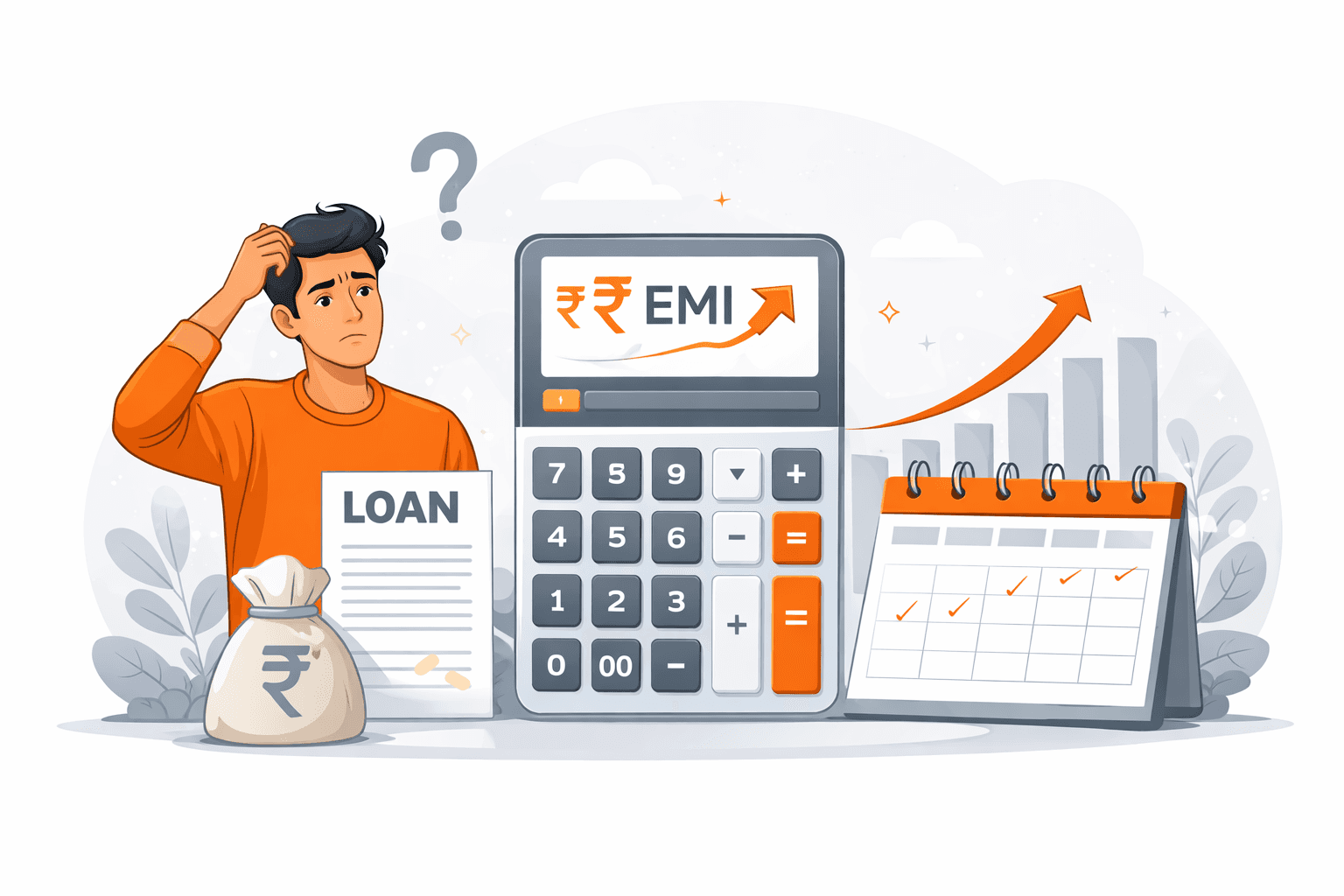
If your EMI feels higher than what you initially calculated, you are not alone. Many borrowers realize after loan disbursal that their monthly outflow is more than expected. This can happen due to interest rate changes, longer tenure, hidden charges, insurance bundling, or incorrect EMI assumptions.
At Saarathi.ai, we have observed that most EMI surprises happen because borrowers focus only on the advertised interest rate and not the full loan structure. Understanding how EMIs are calculated and what influences them can help you avoid financial stress and make smarter borrowing decisions.
Let us break down the real reasons behind higher-than-expected EMIs and what you can do about it.
What Is an EMI and How Is It Calculated?
EMI stands for Equated Monthly Installment. It includes:
Principal repayment
Interest component
The EMI formula considers:
Loan amount
Interest rate
Tenure
Even small changes in any of these can significantly impact your monthly payment.
Lenders follow guidelines influenced by the Reserve Bank of India, especially for floating rate loans. However, individual banks and NBFCs apply their own pricing models.
Top Reasons Why Your EMI Is Higher Than Expected
1. Higher Actual Interest Rate Than Advertised
Advertised interest rates are usually "starting from" rates. These apply to borrowers with excellent credit profiles.
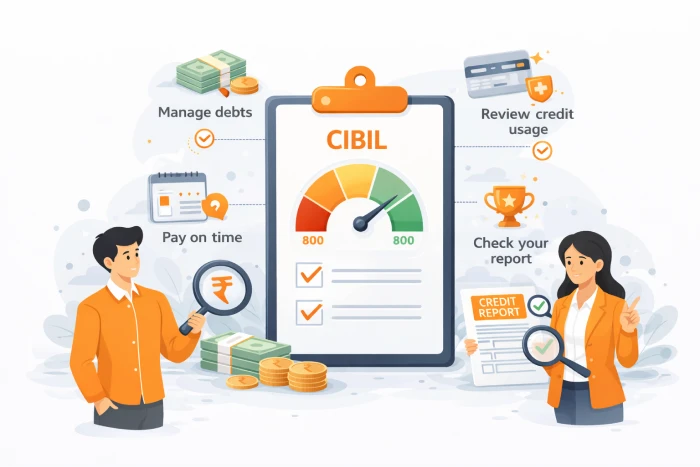
If your credit score from TransUnion CIBIL is lower than expected, the lender may offer a higher rate.
For example:
Advertised rate: 10.50%
Your approved rate: 13.75%
That difference alone can increase EMI noticeably.
At Saarathi.ai, we often see borrowers overlook this difference when comparing offers.
2. Floating Rate Revision
If you have a floating rate loan, your EMI can increase when repo rates rise.
The Reserve Bank of India adjusts the repo rate based on inflation and economic conditions. When repo increases:
Lending rates go up
EMI may increase
Or tenure may extend
Many borrowers do not track these changes regularly.
3. Processing Fees Added to Loan Amount
Sometimes processing fees, documentation charges, or insurance premiums are added to the principal instead of being paid upfront.
Example:
Applied loan: Rs 5,00,000
Processing + insurance added: Rs 25,000
Effective loan: Rs 5,25,000
Your EMI will be calculated on Rs 5.25 lakh, not Rs 5 lakh.
Always check your sanction letter carefully.
4. Longer Tenure Than Planned
Longer tenure reduces EMI per month but increases total interest paid. However, sometimes borrowers misunderstand tenure structure.
If tenure was extended due to:
Rate increase
Restructuring
Moratorium period
Your EMI structure may change.
5. Loan Insurance Bundling
Some lenders bundle credit protection insurance into the loan.
This can:
Increase total principal
Raise EMI
Increase total cost
Insurance can be useful, but it should be transparent and optional.
6. Reducing Balance vs Flat Interest Confusion
Flat interest rate loans calculate interest on the full principal for the entire tenure.
Reducing balance loans calculate interest only on outstanding principal.
Flat rate loans look cheaper but often result in higher effective EMI cost.
At Saarathi.ai, we encourage borrowers to compare effective interest rate, not just quoted numbers.
7. High Credit Utilization or Risk-Based Pricing
If you have:
High credit card utilization
Multiple active loans
Recent loan inquiries
The lender may price your loan higher due to perceived risk.
According to reports by CRISIL, risk-based pricing has become more common in unsecured lending.
Two borrowers with the same income can receive different rates.
8. Pre-EMI During Construction Period
For home loans under construction, lenders may charge Pre-EMI.
Pre-EMI includes:
Only interest payment
No principal repayment
Later, full EMI begins, which may feel higher than expected.
Example: How Small Differences Increase EMI
Loan amount: Rs 10 lakh
Tenure: 5 years
Interest Rate | Approx EMI |
10% | Lower EMI |
12% | Noticeably higher |
15% | Significantly higher |
Even a 2-3% difference can increase EMI by thousands over tenure.
That is why comparing before applying is crucial.
You can compare loan offers transparently on Saarathi.ai to see real EMI calculations, not just headline rates.
Hidden Charges That Increase EMI Impact
Look for these in your sanction letter:
Processing fee
Legal charges
Technical valuation fee
Insurance premium
Stamp duty
GST on fees
If financed within the loan, they raise EMI.
Using Saarathi Bazaar to track your application in Saarathi Bazaar ensures full transparency across lenders.
How to Check If Your EMI Is Correct
Follow these steps:
Verify loan amount disbursed
Confirm interest rate type
Recalculate EMI using reducing balance formula
Review sanction letter
Check for added insurance
If mismatch persists, contact your lender immediately.
You can also ask eligibility and EMI questions via Saarathi AI before accepting any offer.
How to Reduce a High EMI
1. Prepay Part of the Loan
Partial prepayment reduces principal and future interest.
Check if foreclosure or prepayment charges apply.
2. Balance Transfer
If another lender offers lower rate, transfer your loan.
Through Saarathi.ai, you can explore balance transfer options and compare personalized rates digitally.
3. Increase Tenure
Extending tenure reduces EMI but increases total interest cost.
4. Negotiate with Lender
If your credit score improved, request rate revision.
5. Improve Credit Profile
Pay EMIs on time
Reduce credit card usage
Avoid new loans
Within months, your profile may qualify for better pricing.
Common EMI Myths
Myth 1: EMI remains constant in floating loans
Reality: EMI or tenure can change when repo rates change.
Myth 2: Lowest interest rate always means lowest EMI
Reality: Loan amount and tenure also matter.
Myth 3: Pre-approved loans are always cheapest
Reality: They may include bundled charges.
Why Borrowers Trust Saarathi.ai
At Saarathi.ai, we connect you with 110+ banks and NBFCs through a paperless and AI-driven ecosystem.
Key advantages:
Transparent EMI comparison
AI-based lender matching
No repetitive applications
Centralized tracking dashboard
Faster approvals
At Saarathi.ai, we have observed that borrowers who compare digitally often save significantly over the loan tenure because they understand the real EMI impact before signing.
Instead of guessing, you can compare loan offers on Saarathi.ai and see accurate EMI projections instantly.
FAQs
1. Why did my EMI increase after 6 months?
If you have a floating rate loan, repo rate changes by the Reserve Bank of India may have impacted your interest rate.
2. Can EMI increase without informing me?
Lenders usually notify via email or SMS, especially for floating rate changes.
3. Does loan insurance increase EMI?
Yes, if insurance premium is added to principal amount.
4. How can I calculate correct EMI?
Use reducing balance formula or digital loan calculators before accepting offer.
5. Should I switch to another lender?
If rate difference is significant and transfer cost is low, balance transfer may help.
Conclusion: Know Before You Sign
If your EMI is higher than expected, it is usually due to:
Higher personalized interest rate
Floating rate revisions
Bundled charges or insurance
Incorrect loan amount assumptions
Risk-based pricing differences
The solution is simple: compare transparently, verify calculations, and apply smartly.
Discover personalized loan options on Saarathi.ai today. Check eligibility instantly, compare real EMI projections, and make confident borrowing decisions.