Why does loan interest increase mid-tenure?
|
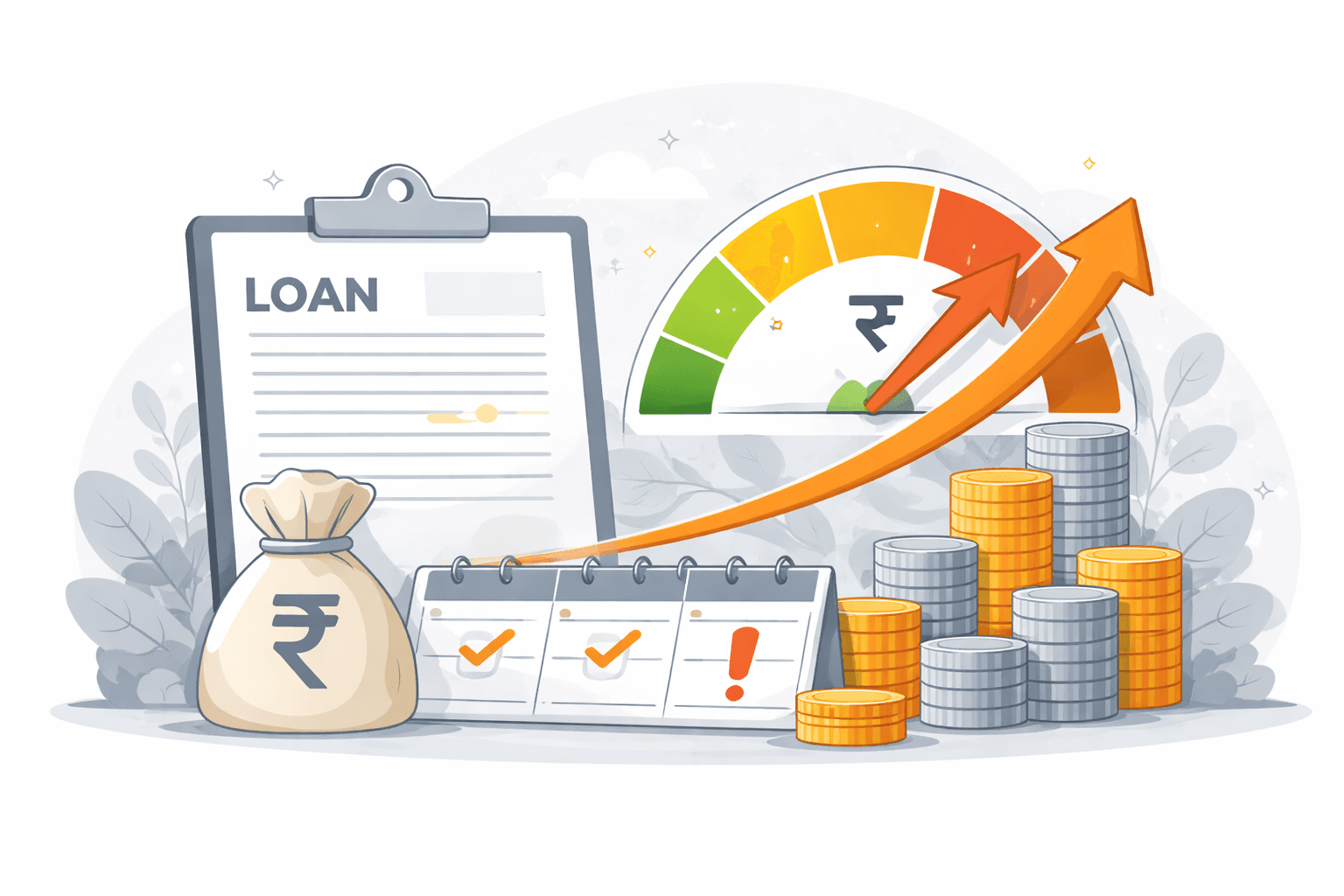
You signed your loan agreement expecting fixed EMIs, and suddenly you receive a message saying your interest rate has increased. This is one of the most common concerns among borrowers in India.
A loan interest increase mid-tenure usually happens due to floating rate revisions, benchmark changes, risk reclassification, or internal lender policies. While it feels unfair, in many cases it is contractually allowed, especially for floating rate loans.
At Saarathi.ai, we have observed that borrowers often misunderstand the difference between fixed and floating rates. In this guide, we explain why interest rates increase mid-tenure, how it affects your EMI, and what you can do to manage the impact smartly.
Fixed vs Floating Interest Rate - The Core Difference
Before understanding mid-tenure hikes, you must know your loan type.
Fixed Rate Loan
Interest remains constant for the agreed period
EMI does not change
Usually slightly higher than floating
Floating Rate Loan
Linked to external benchmark
Interest can increase or decrease
EMI or tenure may change
Most home loans and many business loans in India are floating.
1. Repo Rate Increase by RBI
The most common reason for mid-tenure interest hikes is a repo rate increase.
The Reserve Bank of India sets the repo rate, which is the rate at which banks borrow money. When inflation rises, RBI may increase repo to control liquidity.
Impact on borrowers:
Bank’s cost of funds increases
Floating rate loans become costlier
EMI increases or tenure extends
Since October 2019, many floating loans are linked to external benchmarks like repo rate. So changes directly impact borrowers.
2. Change in External Benchmark Lending Rate
Banks now link floating retail loans to benchmarks such as:
Repo rate
Treasury bill yields
If benchmark rises, your interest rate resets at the next review date.
This reset usually happens:
Monthly
Quarterly
Annually
Check your loan agreement for reset frequency.
3. Spread or Margin Changes
Your interest rate = Benchmark + Spread
Example:
Repo rate: 6.50%
Bank spread: 2.50%
Effective rate: 9.00%
In most retail loans, spread remains constant. However, if your loan has certain clauses, lenders may adjust spread under specific risk scenarios.
Always read the sanction letter carefully.
4. Deterioration in Credit Profile
If your credit score drops significantly during tenure, the lender may reclassify risk.
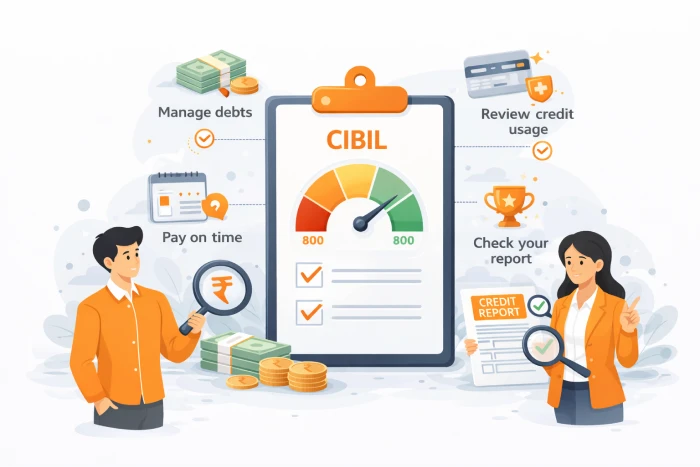
Credit scores are issued by bureaus like TransUnion CIBIL.
Score may drop due to:
Missed EMI
Credit card overuse
Multiple new loans
Some lenders increase interest rate after internal risk review.
At Saarathi.ai, we have observed that borrowers who maintain disciplined repayment rarely face such adjustments.
5. Conversion from Introductory Rate
Sometimes lenders offer:
Promotional rates
Introductory low interest
After a specific period, interest resets to standard rate.
Borrowers often overlook this clause.
6. Reset Clause in Loan Agreement
Most floating loans include a reset clause.
Key points to check:
Reset frequency
Margin change conditions
Communication policy
Lenders are required to inform borrowers about rate changes.
7. Market Liquidity and Cost of Funds
Apart from repo rate, banks’ cost of funds may rise due to:
Deposit rate hikes
Liquidity tightening
Bond yield increases
When funding cost rises, banks adjust lending rates accordingly.
According to analysis by CRISIL, lending rate cycles closely follow liquidity and inflation trends.
How Interest Increase Affects You
When interest rises mid-tenure, lenders typically:
Option 1: Increase EMI
Option 2: Extend tenure
Option 3: Combination of both
Example:
Loan amount: Rs 30 lakh
Tenure: 20 years
Rate increase: 1%
Even a 1% increase can raise EMI by thousands or extend tenure by years.
This significantly increases total interest paid.
How to Check If Your Rate Increase Is Valid
Follow these steps:
Check your loan type - fixed or floating
Review benchmark linkage
Check reset frequency
Compare benchmark change history
Verify spread component
You can compare current market rates on Saarathi.ai to see if your lender’s rate is aligned with market trends.
What Can You Do If Interest Increased?
1. Request Rate Revision
If market rates have reduced later, you can request a rate reset.
Some banks allow internal conversion for a small fee.
2. Make Partial Prepayment
Reducing principal lowers interest burden even if rate increases.
Even a lump sum payment early in tenure saves significant interest.
3. Improve Your Credit Score
If rate increased due to credit deterioration:
Pay EMIs on time
Reduce card utilization
Avoid new loans
Then request a review.
4. Opt for Tenure Extension Instead of EMI Increase
If EMI becomes unaffordable, ask lender to extend tenure instead.
This reduces monthly burden but increases total interest.
5. Consider Balance Transfer
If another lender offers lower rates, transferring loan may reduce cost.
At Saarathi.ai, you can compare personalized loan offers across 110 plus lenders and evaluate whether balance transfer makes financial sense.
Using Saarathi Bazaar, you can track and compare offers transparently before making a decision.
Example Scenario
Borrower A:
Does not monitor benchmark
Accepts rate hike silently
Pays higher EMI for years
Borrower B:
Checks benchmark change
Compares rates digitally
Negotiates with lender
Saves significant interest
Planning makes the difference.
Common Myths About Mid-Tenure Interest Hikes
Myth 1: Bank increased rate randomly
Reality: Most floating loans are benchmark linked.
Myth 2: EMI must always increase
Reality: Tenure extension is also possible.
Myth 3: Nothing can be done
Reality: Prepayment, negotiation, and comparison are valid options.
Why Monitor Your Loan Regularly
Many borrowers sign and forget.
But interest rate cycles in India change frequently based on inflation and RBI policy.
Monitoring helps you:
Avoid silent cost increases
Plan prepayment
Switch at the right time
Protect long-term savings
At Saarathi.ai, we have observed that borrowers who track loan health annually make better financial decisions.
FAQs
1. Can bank increase interest rate anytime?
For floating loans, yes, as per benchmark changes and contract terms.
2. Will EMI reduce if repo rate decreases?
Yes, either EMI reduces or tenure shortens depending on lender policy.
3. Can I convert floating to fixed?
Some lenders allow this for a fee.
4. Is rate hike applicable to personal loans?
Only if loan is floating. Most personal loans are fixed, but confirm with lender.
5. Should I transfer loan immediately after rate hike?
Not always. Calculate processing cost, legal charges, and long-term savings first.
Conclusion: Stay Informed, Stay in Control
Loan interest increases mid-tenure mainly due to:
RBI repo rate changes
Benchmark reset clauses
Credit profile deterioration
Introductory rate expiry
Funding cost adjustments
The solution is not panic. The solution is awareness and comparison.
Discover smarter loan management options on Saarathi.ai today. Compare rates transparently, check eligibility instantly, and make confident decisions about your loan journey.