Why do lenders deny unsecured business loans?
|
Unsecured business loans are popular because they do not require collateral. But that also makes them riskier for lenders. If your application was rejected, you may feel confused or frustrated.
The reality is simple. When there is no security backing the loan, lenders rely heavily on credit profile, cash flow stability, and risk assessment models. Even profitable businesses sometimes face rejection due to technical or compliance gaps.
At Saarathi.ai, we have observed that many MSME rejections happen not because the business is weak, but because the application was sent to the wrong lender category. In this guide, we explain why lenders deny unsecured business loans and how to increase your approval chances in 2026.
What Is an Unsecured Business Loan?
An unsecured business loan is granted without collateral such as property, machinery, or gold. Approval depends on:
Credit score
GST returns
Bank statements
Business turnover
Industry risk
Because there is no asset backing the loan, lenders follow strict risk evaluation guidelines, influenced by the Reserve Bank of India.
Top Reasons Lenders Deny Unsecured Business Loans
1. Low or Poor Credit Score
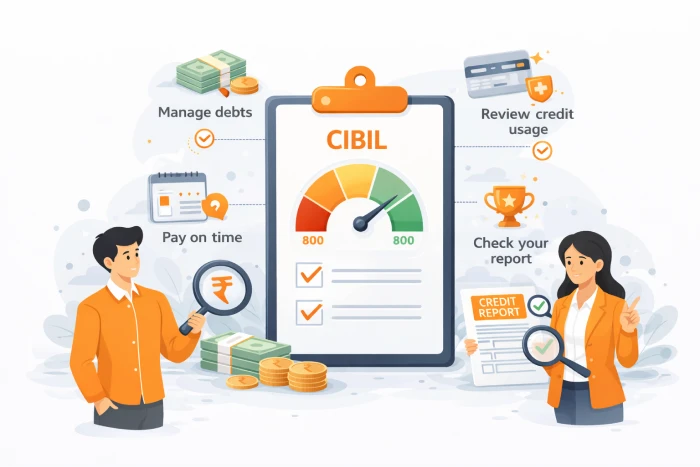
Most lenders check scores from TransUnion CIBIL.
General benchmarks:
750 and above: Strong
700 to 749: Acceptable
650 to 699: Risky
Below 650: High rejection probability
Even one loan settlement or overdue EMI can reduce approval chances significantly.
Unsecured lending is risk-based. Lower score often means higher risk perception.
2. Inconsistent GST Returns
Many MSME loans today are GST-based.
Red flags include:
Missed filings
Sudden drop in turnover
Mismatch between GST and bank credits
If GST filings are inconsistent, lenders question revenue stability.
3. Weak Bank Statement Analysis
Lenders analyze:
Average monthly balance
Credit turnover
Cheque bounces
High cash withdrawals
Frequent overdrafts
If your bank statements show stress signals, approval becomes difficult.
At Saarathi.ai, we have observed that even profitable businesses get rejected due to poor banking discipline.
4. High Existing Debt Burden
If your business already has:
Term loans
Overdraft limits
Multiple NBFC loans
Lenders calculate Fixed Obligation to Income Ratio.
If debt burden is high, unsecured loan may be denied.
5. Short Business Vintage
Most lenders require:
Minimum 1 to 3 years of operations
New businesses without proven track record face higher rejection risk.
For startups, government-backed schemes may be better options.
6. Industry Risk Category
Some sectors are considered high risk:
Seasonal businesses
Construction subcontractors
Highly volatile trading segments
According to sectoral assessments by CRISIL, risk varies significantly across industries, influencing lender approval decisions.
7. Multiple Loan Applications
Applying to several lenders simultaneously creates multiple hard inquiries on your credit report.
This signals credit hunger and reduces approval probability.
Using a structured platform reduces unnecessary inquiries.
8. Documentation Gaps
Common documentation issues:
Mismatch in PAN and GST details
Incomplete ITR filings
Incorrect business address
Unclear ownership structure
Even small discrepancies can cause rejection.
9. Cash-Heavy Business Model
If your business deals primarily in cash and deposits are irregular, lenders may struggle to assess actual revenue.
Digital transaction consistency improves credibility.
10. Loan Amount Too High for Turnover
If requested loan size is disproportionate to turnover, lenders may deny application.
Example:
Annual turnover: Rs 25 lakh
Loan request: Rs 20 lakh
Risk perception increases.
Example Scenario
Business A:
3 years operations
Consistent GST filings
Stable bank credits
Moderate loan request
Business B:
1 year operations
Irregular GST filing
Multiple cheque bounces
High loan request
Business A has significantly higher approval probability.
Preparation and positioning matter.
What To Do If Your Loan Was Rejected
1. Identify the Exact Reason
Ask lender clearly:
Was it credit score?
Bank statement issue?
Industry risk?
Understanding the reason helps fix the issue.
2. Improve Credit Profile
If rejection was due to low score:
Clear overdue accounts
Avoid settlements
Reduce credit card utilization
Even 3 to 6 months of disciplined repayment can improve score.
3. Reduce Existing Liabilities
Lowering current EMI burden improves approval probability.
4. Consider Secured Options
If unsecured loan is denied, explore:
Loan against property
Gold loan for business
Secured working capital
Collateral reduces lender risk significantly.
5. Apply Through Smart Matching
Instead of applying randomly, compare unsecured business loan offers on Saarathi.ai.
Our AI Recommendation Engine analyzes:
Business turnover
Credit score
Industry category
Banking behavior
Then matches you with suitable lenders among 110 plus banks and NBFCs.
This reduces rejection rates and improves approval efficiency.
You can track all offers transparently in Saarathi Bazaar without repetitive paperwork.
How to Improve Approval Chances for Unsecured Loan
Follow this checklist:
Maintain consistent GST filings
Keep bank statements clean
Avoid cheque bounces
Keep credit utilization below 30 percent
Apply for realistic loan amount
Avoid multiple simultaneous applications
Prepare proper financial projections
Small improvements can make a big difference.
Interest Rates for Unsecured Business Loans
Since these loans are risk-based:
Higher risk equals higher interest
Strong profile equals competitive rates
Interest depends on:
Credit score
Turnover
Business stability
Industry category
Always compare effective cost including processing fees.
Digital comparison helps prevent overpaying.
Common Myths
Myth 1: Profitable business always gets approved
Reality: Cash flow consistency and credit profile matter more than declared profit.
Myth 2: Applying to more lenders increases chances
Reality: It reduces approval probability due to multiple inquiries.
Myth 3: NBFCs approve everyone
Reality: NBFCs are flexible but still follow risk-based models.
Why Saarathi.ai Helps MSMEs
At Saarathi.ai, we connect MSMEs with 110 plus lenders through a transparent, paperless ecosystem.
Benefits include:
AI-driven lender matching
Transparent interest comparison
Faster approvals
Centralized tracking dashboard
Reduced rejection risk
At Saarathi.ai, we have observed that structured applications through digital marketplaces significantly improve MSME approval outcomes.
Instead of guessing why lenders deny unsecured business loans, use data-driven matching to improve success rate.
FAQs
1. What is minimum CIBIL required for unsecured business loan?
Most lenders prefer 700 plus, but some NBFCs may consider lower based on turnover.
2. Can I get loan if my GST filing is irregular?
It reduces approval chances. Regular filing improves credibility.
3. Does loan rejection affect credit score?
Rejection itself may not, but hard inquiry can slightly impact score.
4. Are secured loans easier to approve?
Yes, because collateral reduces lender risk.
5. How long should I wait after rejection?
Wait at least 3 months while improving profile before reapplying.
Conclusion: Rejection Is a Signal, Not the End
Lenders deny unsecured business loans mainly due to:
Low credit score
Inconsistent GST filings
Weak bank statements
High existing debt
Industry risk perception
The solution is preparation and smart application strategy.
Discover personalized MSME loan options on Saarathi.ai today. Check eligibility instantly, compare transparently, and apply with confidence through AI-driven lender matching.