ITR vs Form 16: What lenders actually check before approving loans
|
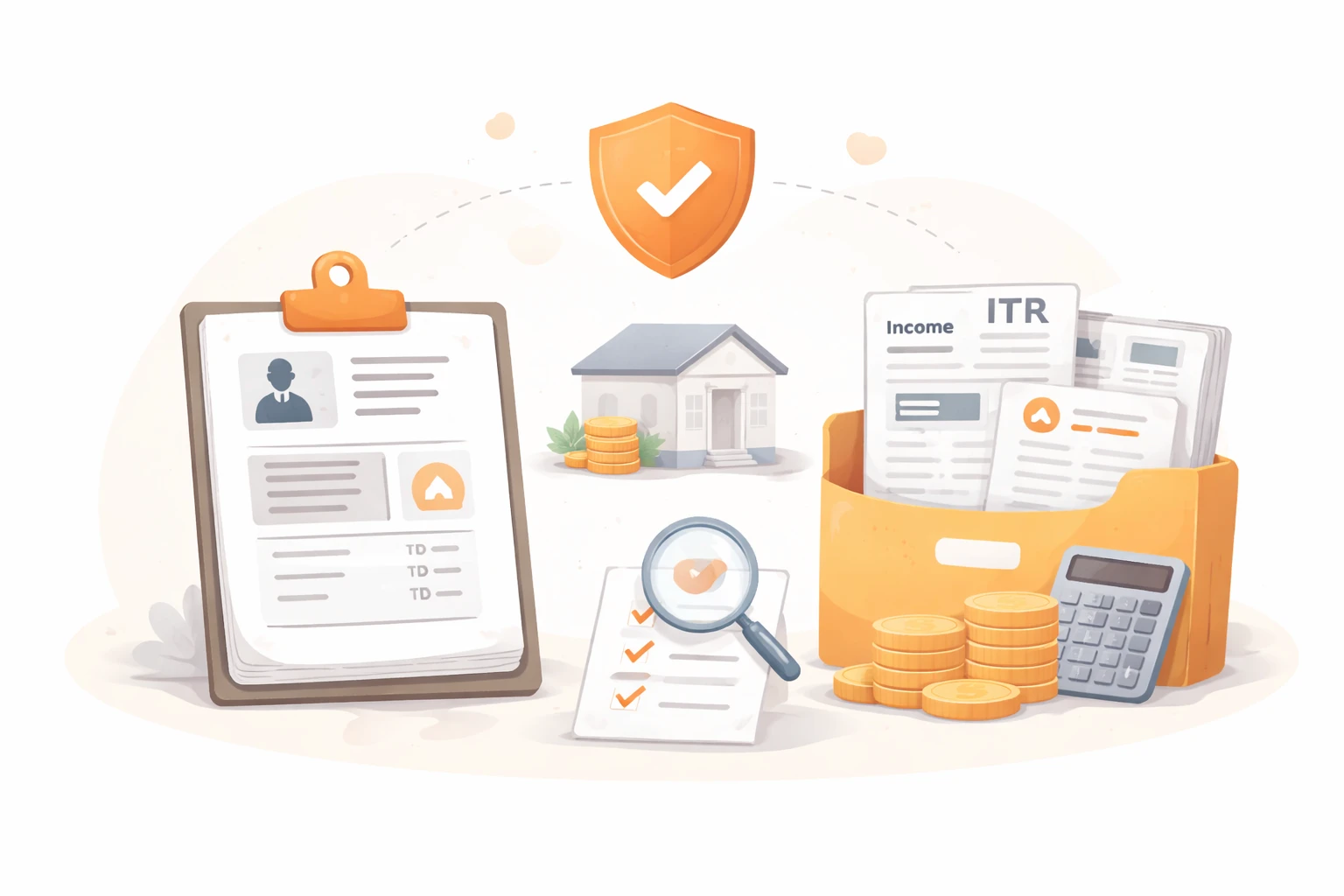
If you are applying for a loan in India, you have likely heard lenders ask for ITR and Form 16. Many borrowers assume they are the same. They are not.
When it comes to loan approval, lenders look deeper than just your salary slip. They verify income stability, tax compliance, repayment capacity, and financial discipline. That is where ITR vs Form 16 becomes important.
At Saarathi.ai, we have observed that confusion around these documents often delays approvals. Understanding what lenders actually check can help you prepare better and improve your chances of faster sanction. Let us break it down clearly.
What Is Form 16?
Form 16 is a certificate issued by your employer. It shows:
Your annual salary
Tax deducted at source (TDS)
Allowances and deductions
Net taxable income
It is proof that your employer has deducted tax and deposited it with the Income Tax Department.
Form 16 is usually asked for in:
Personal loan applications
Home loan applications for salaried individuals
Quick verification cases
However, it reflects only salary income and not your complete financial picture.
What Is ITR?
ITR or Income Tax Return is a document you file with the Income Tax Department every year. It includes:
Salary income
Business income
Rental income
Capital gains
Interest income
Total tax paid
ITR is a self-declared but legally verified financial record. Lenders consider it more comprehensive than Form 16.
Self-employed individuals, business owners, and professionals must provide 2-3 years of ITR in most cases.
ITR vs Form 16: Key Differences
Here is a simple comparison lenders care about:
Factor | Form 16 | ITR |
Issued by | Employer | Filed by taxpayer |
Covers | Salary income only | All income sources |
Required for | Salaried borrowers | Salaried + Self-employed |
Years needed | Usually 1 year | 2-3 years |
Lender trust level | Moderate | High |
Important: Lenders treat ITR as stronger proof of income stability.
What Lenders Actually Check Before Loan Approval
It is not just about submitting documents. Lenders analyze specific factors inside them.
1. Income Consistency
Lenders compare:
Current salary vs previous year
Growth pattern
Sudden drops
If your ITR shows fluctuating income, it may affect approval.
At Saarathi.ai, our AI Recommendation Engine flags income inconsistencies early so you can apply with the right lender.
You can check your loan eligibility instantly using Saarathi AI and avoid unnecessary rejections.
2. Tax Compliance
Regular ITR filing signals financial discipline.
According to the Reserve Bank of India, formal income documentation plays a key role in credit risk assessment Reserve Bank of India.
Missing ITR filings may create doubts about declared income.
3. Net Income vs Gross Income
Many borrowers quote their gross salary. Lenders calculate eligibility based on:
Net take-home income
Existing EMIs
Debt-to-income ratio
Your Form 16 may show gross salary of Rs 12 lakh. But your actual eligible income could be lower after deductions.
4. Stability of Employment or Business
For salaried individuals:
Employer credibility
Job stability
Industry risk
For self-employed individuals:
2-3 years consistent ITR
Business continuity
Profit trend
Economic slowdowns reported by sources like CRISIL influence how strictly lenders evaluate business income.
5. Income Mismatch Red Flags
Lenders check if:
Income declared in loan application matches ITR
TDS in Form 16 matches tax portal data
Bank credits align with income claims
Any mismatch can delay approval.
With Saarathi Bazaar, you can track document verification in real time and stay informed.
Which Is More Important for Loan Approval?
The answer depends on your profile.
For Salaried Borrowers
Most lenders initially ask for:
Last 3 salary slips
Latest Form 16
Bank statements
But for higher ticket home loans, many lenders also ask for ITR even if you are salaried.
You can compare verified home loan offers directly on Saarathi.ai and see documentation requirements upfront.
For Self-Employed Borrowers
ITR is mandatory.
Lenders usually require:
2-3 years ITR
Computation of income
Balance sheet and profit-loss statement
Without ITR, loan approval becomes difficult unless you opt for specific alternative income products.
How ITR Impacts Loan Eligibility
Here is how ITR directly influences your loan amount:
Higher Declared Income = Higher Eligible Loan Amount
Example:
Declared income Rs 8 lakh per year
Eligible EMI capacity approx 40-50%
Loan eligibility approx Rs 25-35 lakh
But if you underreport income to save tax, your loan eligibility reduces.
This is a common dilemma we see at Saarathi.ai.
Why Some Loans Get Rejected Despite Form 16
Many borrowers ask: I submitted Form 16. Why was my loan rejected?
Common reasons:
Low CIBIL score
High existing EMIs
Income mismatch
Employer not in approved list
No ITR filing history
You can improve your credit score and explore better matched lenders through Saarathi AI before applying.
Can You Get a Loan Without ITR?
Yes, in limited scenarios:
Small personal loans
New-to-credit salaried applicants
Certain fintech lenders
However, loan amounts and interest rates may not be favorable.
Digital marketplaces like Saarathi.ai connect you with 110+ lenders so you can find options suited to your documentation profile.
Smart Tips to Improve Approval Chances
Before applying for a loan:
File ITR regularly even if not mandatory
Ensure income declared matches bank credits
Maintain low credit utilization
Avoid multiple loan applications
Use an eligibility checker first
At Saarathi.ai, we have seen approval rates improve when borrowers apply strategically instead of randomly.
FAQs
1. Is ITR mandatory for home loans?
For self-employed borrowers, yes. For salaried individuals, it depends on loan amount and lender policy.
2. Can Form 16 replace ITR?
Form 16 proves salary income but does not replace ITR for self-employed applicants.
3. How many years of ITR are required?
Most lenders ask for 2-3 years of ITR for business or professional loans.
4. What if my income increased this year?
Lenders may consider the latest income proof but will check previous ITR for consistency.
5. Does not filing ITR affect credit score?
ITR does not directly impact CIBIL score, but it affects loan eligibility and lender confidence.
Conclusion
Understanding ITR vs Form 16 can significantly improve your loan approval chances.
Here are the key takeaways:
Form 16 shows salary income only
ITR shows complete financial picture
Lenders prefer consistent income history
Mismatch in documents can delay approval
Strategic application improves approval odds
Instead of guessing what lenders want, discover personalized loan options on Saarathi.ai today. Check eligibility instantly, compare multiple lenders, and track your application with full transparency.