How to reduce EMI without refinancing?
|
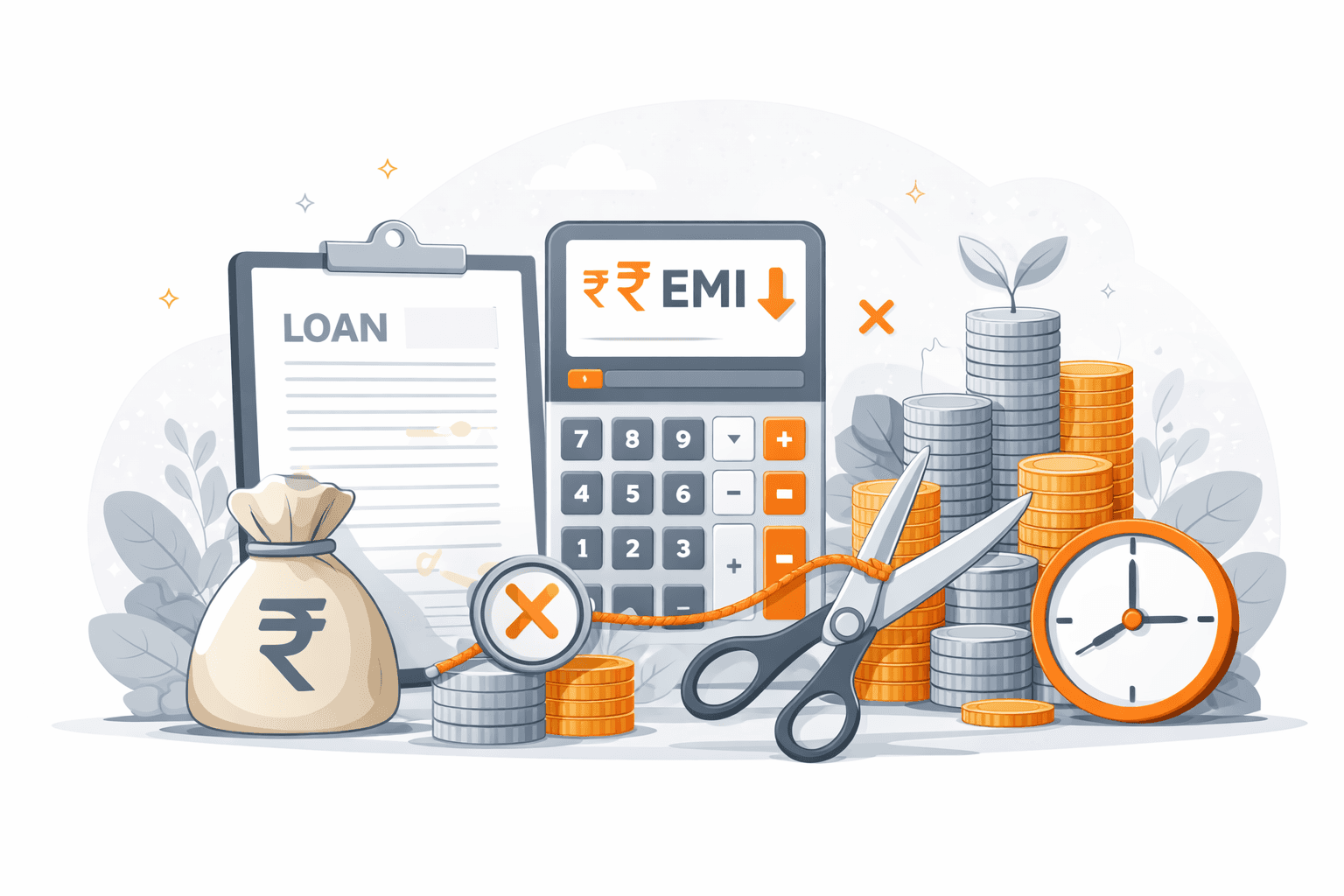
If your monthly EMI feels heavy but you do not want to refinance or transfer your loan, there are still practical ways to reduce the burden. Many borrowers assume refinancing is the only solution. That is not true. You can reduce EMI pressure through partial prepayment, tenure adjustment, interest rate negotiation, or restructuring.
At Saarathi.ai, we have observed that borrowers who proactively review their loan structure often reduce EMI stress without switching lenders. The key is understanding how EMIs are structured and where flexibility exists.
This guide explains step-by-step strategies to reduce EMI without refinancing and how to approach your lender smartly.
Understand Why Your EMI Is High
Before reducing EMI, identify what is causing the strain:
High interest rate
Short tenure
Floating rate increase
Insurance added to principal
High overall debt burden
Floating rate loans are linked to benchmarks influenced by the Reserve Bank of India repo rate. If repo increases, your interest may rise automatically.
Knowing the reason helps you choose the right strategy.
Proven Ways to Reduce EMI Without Refinancing
1. Make a Partial Prepayment
Partial prepayment reduces your outstanding principal. When principal reduces, interest calculation also reduces.
Benefits:
Lower future EMI or shorter tenure
Reduced total interest paid
Immediate financial relief
Check:
Prepayment charges
Minimum prepayment amount
Lock-in period
Most floating rate loans do not attract foreclosure penalties for individuals, as per regulatory guidelines.
Even a lump sum of Rs 50,000 to Rs 1 lakh can make a noticeable difference in EMI over tenure.
2. Increase the Loan Tenure
If your cash flow is tight, you can request tenure extension.
Example:
Current tenure: 3 years
Extended tenure: 5 years
This reduces EMI but increases total interest outgo.
Best suited for:
Temporary cash flow issues
Business slowdown
Medical emergencies
At Saarathi.ai, we advise borrowers to calculate total cost impact before extending tenure.
3. Negotiate Interest Rate with Your Existing Lender
If your credit score has improved, request a rate revision.
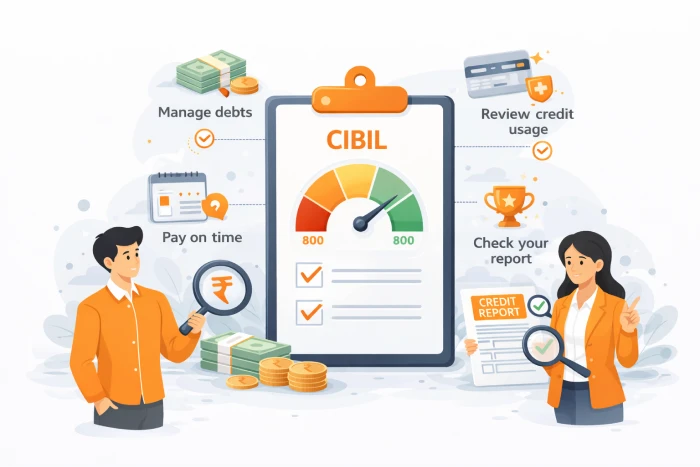
Credit scores are issued by bureaus like TransUnion CIBIL. If your score increased from 680 to 760, you have negotiation power.
Steps:
Check current market rates
Gather competing offers
Approach your lender formally
Request rate reset
Many lenders allow rate revision for a nominal administrative fee.
You can compare current personalized rates on Saarathi.ai before negotiating.
4. Switch from EMI Increase to Tenure Increase in Floating Loans
When interest rates rise, lenders typically:
Increase EMI
orExtend tenure
You may request tenure extension instead of EMI increase to manage monthly burden.
This keeps EMI stable but increases repayment period.
5. Remove Unnecessary Add-ons
Some loans include:
Credit insurance
Extended warranty
Processing fees financed into loan
If insurance was added and cancellable within free-look period, removing it can reduce principal and EMI.
Always review your sanction letter.
6. Convert to Lower Margin Within Same Bank
Some banks allow internal rate reset without refinancing. This is different from balance transfer.
You stay with the same lender but move to a lower rate scheme if eligible.
Ask:
Is a rate conversion option available?
What is the conversion fee?
How much EMI will reduce?
Through Saarathi Bazaar, you can track offers and compare alternatives before requesting conversion.
7. Consolidate Other Small Debts
If multiple EMIs are causing stress, focus on closing high-interest small loans first.
Clearing a small personal loan or credit card EMI can free up monthly cash flow.
Even though this does not reduce the main EMI directly, it reduces overall EMI burden.
8. Make Bi-Weekly Payments
If your lender allows flexible repayment cycles, bi-weekly payments reduce interest faster than monthly EMI.
This reduces principal faster and lowers overall interest.
Check with your lender if this option is available.
Example: How Partial Prepayment Reduces EMI
Loan amount: Rs 8 lakh
Interest rate: 12 percent
Tenure: 5 years
If you prepay Rs 1 lakh after 1 year:
Outstanding principal reduces
Interest calculation reduces
EMI or tenure adjusts
Even a small prepayment early in tenure saves significant interest because interest component is higher in initial years.
When Should You Avoid Tenure Extension?
Avoid extending tenure if:
You can manage EMI comfortably
You are near loan closure
Prepayment penalty is low and you can close faster
Extending tenure increases total interest burden.
Temporary Relief Options
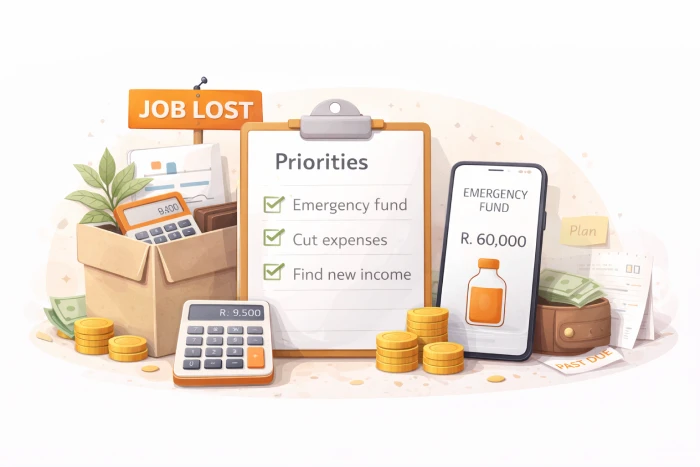
If facing genuine hardship such as job loss or medical emergency, speak to your lender about restructuring.
During financial stress periods, the Reserve Bank of India has allowed restructuring frameworks in the past. While not always active, lenders may offer internal relief policies.
Restructuring may:
Reduce EMI temporarily
Offer moratorium
Extend tenure
Use this carefully as it may affect credit profile.
How to Evaluate the Best Option
Before choosing any method, calculate:
Current EMI
Total outstanding principal
Remaining tenure
Prepayment cost
Conversion fee
You can use digital comparison tools on Saarathi.ai to estimate EMI impact before making decisions.
You can also ask detailed EMI queries via Saarathi AI to understand:
Expected savings
Best adjustment option
Risk to credit score
Quick Comparison Table
Method | EMI Impact | Total Interest Impact | Best For |
Partial Prepayment | Reduce EMI or tenure | Reduce total interest | Surplus funds available |
Tenure Extension | Reduce EMI | Increase total interest | Short-term cash flow issue |
Rate Negotiation | Reduce EMI | Reduce total interest | Improved credit score |
Internal Conversion | Reduce EMI | Slight fee cost | Market rates dropped |
Common Mistakes to Avoid
Ignoring prepayment charges
Extending tenure without calculating total cost
Not negotiating when credit score improves
Taking another loan to pay EMI
Missing EMI instead of restructuring
Missing EMI damages your credit score significantly.
Why Use Saarathi.ai Before Making Changes
At Saarathi.ai, we connect borrowers with 110 plus banks and NBFCs through a transparent digital ecosystem.
Benefits include:
AI-based lender and rate comparison
Clear EMI projections
Paperless documentation
Centralized tracking through Saarathi Bazaar
Faster approvals if you choose balance transfer later
At Saarathi.ai, we have observed that borrowers who evaluate options digitally before requesting lender changes make better financial decisions.
Even if you do not refinance today, understanding your alternatives gives you negotiation power.
You can compare loan offers on Saarathi.ai anytime to see if market conditions favor better pricing.
FAQs
1. Can I reduce EMI without changing lender?
Yes. Through partial prepayment, tenure extension, or rate negotiation.
2. Does partial prepayment reduce EMI or tenure?
You can usually choose between EMI reduction or tenure reduction.
3. Is there a penalty for prepayment?
Floating rate loans for individuals often have no penalty, but confirm with your lender.
4. Will restructuring affect my credit score?
It may impact your credit profile depending on reporting. Discuss clearly with lender.
5. Should I always extend tenure to reduce EMI?
Only if necessary. It increases total interest cost.
Conclusion: Reduce EMI Smartly, Not Emotionally
You can reduce EMI without refinancing by:
Making partial prepayments
Negotiating interest rates
Extending tenure carefully
Removing unnecessary add-ons
Using internal rate conversion options
The key is understanding numbers before acting.
If you want to explore personalized rate comparisons or evaluate future balance transfer options, discover smarter loan choices on Saarathi.ai today. Check eligibility instantly, compare transparently, and take control of your EMI burden with confidence.