How lifestyle inflation quietly increases debt
|
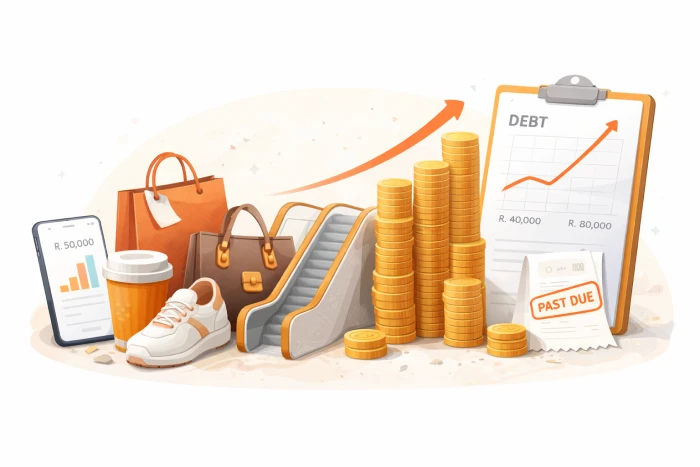
You got a salary hike. You upgraded your phone. You shifted to a better apartment. You started dining out more often. Everything feels earned and deserved. But a few months later, your savings have not increased and your EMIs feel heavier.
This is lifestyle inflation, and it quietly increases debt without you realizing it. In India 2026, with rising disposable incomes, easy digital credit, and instant loan approvals, lifestyle upgrades can quickly turn into long-term liabilities.
At Saarathi.ai, we have observed that many borrowers facing repayment stress are not struggling because of low income. They are struggling because their expenses rise as fast as their income. This guide explains how lifestyle inflation increases debt and how to control it before it controls you.
What Is Lifestyle Inflation?
Lifestyle inflation happens when your spending increases as your income increases.
Instead of saving more after a raise, you:
Upgrade gadgets
Move to a bigger home
Buy a more expensive car
Increase shopping and travel
Take higher EMIs
The result? Your financial position does not improve, even though your salary does.
According to coverage in Economic Times, urban consumption in India has steadily grown alongside easy access to personal credit. This combination makes lifestyle inflation more common than ever.
How Lifestyle Inflation Quietly Increases Debt
1. Bigger Income Leads to Bigger EMIs
After a salary hike, banks and NBFCs offer higher loan eligibility. You may feel confident taking:
A larger home loan
A premium car loan
A higher personal loan
But higher eligibility does not always mean higher affordability.
Lenders typically consider FOIR, which means Fixed Obligation to Income Ratio. Ideally, EMIs should stay below 40-50 percent of income. When lifestyle upgrades push EMIs beyond this level, debt pressure begins.
At Saarathi.ai, our AI Recommendation Engine evaluates repayment capacity carefully before suggesting lenders from 110+ banks and NBFCs. This helps prevent overborrowing.
You can compare personal loan offers on Saarathi.ai to ensure EMIs fit your real disposable income.
2. Fixed Costs Increase Permanently
Lifestyle inflation often converts flexible spending into fixed commitments.
Examples:
Higher rent in premium locality
Club memberships
Expensive school admissions
Long-term car loan
Once these become monthly obligations, they are hard to reverse.
Unlike dining out, rent and EMIs cannot be easily reduced.
3. Savings Rate Stays Flat
If your salary increases from Rs 60,000 to Rs 90,000 but savings remain Rs 5,000 per month, lifestyle inflation has consumed your raise.
Healthy financial growth means:
Increasing savings percentage
Not just increasing expenses
According to CRISIL research on consumer credit trends, rising unsecured borrowing often correlates with consumption upgrades rather than asset creation.
This is where silent debt builds.
4. Credit Cards Mask the Problem
Lifestyle upgrades are often funded by credit cards:
International vacations
Premium gadgets
Fashion and electronics
Dining and subscriptions
Minimum due payments create the illusion of affordability. But interest rates can exceed 30 percent annually.
Soon, EMIs and credit card dues overlap, reducing monthly surplus.
5. Social Media Comparison Triggers Spending
In 2026, social comparison is stronger than ever.
Seeing:
Friends buying homes
Colleagues driving new SUVs
Influencers promoting luxury lifestyles
Creates pressure to match that standard.
This emotional spending leads to debt decisions without financial planning.
Warning Signs Lifestyle Inflation Is Hurting You
Salary increased but savings did not
EMIs have increased in the last 12 months
You rely on credit card rollovers
You check balance frequently near month-end
Emergency fund is under 3 months
If two or more signs apply, lifestyle inflation may already be increasing your debt risk.
Real Example: The Silent Debt Cycle
Initial Salary: Rs 70,000
Savings: Rs 15,000
After Promotion: Rs 1,00,000
New Decisions:
Bigger flat: +Rs 12,000 rent
New car EMI: Rs 18,000
Higher lifestyle spend: +Rs 8,000
New Monthly Structure:
Fixed + EMI: Rs 60,000
Essentials: Rs 20,000
Lifestyle: Rs 15,000
Savings: Rs 5,000
Despite earning Rs 30,000 more, savings dropped by Rs 10,000.
This is lifestyle inflation increasing debt vulnerability.
How Lifestyle Inflation Impacts Loan Eligibility
Lenders evaluate:
FOIR
Debt to income ratio
Surplus income
Credit score
If lifestyle upgrades increase EMIs:
Loan eligibility reduces
Interest rates may rise
Approval chances decline
At Saarathi.ai, we have observed that applicants with controlled fixed costs and higher surplus income receive smoother approvals.
You can ask eligibility questions via Saarathi AI before applying. This helps you understand safe borrowing limits without harming your credit score.
How to Control Lifestyle Inflation
1. Follow the 50-30-20 Structure
Modified for India:
55 percent Needs including EMIs
20 percent Wants
25 percent Savings
If savings percentage falls after a raise, adjust immediately.
2. Increase Savings Before Increasing Lifestyle
Whenever income increases:
Increase SIP first
Boost emergency fund
Increase retirement contributions
Only then upgrade lifestyle.
3. Maintain EMI Discipline
Total EMIs should ideally remain under 40-50 percent of income.
If EMIs are high:
Consider refinancing
Explore balance transfer
Compare lenders for better rates
You can compare personal loan offers on Saarathi.ai in a fully paperless journey and track applications in Saarathi Bazaar for full transparency.
4. Delay Major Upgrades by 6 Months
After a salary hike:
Wait 6 months before upgrading house or car
Observe spending pattern
Build additional savings buffer
This cooling period prevents emotional decisions.
5. Track Real Disposable Income
Disposable Income = Net Income - Fixed Costs - Essentials - Annual Adjusted Expenses
Maintain at least 20-30 percent surplus.
This buffer protects you from unexpected shocks.
6. Build a 6-Month Emergency Fund
Before upgrading lifestyle:
Secure health insurance
Build 6 months expense cushion
Avoid dependency on credit cards
This creates financial stability.
The Role of Smart Borrowing
Loans are not bad. Poor planning is.
Smart borrowing means:
Choosing affordable EMI
Comparing multiple lenders
Avoiding unnecessary applications
Tracking repayment clearly
With Saarathi.ai, you get:
AI-driven lender recommendations
Transparent comparison
Access to 110+ lenders
Real-time tracking in Saarathi Bazaar
Faster, paperless approvals
This ensures your borrowing supports growth, not lifestyle pressure.
When Lifestyle Inflation Is Healthy
Not all upgrades are harmful.
Healthy lifestyle upgrades:
Buying a home within budget
Investing in skill development
Starting a business
Purchasing assets that appreciate
The key difference is asset creation versus consumption expansion.
FAQs
1. What is lifestyle inflation?
It is the tendency to increase spending as income increases, reducing savings growth.
2. Is lifestyle inflation always bad?
No. It becomes harmful when spending grows faster than savings and increases debt burden.
3. How much EMI is safe after salary hike?
Keep total EMIs under 40-50 percent of net income.
4. Can lifestyle inflation affect credit score?
Yes. Higher debt and missed EMIs can reduce credit score.
5. How can I check safe loan eligibility?
Use AI tools like Saarathi.ai to assess repayment capacity before applying.
6. Should I upgrade house immediately after promotion?
Ideally wait 6 months and increase savings first.
Conclusion
Lifestyle inflation is subtle but powerful. It makes higher income feel smaller and increases debt risk quietly.
Key Takeaways:
Salary growth does not guarantee wealth growth
Rising EMIs reduce financial flexibility
Savings percentage must increase with income
Keep EMIs under control
Build emergency buffer first
Borrow strategically using AI-driven comparison
Financial freedom comes from disciplined growth, not constant upgrades. Discover personalized loan options on Saarathi.ai today. Compare lenders, track your application in Saarathi Bazaar, and get AI-powered expert guidance in a transparent, paperless journey.