Can MSMEs get working capital without CIBIL?
|
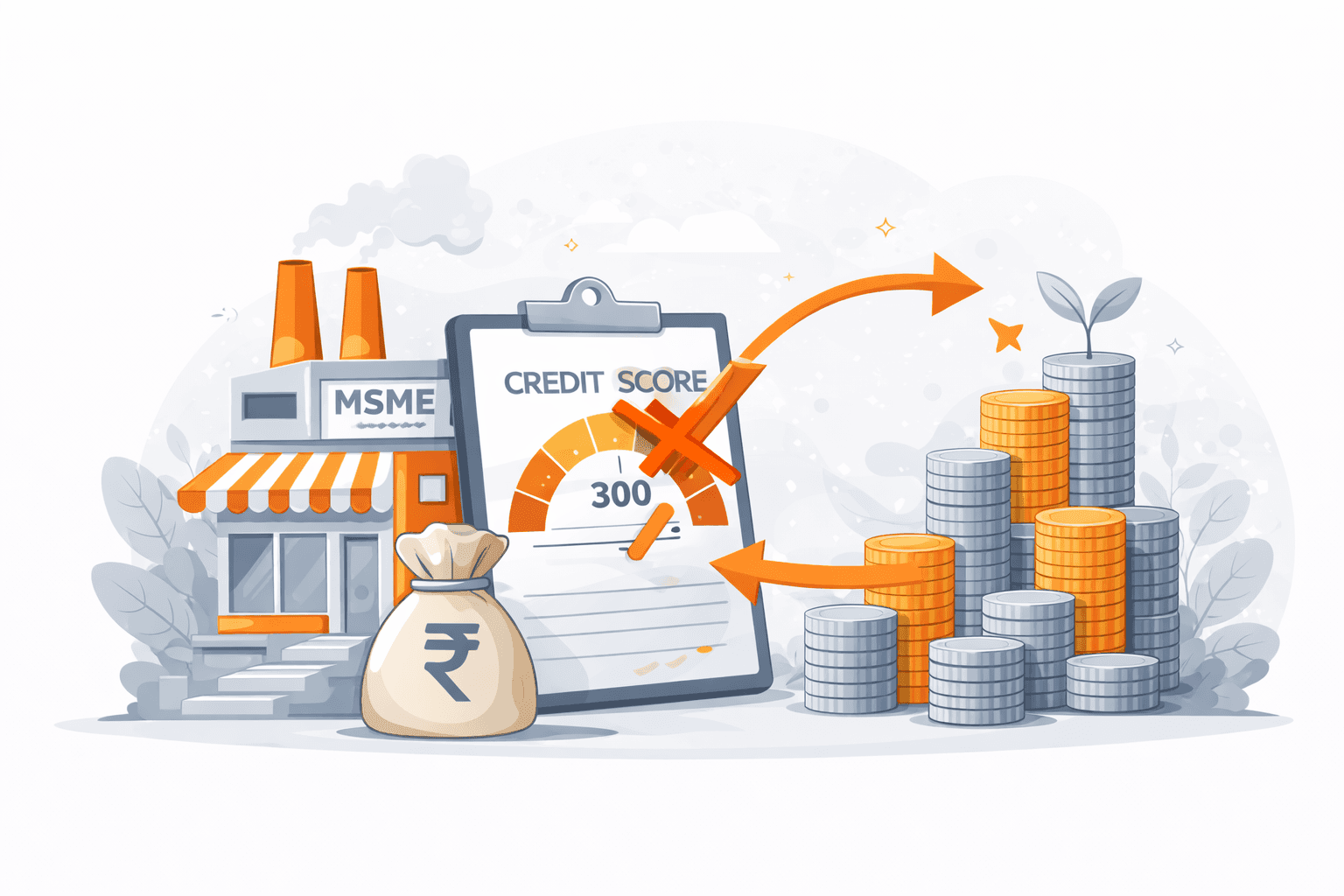
Many MSME owners worry that a low or missing CIBIL score will block their access to working capital. If your business is new, recovering from past delays, or never used formal credit, you may not have a strong credit profile.
The good news is that MSMEs can get working capital without CIBIL in certain cases. While most lenders check credit reports, many now evaluate GST data, bank transactions, cash flows, and government scheme eligibility instead of relying only on CIBIL.
At Saarathi.ai, we have observed that MSMEs with strong turnover consistency and proper documentation often secure approvals even with weak or no CIBIL history. The key is choosing the right lender category and applying strategically.
Let us break down how it works and what your best options are.
Is It Possible to Get Working Capital Without CIBIL?
Short answer: Yes, but not from every lender.
Most banks check scores from TransUnion CIBIL as part of their underwriting. However, alternative credit assessment models are becoming common, especially among:
NBFCs
Fintech lenders
Government-backed schemes
Secured loan providers
Under regulations from the Reserve Bank of India, lenders must assess risk prudently, but they can use alternative data for credit evaluation.
This opens opportunities for MSMEs.
Top Ways MSMEs Can Get Working Capital Without CIBIL
1. GST-Based Working Capital Loans
If your MSME has:
6 to 12 months of GST filings
Consistent turnover
Regular bank credits
Some lenders assess:
Monthly sales trends
Seasonality patterns
Input-output ratio
Instead of focusing purely on CIBIL score.
This is common for:
Retail traders
Manufacturers
Service providers
At Saarathi.ai, our AI Recommendation Engine identifies lenders that prioritize GST and banking data over traditional credit scores.
You can compare working capital loan offers on Saarathi.ai digitally and check eligibility instantly.
2. Bank Statement-Based Loans
Many fintech lenders analyze:
Average monthly balance
Credit turnover
Cash flow stability
Vendor payments
Even if CIBIL is low or new, strong cash flow increases approval chances.
This works well for:
Small retailers
Kirana stores
Online sellers
Local service businesses
3. Government-Backed MSME Schemes
Government support schemes often provide funding relief.
Pradhan Mantri Mudra Yojana
Pradhan Mantri Mudra Yojana supports micro and small enterprises under Shishu, Kishor, and Tarun categories.
Many Mudra loans:
Do not require collateral
Have relaxed documentation
Are accessible for small traders
CGTMSE Coverage
The Credit Guarantee Fund Trust for Micro and Small Enterprises provides guarantee cover to lenders for eligible MSME loans.
This reduces lender risk and increases approval probability even if CIBIL is weak.
4. Secured Working Capital Loans
If your MSME has:
Commercial property
Residential property
Machinery
Gold
You can apply for:
Loan against property
Secured overdraft
Gold loan for business
Collateral reduces lender risk, making CIBIL less critical.
Interest rates are usually lower compared to unsecured loans.
5. Invoice Discounting or Bill Discounting
If you supply goods to:
Corporates
Government departments
Large distributors
You can discount invoices and get funds quickly.
Approval depends more on the buyer’s credibility than your CIBIL.
This is ideal for B2B MSMEs.
6. NBFC and Fintech Lending
As per industry insights from CRISIL, NBFCs play a significant role in MSME credit expansion.
NBFCs may:
Accept lower credit scores
Focus on business turnover
Offer faster approvals
Provide flexible working capital lines
However, interest rates may be slightly higher due to risk pricing.
Using Saarathi.ai ensures transparent comparison across banks and NBFCs so you do not overpay.
Documents Required Even Without CIBIL
Even if CIBIL is not the main factor, documentation is still necessary.
Typical documents:
PAN and Aadhaar
GST registration
Business registration certificate
Bank statements for 6 to 12 months
ITR if available
Stronger documentation improves approval chances significantly.
How Lenders Evaluate MSMEs Without CIBIL
When CIBIL is weak or absent, lenders focus on:
1. Turnover Consistency
Stable monthly revenue
Growth pattern
2. Cash Flow Adequacy
Sufficient inflows to service EMI
No frequent cheque bounces
3. Industry Type
Low-risk industries preferred
Seasonal businesses evaluated carefully
4. Banking Discipline
Regular vendor payments
Controlled overdraft usage
At Saarathi.ai, we have observed that MSMEs with consistent GST filings and clean bank statements often secure approvals even if CIBIL is below 650.
Step-by-Step: How MSMEs Should Apply
Step 1: Check Digital Eligibility First
Avoid random applications.
Ask eligibility questions via Saarathi AI to understand:
Suitable lender category
Likely interest range
Approval probability
This avoids multiple hard inquiries.
Step 2: Organize Financial Records
Prepare:
Updated GST returns
Clean bank statements
Business projections
Professional presentation improves lender confidence.
Step 3: Choose Correct Loan Type
Business Situation | Best Option |
Small trader | Mudra loan |
GST registered MSME | GST-based loan |
Asset available | Loan against property |
B2B supplier | Invoice discounting |
Step 4: Compare Offers Transparently
Instead of visiting multiple banks, compare working capital loan offers on Saarathi.ai.
Benefits include:
AI-based lender matching
Transparent rate comparison
Paperless documentation
Centralized tracking in Saarathi Bazaar
Faster approvals
Interest Rates for MSME Loans Without CIBIL
Interest depends on:
Loan type
Collateral availability
Turnover
Industry risk
Typical patterns:
Secured loans: Lower rates
GST-based unsecured loans: Moderate rates
High-risk unsecured loans: Higher rates
Always evaluate total cost, not just EMI.
Common Mistakes MSMEs Make
Applying to 5 to 10 lenders simultaneously
Hiding past defaults
Filing inconsistent GST returns
Maintaining low bank balance
Ignoring government schemes
Each rejection reduces confidence from future lenders.
When Should You Improve CIBIL First?
If you have:
Recent defaults
Loan settlements
Ongoing overdue accounts
Clear them first if possible.
Even 3 to 6 months of disciplined repayment can improve your profile.
Why Saarathi.ai Is Useful for MSMEs
Saarathi.ai connects MSMEs with 110 plus banks and NBFCs through a fully digital marketplace.
For MSMEs, benefits include:
AI-driven lender recommendations
Paperless loan application
Transparent comparison
Centralized offer tracking via Saarathi Bazaar
Faster approvals
At Saarathi.ai, we have observed that MSMEs using structured digital comparison instead of random applications significantly improve approval rates and reduce interest burden.
Instead of worrying about CIBIL alone, focus on business fundamentals and apply smartly.
FAQs
1. Can MSMEs get loan with zero CIBIL score?
Yes, especially through GST-based loans, secured loans, or government-backed schemes.
2. Is collateral mandatory?
Not always. Unsecured working capital loans are available but may have higher rates.
3. What is the minimum turnover required?
It varies by lender. Some require 6 months of consistent GST filings.
4. Does checking eligibility affect CIBIL?
Soft checks do not affect score. Multiple hard applications can.
5. Are NBFCs better for low CIBIL MSMEs?
NBFCs may be more flexible but compare rates carefully.
Conclusion: CIBIL Is Important, But Not Everything
MSMEs can secure working capital without CIBIL if they:
Show strong GST and bank transactions
Choose government-backed schemes
Offer collateral when possible
Avoid multiple random applications
Use AI-based lender matching
Access to funding depends on smart strategy, not just credit score.
Discover personalized MSME working capital options on Saarathi.ai today. Check eligibility instantly, compare transparently, and strengthen your business with confidence.