Balance Transfer: Is It Worth It After Recent Rate Changes?
|
Interest rates have shifted again. EMIs feel heavier. And many borrowers are asking one question: Is balance transfer still worth it in 2026?
A loan balance transfer allows you to move your existing loan to another lender offering lower interest rates or better terms. But with recent rate changes and tighter lending norms, the decision is not as straightforward as it once was.
At Saarathi.ai, we have observed that while balance transfers still help many borrowers reduce EMIs, the savings depend on timing, outstanding tenure, and processing costs. Let us break it down clearly so you can decide smartly.
What Is a Loan Balance Transfer?
A balance transfer means transferring your outstanding loan from one lender to another for:
Lower interest rate
Reduced EMI
Longer tenure
Better service or flexibility
It is common for:
Home loans
Personal loans
Loan against property
You can compare balance transfer offers directly on Saarathi.ai before initiating the process.
What Changed in 2026?
Recent monetary policy actions by the Reserve Bank of India influenced lending rates across banks and NBFCs.
Key developments:
Repo rate adjustments
Revised lending spreads
Stricter underwriting for unsecured loans
Increased focus on borrower risk profiling
These changes mean that while some lenders reduced rates, others tightened approval criteria.
When Is Balance Transfer Still Worth It?
A balance transfer makes sense if the savings outweigh the costs.
1. Interest Rate Difference Is Meaningful
Rule of thumb:
At least 0.5 percent to 1 percent lower rate
Higher difference leads to better savings
Example:
Outstanding loan: Rs 40 lakh
Remaining tenure: 15 years
Current rate: 9.5 percent
New rate: 8.6 percent
This difference can lead to substantial interest savings over the remaining tenure.
2. You Are in Early or Mid Tenure
In the initial years:
EMI has higher interest component
Maximum savings possible
If you are in the last 2-3 years of tenure, benefit may be limited.
At Saarathi.ai, we have observed that borrowers in first 40 percent of tenure benefit most.
3. Your Credit Score Improved
If your credit score increased since you took the loan:
You may qualify for lower rates
Negotiation power improves
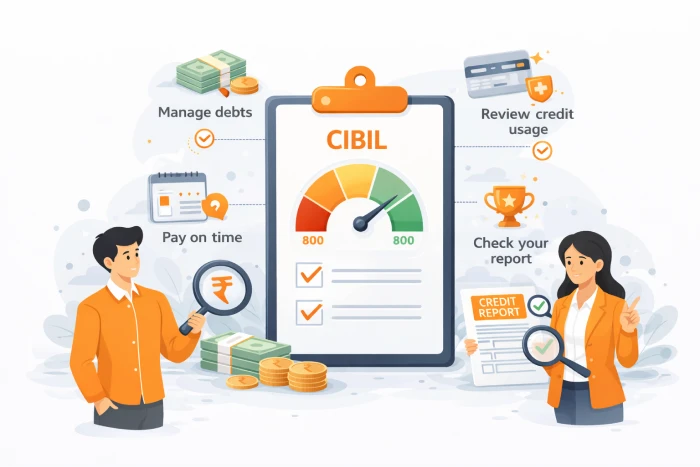
Credit bureaus like TransUnion CIBIL play a key role in determining rate eligibility.
When Balance Transfer May Not Be Worth It
1. Small Outstanding Amount
If outstanding balance is low, savings may not justify processing charges.
2. High Processing Fees
Consider:
Processing fee
Legal charges
Valuation charges
Administrative fees
Always calculate total cost before transferring.
3. Minimal Rate Difference
If rate difference is less than 0.3 percent, benefit may be negligible.
How to Calculate Real Savings
Follow these steps:
Check outstanding principal
Note current interest rate
Compare new rate
Calculate interest savings
Subtract processing charges
If net savings are significant, transfer may be worth it.
You can check personalized balance transfer eligibility instantly through Saarathi AI.
Impact of Rate Changes in 2026
With evolving rate cycles:
Some banks adjusted floating rates quickly
Some NBFCs offer competitive takeover rates
Risk-based pricing became more common
Reports from CRISIL indicate lenders are increasingly differentiating borrowers based on credit quality.
This means:
Strong profile borrowers benefit more from balance transfers.
Balance Transfer for Home Loans vs Personal Loans
Home Loan
Larger principal
Longer tenure
Higher potential savings
More documentation
Balance transfers are more beneficial here.
Personal Loan
Shorter tenure
Smaller principal
Processing fees can reduce savings
Savings need careful evaluation.
You can compare both options transparently on Saarathi.ai before deciding.
Hidden Benefits Beyond Lower Interest
Balance transfer can also help you:
Increase tenure flexibility
Top up additional funds
Consolidate debt
Shift to better service provider
Many lenders offer top-up loans during transfer at competitive rates.
Real-World Example
Case:
Home loan of Rs 55 lakh
Remaining tenure 18 years
Rate reduced from 9.8 percent to 8.7 percent
Processing cost Rs 20,000
Total interest savings over tenure exceeded Rs 6 lakh.
Even after charges, net savings were substantial.
Risks to Watch
Reset clause changes
Floating rate volatility
Prepayment penalties for certain loan types
Documentation delays
Always read loan sanction letter carefully.
Through Saarathi Bazaar, you can track every stage of your transfer process transparently.
Should You Wait or Act Now?
Consider acting now if:
Rate difference is meaningful
Credit score is strong
Outstanding tenure is long
Consider waiting if:
Rate cycle expected to soften further
You are close to closing loan
Savings are marginal
Instead of guessing, calculate exact numbers first.
FAQs
1. Does balance transfer affect credit score?
A new loan enquiry may cause minor temporary dip.
2. Can I transfer personal loan in 2026?
Yes, if lender policies allow and eligibility matches.
3. Is there a lock-in period?
Some lenders require minimum repayment period before transfer.
4. How long does transfer take?
Typically 7-21 working days depending on documentation.
5. Can I get additional top-up loan during transfer?
Yes, if income and credit profile support it.
Conclusion
Balance transfer in 2026 is still worth it, but only if the math works in your favor.
Here are the key takeaways:
At least 0.5 to 1 percent rate difference matters
Early tenure gives maximum savings
Processing costs must be factored in
Strong credit score improves negotiation power
Calculate before acting
Before deciding, discover personalized balance transfer options on Saarathi.ai today. Compare lenders, calculate real savings, and make a confident financial move.