UPI Growth 2026: Cross-Border Payments and Loans
|
UPI has transformed India’s payment ecosystem. What started as a domestic real-time payment system is now expanding globally. In 2026, UPI’s growth is not just about local transfers. It is influencing cross-border payments, remittances, and even international lending opportunities. As Indian travellers, NRIs, freelancers, and exporters engage globally, seamless payment infrastructure becomes critical. But how does UPI expansion affect loans? Can cross-border digital trails improve credit access? At Saarathi.ai, we have observed rising interest from borrowers with international income streams who want faster and smarter lending options. Let us explore how UPI’s global footprint could reshape cross-border payments and credit access.
The Rise of UPI in India
Unified Payments Interface or UPI has become the backbone of India’s digital payments.
Key milestones:
Billions of monthly transactions
Widespread QR adoption
Integration across banks and fintech apps
Real-time money transfer 24x7
UPI’s success is built on:
Interoperability
Instant settlement
Low transaction cost
Strong regulatory oversight
This digital infrastructure lays the foundation for global expansion.
UPI Goes Global
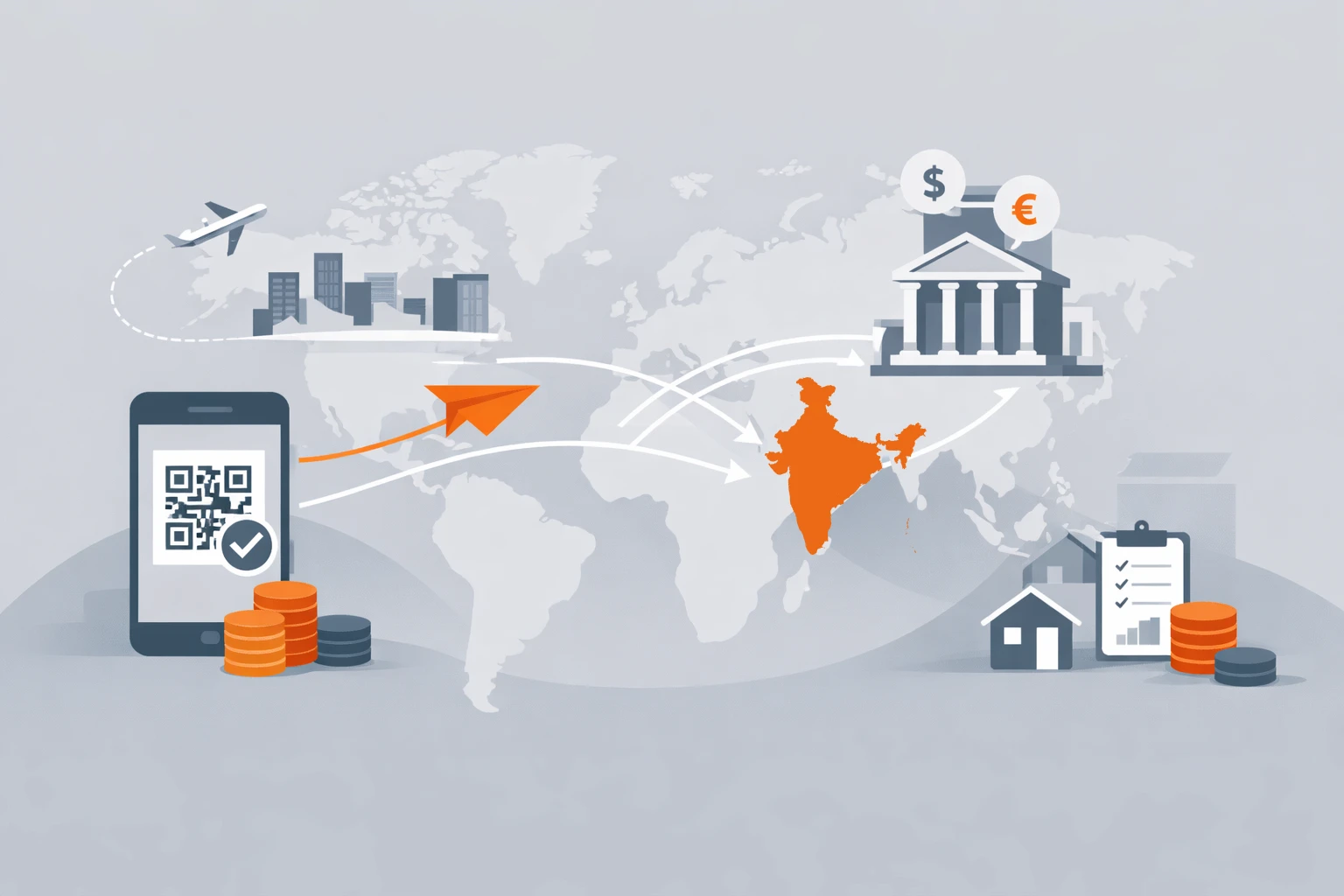
UPI is expanding through partnerships with international payment networks and foreign countries.
This allows:
Indian travellers to pay abroad using UPI apps
NRIs to transfer funds seamlessly
Merchants overseas to accept UPI-based payments
Cross-border QR code integration
Global UPI acceptance reduces reliance on expensive card networks and high forex charges.
How UPI Growth Impacts Cross-Border Payments
1. Faster Remittances
Traditional remittance channels often involve:
Multiple intermediaries
Delayed settlement
Higher transfer fees
UPI-linked corridors can reduce friction and improve settlement speed.
2. Lower Transaction Costs
Direct bank-to-bank systems reduce processing layers.
3. Improved Transparency
Digital trails enhance visibility and compliance.
4. Real-Time Confirmation
Instant confirmation improves trust for freelancers and exporters.
For gig workers and service providers receiving foreign payments, consistent digital transaction records can strengthen financial profiles.
What Does This Mean for Loans?
UPI’s global footprint can indirectly impact lending in several ways.
1. Stronger Income Visibility
Digital cross-border payment trails improve income verification.
Lenders may analyze:
Frequency of international credits
Cash flow stability
Consistency of earnings
This helps freelancers, consultants, and exporters access credit more easily.
2. Better Risk Assessment
Real-time data improves underwriting models.
AI systems can assess repayment capacity based on transaction consistency rather than fixed salary alone.
At Saarathi.ai, we have observed that borrowers with stable digital cash flow, even from overseas clients, often qualify for competitive personal loan options when matched correctly.
3. Expanded NRI Lending Opportunities
As payment rails integrate globally, lenders may streamline:
NRI personal loans
NRI home loans
Loan against property for overseas earners
You can compare home loan offers on Saarathi.ai if you earn abroad but plan to invest in India.
UPI and MSME Financing
Small businesses engaged in exports benefit from:
Faster receivable cycles
Transparent transaction records
Improved working capital visibility
Lenders may offer:
Short-term business loans
Invoice financing
Merchant cash flow-based credit
Using platforms like Saarathi.ai, business owners can compare structured loan options based on digital cash flow data rather than relying only on traditional collateral.
Regulatory Considerations
Cross-border payments involve:
Foreign exchange compliance
Anti-money laundering rules
Data privacy standards
RBI oversight
Any lending decision linked to cross-border income must comply with Indian regulatory frameworks.
RBI emphasizes:
Transparent reporting
Proper KYC
Responsible underwriting
Borrowers should ensure the lending partner is regulated.
Challenges in Cross-Border Lending
Despite progress, challenges remain:
1. Currency Risk
Exchange rate fluctuations affect repayment ability.
2. Data Standardization
Global data integration requires alignment between countries.
3. Credit Reporting Gaps
Foreign credit history may not directly translate into Indian bureau scores.
4. Regulatory Complexity
Cross-border compliance is more complex than domestic lending.
This is where intelligent loan marketplaces help bridge the gap.
Role of AI in Cross-Border Lending
AI-driven underwriting can:
Analyze digital payment history
Evaluate seasonal income trends
Assess global cash flow patterns
Predict repayment ability dynamically
At Saarathi.ai, our Saarathi Recommendation Engine matches borrowers with lenders suited to their income profile, including those with overseas earnings.
Instead of applying randomly across multiple banks, borrowers can compare personal loan offers on Saarathi.ai to reduce unnecessary inquiries.
Real Example Scenario
Consider an Indian freelancer working with US clients.
Income pattern:
Monthly international transfers
Fluctuating but consistent annual revenue
Digital receipts via UPI-linked channels
Traditional underwriting may view variable income as risky.
AI-supported assessment may evaluate overall cash flow stability and approve accordingly.
This expands financial inclusion.
Future of Cross-Border Credit Ecosystem
In 2026 and beyond, we may see:
Integrated global QR systems
Real-time forex conversion
Instant NRI loan eligibility checks
Digital verification of overseas income
AI-based cross-border affordability models
UPI’s continued expansion will strengthen India’s digital financial credibility.
Should You Rely on Cross-Border Income for Loan Eligibility?
Yes, but responsibly.
Ensure:
Proper income documentation
Consistent transaction history
Stable bank balance
Low existing debt exposure
Before applying, you can ask eligibility questions via Saarathi AI to understand your approval probability.
Key Benefits for Borrowers
UPI growth enables:
Faster global payments
Better income documentation
Easier verification for lenders
Improved credit access for freelancers and exporters
Reduced remittance cost
However, borrowers must still manage credit discipline.
FAQs
1. Does UPI support international transactions?
Yes, UPI is expanding through partnerships enabling cross-border payments in select corridors.
2. Can overseas income improve my loan eligibility in India?
Yes, consistent and documented foreign income strengthens your profile.
3. Does foreign income affect CIBIL score?
Indirectly. Timely loan repayment affects your score. Income stability improves approval chances.
4. Are cross-border loans more expensive?
Interest depends on risk profile, currency exposure, and lender policy.
5. Can NRIs apply for loans digitally?
Yes, many lenders offer digital processing for NRI loans.
Conclusion
UPI’s growth is reshaping not just payments but the future of lending.
Key Takeaways:
UPI expansion strengthens cross-border payment efficiency.
Digital transaction trails improve income visibility.
AI underwriting supports freelancers and exporters.
Regulatory compliance remains critical.
Smart comparison reduces cost and risk.
If you earn globally and want transparent, AI-powered loan matching, discover personalized loan options on Saarathi.ai today and manage your credit journey confidently in one secure platform.