Struggling With EMIs? Smart Ways to Regain Control
|
Missing EMIs or constantly worrying about upcoming due dates can feel overwhelming. Whether it is a personal loan, home loan, credit card EMI, or multiple small digital loans, repayment stress is one of the most common financial challenges in India today. Rising living costs, unexpected medical bills, job uncertainty, and impulse borrowing often create a cycle that feels hard to break. If you are struggling with EMIs, you are not alone. The good news is that there are smart, practical ways to regain control without damaging your long-term financial health. At Saarathi.ai, we have observed that borrowers who take early action manage to protect their credit score and reduce stress significantly. Let us walk through realistic steps you can take.
Why EMI Stress Happens
Before solving the problem, understand the cause.
Common reasons include:
Taking multiple loans at the same time
Overestimating monthly income stability
Ignoring hidden charges
Unexpected emergencies
Using short-term loans for long-term needs
Poor budgeting discipline
EMI stress often builds gradually. Small commitments accumulate until cash flow becomes tight.
Step 1: List All Your EMIs Clearly
Start with complete clarity.
Make a list of:
Loan type
Outstanding amount
Interest rate
EMI amount
Due date
Remaining tenure
This gives you a realistic picture of your total monthly obligation.
Many borrowers avoid checking numbers because it feels stressful. But clarity reduces anxiety.
Step 2: Calculate Your EMI-to-Income Ratio
A healthy EMI-to-income ratio is typically below 40 percent.
For example:
Monthly income: Rs 60,000
Total EMI: Rs 30,000
EMI ratio = 50 percent
This signals financial pressure.
If your EMI ratio is high, restructuring may be necessary.
Step 3: Talk to Your Lender Early
One of the biggest mistakes borrowers make is waiting until default.
If you anticipate difficulty:
Inform your lender before the due date
Ask about restructuring options
Explore tenure extension
Request temporary relief
Most regulated lenders prefer proactive communication over silent default.
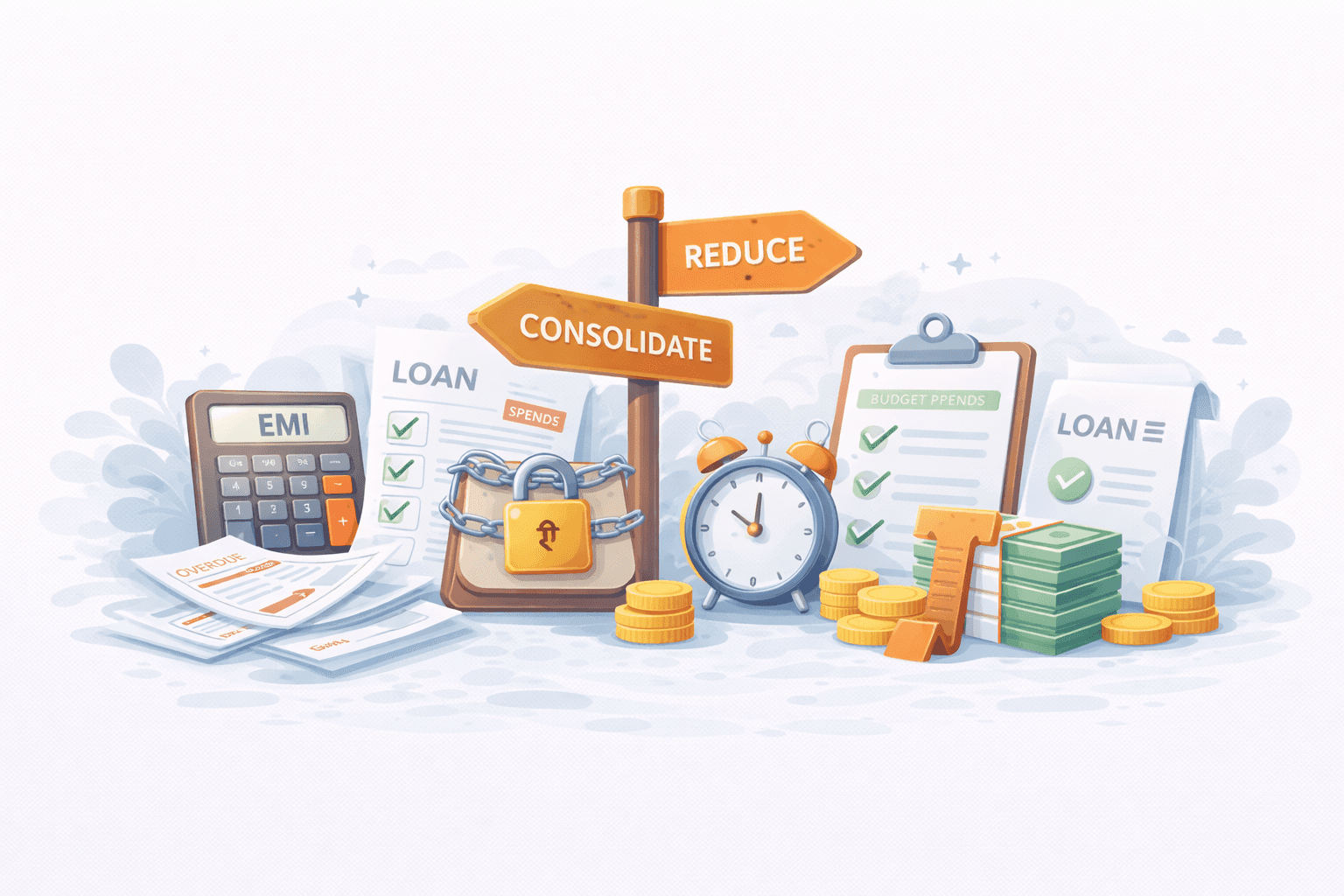
Step 4: Consider Loan Consolidation
If you have:
Multiple small personal loans
Credit card EMIs
BNPL obligations
Consolidating them into one structured loan may reduce stress.
Instead of paying five EMIs, you pay one manageable EMI.
You can compare personal loan offers on Saarathi.ai to explore consolidation options with transparent pricing.
Step 5: Refinance at Lower Interest
If your credit score has improved since you took the loan, refinancing may reduce your EMI.
Options include:
Balance transfer
Lower interest rate negotiation
Switching lenders
Even a 1 percent interest reduction can create meaningful savings over tenure.
For larger commitments like housing, you can compare home loan offers on Saarathi.ai to explore refinancing benefits.
Step 6: Prioritize High-Interest Debt
Not all EMIs are equal.
High-interest loans should be prioritized for faster repayment.
Examples:
Credit card outstanding
Short-term digital loans
High-interest personal loans
Reducing high-cost debt improves monthly cash flow quickly.
Step 7: Build a Mini Emergency Buffer
Even Rs 10,000 to Rs 20,000 as a buffer reduces stress.
Without buffer:
Any unexpected expense leads to EMI bounce
Late fees and penalties increase
Start small. Even saving 5 percent of income helps.
Step 8: Avoid Taking New Loans Under Stress
When struggling, many borrowers take new loans to pay old ones.
This creates:
Debt spiral
Higher interest burden
More credit inquiries
Lower CIBIL score
Before applying for any new credit, ask eligibility questions via Saarathi AI to evaluate smarter alternatives.
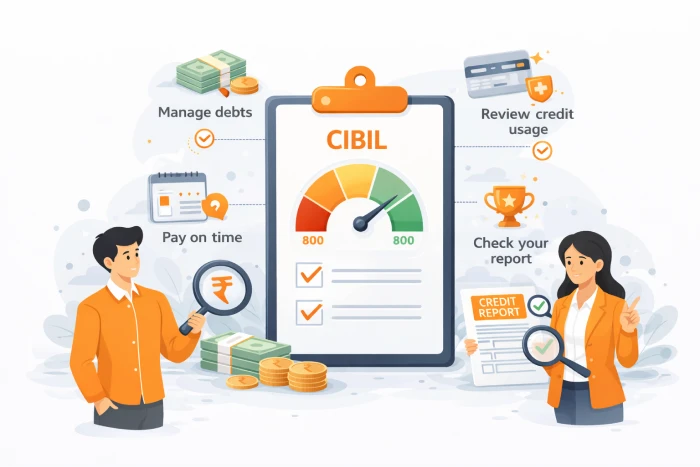
Step 9: Protect Your Credit Score
Missing EMIs affects:
CIBIL score
Future loan eligibility
Interest rates
If EMI delay is unavoidable:
Inform lender immediately
Request short extension
Avoid multiple consecutive misses
Credit recovery takes time, so prevention is better.
Step 10: Increase Income Temporarily
If possible:
Freelance work
Sell unused assets
Monetize skills
Overtime opportunities
Short-term income boosts can stabilize repayment cycle.
Real Example Scenario
Borrower earning Rs 75,000 monthly:
Personal loan EMI Rs 20,000
Credit card EMI Rs 12,000
BNPL Rs 6,000
Car loan Rs 14,000
Total EMI: Rs 52,000
This leaves little room for rent, groceries, and savings.
Solution:
Consolidate credit card and BNPL
Extend tenure for car loan
Reduce monthly EMI to sustainable level
At Saarathi.ai, we have observed that structured consolidation reduces financial anxiety significantly.
When to Consider Restructuring Seriously
Consider formal restructuring if:
EMI exceeds 50 percent of income
You are using savings to pay EMIs
You depend on credit cards for essentials
You feel constant financial stress
Ignoring the issue worsens it.
Mental Health and Financial Stress
EMI pressure affects more than money.
It can impact:
Sleep
Family relationships
Productivity
Confidence
Seeking help is not weakness. Financial reset is possible with structured action.
Warning Signs of Debt Trap
Watch for:
Borrowing to repay existing EMIs
Frequent loan app downloads
Ignoring due date notifications
Receiving collection reminders
Early action prevents long-term damage.
Long-Term Financial Discipline
Once stabilized:
Maintain EMI ratio below 40 percent
Build emergency fund of 3 to 6 months expenses
Avoid impulse credit
Review loan terms before signing
Financial discipline builds long-term freedom.
How Saarathi.ai Can Help
At Saarathi.ai, we focus on:
Intelligent lender matching
Transparent comparison
Reduced rejection impact
Paperless and faster approvals
Tracking via Saarathi Bazaar dashboard
Instead of applying randomly across apps, you can explore structured solutions in one secure ecosystem.
FAQs
1. What happens if I miss one EMI?
Late fee applies and credit score may drop slightly.
2. Can lenders reduce my EMI?
They may extend tenure or restructure depending on policy.
3. Is loan consolidation a good idea?
Yes, if it lowers overall interest and simplifies repayment.
4. Will refinancing hurt my credit score?
A single inquiry has minor impact. Multiple applications may reduce score.
5. How long does it take to recover credit score?
Consistent on-time payments over several months improve it gradually.
Conclusion
Struggling with EMIs is stressful, but it is manageable with timely action.
Key Takeaways:
List all EMIs and calculate your ratio.
Communicate with lenders early.
Consolidate or refinance if beneficial.
Avoid taking new debt under pressure.
Protect your credit score at all costs.
Financial control begins with awareness and smart decisions. Discover transparent, personalized loan solutions on Saarathi.ai today and take confident steps toward regaining control of your finances.