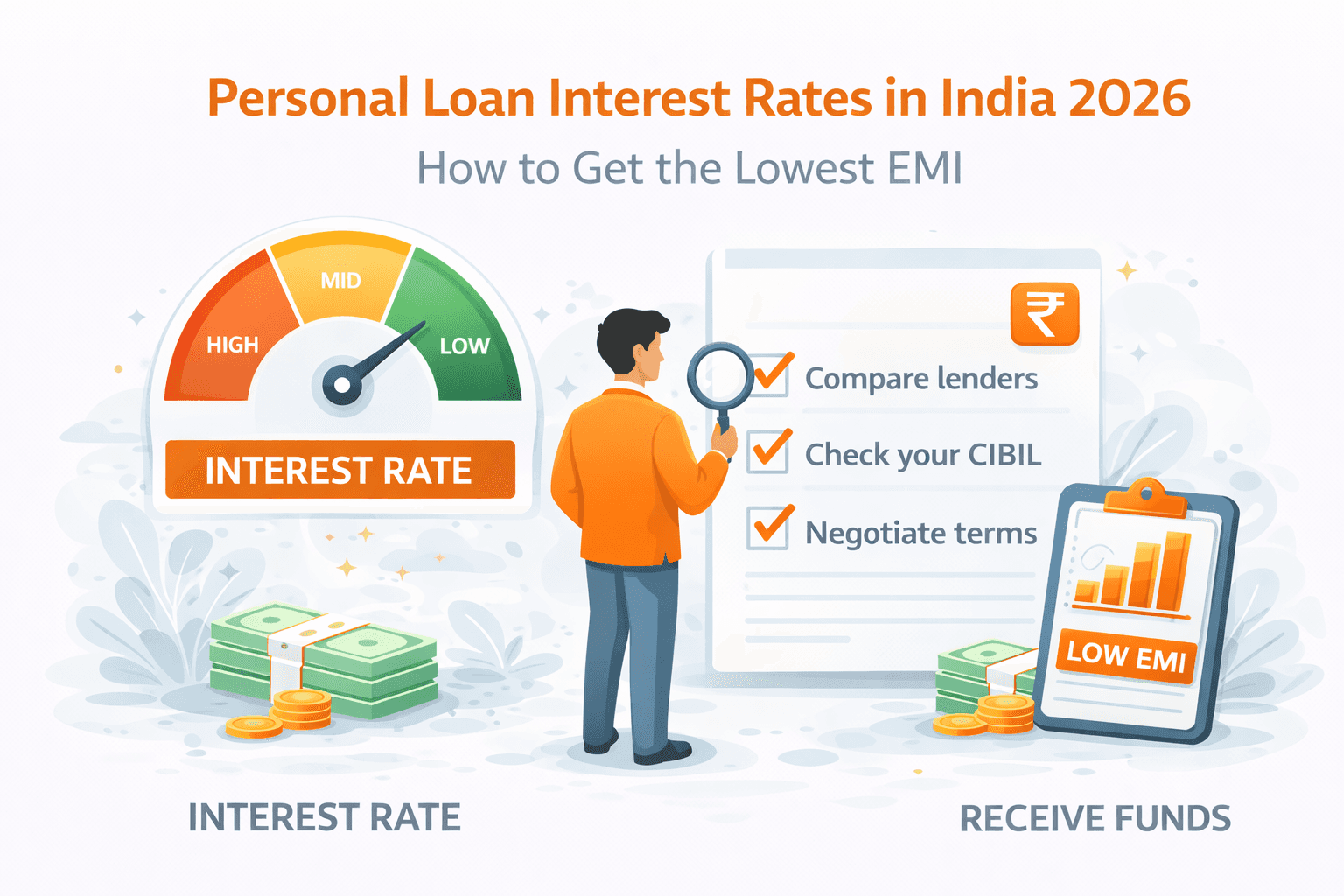
Personal Loan Interest Rates in India 2026: How to Get the Lowest EMI
|
Personal loans remain one of the most popular credit products in India, whether for medical emergencies, weddings, travel, or consolidating high-interest debt. In 2026, personal loan interest rates in India are more dynamic than ever, influenced by RBI policy decisions, borrower credit profiles, and AI-led risk assessment. The good news is that borrowers today have more power to secure lower EMIs if they understand how rates work and compare offers smartly. At Saarathi.ai, we have observed that borrowers who compare multiple lender offers digitally often save thousands of rupees over the loan tenure. This guide explains current personal loan interest rate trends in India for 2026 and practical steps you can take to get the lowest possible EMI.
Personal Loan Interest Rates in India 2026: Current Overview
In 2026, personal loan interest rates in India typically range between 9.75 percent and 24 percent per annum. The wide range exists because personal loans are unsecured, meaning lenders price risk based on individual borrower profiles. Salaried professionals with stable income and strong credit history usually get rates on the lower end, while self-employed or first-time borrowers may see higher rates. According to insights aligned with policy signals from the Reserve Bank of India, interest rates continue to respond to inflation trends and repo rate movements, but individual risk-based pricing plays a bigger role than ever in 2026.
Why Interest Rates Differ So Much Across Lenders
Many borrowers assume all banks offer similar rates, but this is rarely true. Each bank or NBFC has its own credit policy, cost of funds, and risk appetite. One lender may prioritise salaried borrowers from large corporates, while another focuses on MSMEs or professionals. This is why blindly applying to one or two lenders often results in higher EMIs or rejection. At Saarathi.ai, the Saarathi Recommendation Engine matches your profile with lenders most likely to offer competitive rates, reducing guesswork and unnecessary credit checks.
How RBI Policies Impact Personal Loan Rates
The RBI’s repo rate directly affects the cost of borrowing for banks and NBFCs. When the repo rate rises, lenders often increase interest rates to protect margins. When it falls, borrowers may benefit from lower rates, although the transmission is not always immediate for unsecured loans. In 2026, personal loan rates are more closely linked to borrower risk profiles than base rates alone. This means even in a stable rate environment, improving your financial profile can significantly lower your EMI.
Credit Score Still Matters Most
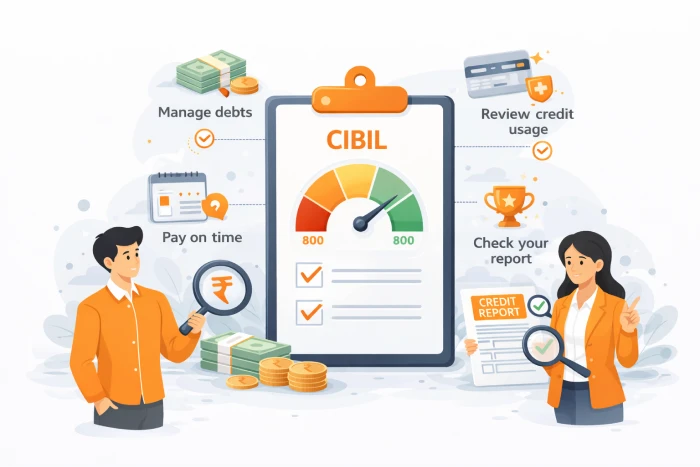
Your credit score remains the single most important factor in determining your personal loan interest rate. A CIBIL score above 750 typically qualifies for the best rates. Scores between 650 and 749 may still get approved but at higher rates. Below 650, options become limited and expensive. AI-driven platforms now evaluate more data, but credit discipline remains critical. At Saarathi.ai, we often see borrowers improve eligibility and rates by correcting credit report errors and reducing outstanding balances before applying.
Income Stability and Employment Profile
Lenders prefer predictable income. Salaried individuals working with reputed employers usually receive lower rates compared to self-employed borrowers with fluctuating income. However, in 2026, AI underwriting has narrowed this gap. By analysing bank statements, GST data, and cash flows, lenders can assess true repayment capacity. This has helped many self-employed professionals secure competitive rates through digital marketplaces like Saarathi.ai.
Loan Amount and Tenure Selection
Choosing the right loan amount and tenure directly impacts your EMI and interest outgo. Longer tenures reduce monthly EMI but increase total interest paid. Shorter tenures increase EMI but save interest overall. Smart borrowers balance affordability with cost efficiency. Saarathi Bazaar allows borrowers to simulate different scenarios and see how changing tenure or amount affects EMI before finalising an offer.
Fixed vs Floating Rates for Personal Loans
Most personal loans in India come with fixed interest rates, offering predictable EMIs throughout the tenure. Some lenders offer floating-rate personal loans linked to external benchmarks. In 2026, fixed rates remain more popular due to stability and easier financial planning. Borrowers who value certainty generally prefer fixed rates, especially in uncertain economic cycles.
Hidden Charges That Increase Your Effective EMI
Interest rate is not the only cost. Processing fees, documentation charges, insurance premiums, and prepayment penalties can significantly increase the effective cost of a loan. Two loans with the same interest rate can have very different total costs. AI-led comparison platforms highlight these charges transparently. At Saarathi.ai, borrowers can see the full cost breakdown before accepting an offer, ensuring no unpleasant surprises later.
How AI Helps You Get the Lowest EMI
AI has changed how personal loan offers are discovered and priced. Instead of mass-market rates, lenders now offer customised pricing. Saarathi AI expert evaluates your profile and suggests steps to improve eligibility, such as adjusting tenure or reducing existing EMIs. The Saarathi Recommendation Engine then compares offers from 110+ lenders to surface those with the lowest possible EMI for your profile. This personalised approach often results in better rates than applying directly to a single bank.
Prepayment and Foreclosure Strategies
If your income increases or you receive a bonus, prepaying part of your loan can reduce interest burden. Some lenders allow partial prepayment without penalty after a lock-in period. In 2026, many digital lenders offer flexible prepayment options, but terms vary widely. Always check prepayment clauses before finalising a loan. Saarathi Bazaar displays these terms clearly, helping borrowers plan long-term savings.
Common Mistakes That Lead to Higher EMIs
Many borrowers unknowingly increase their EMI burden by making avoidable mistakes. Applying to multiple lenders simultaneously can hurt your credit score. Choosing longer tenures without calculating total interest is another common error. Ignoring processing fees and insurance costs also inflates the effective EMI. Using a single trusted platform to compare offers helps avoid these pitfalls.
What Trends to Expect Beyond 2026
Personal loan pricing will continue to become more personalised. AI models will factor in behavioural patterns and life events, offering proactive credit options. Borrowers with strong digital footprints and disciplined repayment histories will benefit the most. Transparency and speed will remain key differentiators.
FAQs
What is the average personal loan interest rate in India in 2026?
Rates typically range from 9.75 percent to 24 percent per annum, depending on borrower profile and lender.
How can I reduce my personal loan EMI?
Improve your credit score, compare multiple lenders, choose the right tenure, and avoid unnecessary add-ons.
Do NBFCs offer lower rates than banks?
Sometimes. NBFCs may offer faster approvals and flexible criteria, while banks usually offer lower rates for strong profiles.
Does checking offers on Saarathi.ai affect my credit score?
No. Eligibility checks and comparisons on Saarathi.ai are designed to minimise unnecessary hard inquiries.
Can self-employed borrowers get low interest personal loans?
Yes. With proper documentation and AI-led assessment, many self-employed borrowers secure competitive rates.
Conclusion
Personal loan interest rates in India in 2026 depend on a mix of RBI policy signals, lender strategy, and most importantly, your financial profile. Key takeaways include maintaining a strong credit score, comparing offers instead of applying blindly, understanding total loan cost, and using AI tools to your advantage. If you want the lowest possible EMI with full transparency, compare personalised personal loan offers across 110+ lenders and track your application seamlessly on Saarathi.ai today.