NBFC vs Bank Loans: Which Offers Faster Approval in 2026?
|
Speed matters more than ever when applying for a loan in India. In 2026, borrowers expect quick approvals, minimal paperwork, and clear communication. This has brought a long-standing comparison back into focus: NBFC vs bank loans. While banks are trusted for stability and lower rates, NBFCs are known for flexibility and faster decisions. At Saarathi.ai, we have observed that borrowers often choose the wrong option based on assumptions, not actual approval timelines. This article explains the real differences between NBFC and bank loans in India in 2026, with a clear focus on which option offers faster approval and why.
Understanding Banks and NBFCs
Banks are regulated financial institutions that accept deposits and offer a wide range of financial services. They follow strict compliance, risk controls, and standardised processes. NBFCs, or Non-Banking Financial Companies, do not accept demand deposits but provide loans and credit products across segments. Both operate under regulations issued by the Reserve Bank of India, but their operating models differ significantly. These differences directly impact approval speed, eligibility criteria, and borrower experience.
Approval Speed: The Core Difference
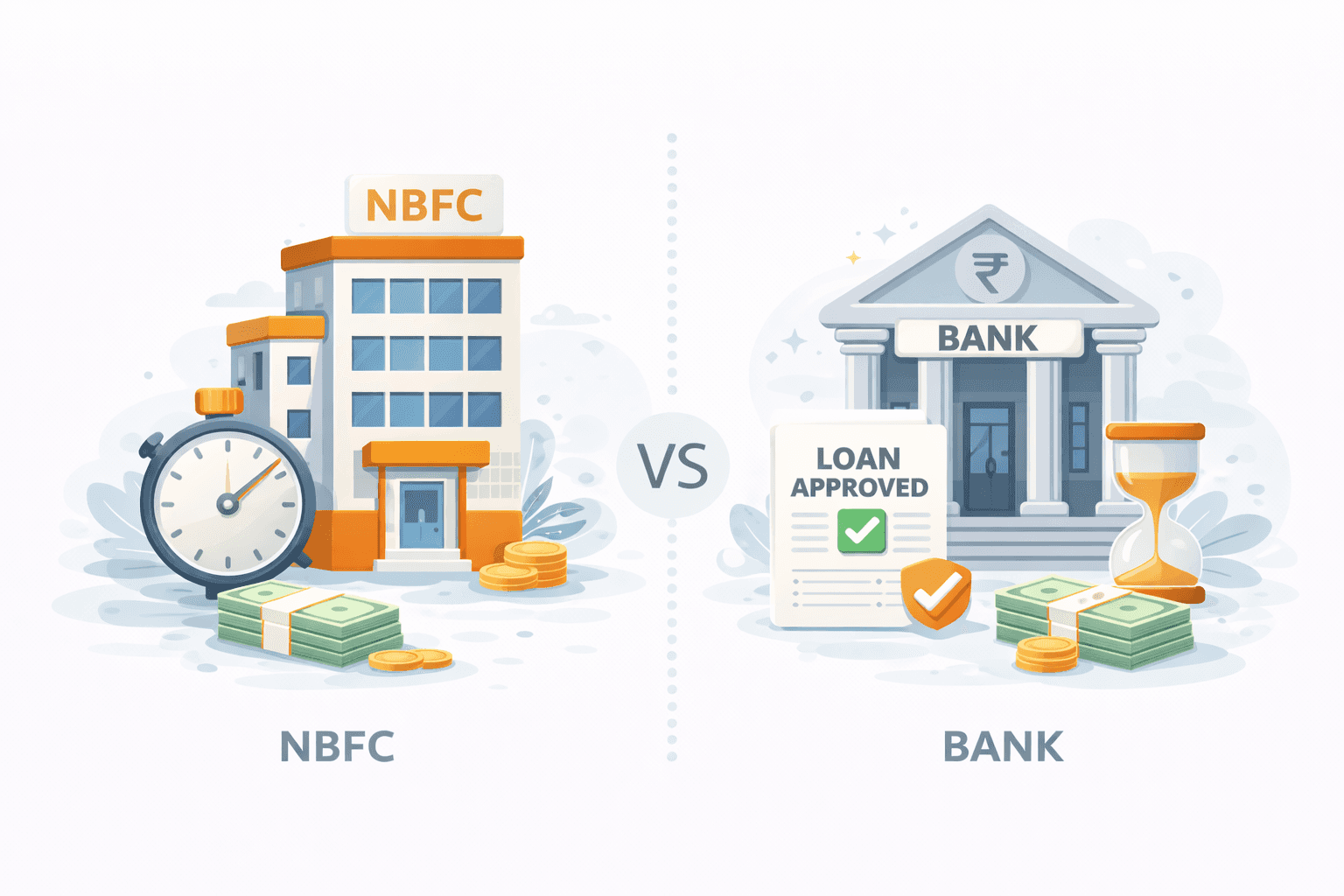
In 2026, NBFCs generally offer faster loan approvals than banks. Many NBFCs approve personal and business loans within 24 to 72 hours, especially through digital channels. Banks, on the other hand, may take anywhere from a few days to a few weeks, depending on the loan type and documentation. The faster turnaround from NBFCs comes from simpler credit policies, AI-driven underwriting, and fewer legacy systems. Banks prioritise risk control and compliance, which adds processing layers and time.
Why NBFCs Approve Loans Faster
NBFCs are built for speed and niche lending. They often focus on specific borrower segments such as MSMEs, self-employed professionals, or first-time borrowers. Their credit models use alternative data like bank statements, GST returns, and transaction patterns. This allows quicker decisions without waiting for extensive manual verification. At Saarathi.ai, we have seen NBFC-led offers come through much faster for borrowers with variable income or non-standard profiles.
Why Banks Take Longer but Feel Safer
Banks follow uniform underwriting standards and extensive verification processes. Property-backed loans, in particular, involve detailed legal and technical checks. While this slows down approval, it also results in lower interest rates for strong borrower profiles. In 2026, banks remain the preferred choice for home loans and large-ticket secured loans where cost matters more than speed.
Eligibility Flexibility Comparison
NBFCs are generally more flexible on eligibility. They consider a wider range of income proofs and are open to borrowers with moderate credit scores. Banks prefer high credit scores, stable income, and clean repayment history. This means borrowers who get rejected by banks often find options with NBFCs. However, flexibility comes at a cost, usually in the form of higher interest rates or shorter tenures.
Interest Rates and Cost Trade-Off
Banks usually offer lower interest rates, especially for borrowers with strong profiles. NBFC rates are slightly higher to compensate for faster approvals and higher risk tolerance. In 2026, the difference has narrowed due to AI-based risk pricing, but it still exists. Borrowers must balance speed and cost. If funds are needed urgently, NBFCs may be the better option. If time allows, bank loans can reduce long-term interest outgo.
Documentation and Paperwork
Banks typically require extensive documentation, including income proof, employment details, and property papers for secured loans. NBFCs have simplified documentation, often allowing digital uploads and faster verification. Paperless journeys are more common with NBFCs, which directly impacts approval speed. Saarathi.ai connects borrowers with lenders that offer minimal documentation and transparent requirements.
Loan Types Where NBFCs Are Faster
NBFCs usually approve personal loans, business loans, and loan against property faster than banks. They are also quicker for top-up loans and balance transfers. Banks are slower but competitive for home loans, especially for salaried borrowers with strong credit profiles.
Role of AI in Speeding Up Approvals
AI has reduced the gap between NBFCs and banks, but NBFCs still lead on speed. AI-driven credit scoring, document verification, and eligibility checks allow instant decisions. Saarathi AI expert helps borrowers understand which lenders are likely to approve quickly based on profile and urgency. The Saarathi Recommendation Engine then highlights offers where approval timelines match borrower needs.
Transparency and Tracking Experience
Another factor affecting borrower perception is transparency. NBFCs often provide real-time status updates and quicker communication. Banks may rely on branch-based updates, which feel slower. Saarathi Bazaar solves this by offering a single dashboard to track applications across banks and NBFCs with full visibility.
Risk and Regulatory Safeguards
Both banks and NBFCs are regulated by the RBI, but banks face stricter capital and compliance norms. Borrowers should always choose RBI-regulated lenders and avoid unverified digital apps. Saarathi.ai works only with trusted banks and NBFCs, ensuring safety along with speed.
Which Option Should You Choose in 2026
Choose an NBFC if speed, flexibility, and ease of approval are your top priorities. This is especially relevant for MSMEs, self-employed individuals, or urgent funding needs. Choose a bank if you have a strong credit profile, stable income, and time to wait for lower interest rates and longer tenures.
FAQs
Who offers faster loan approval in 2026, banks or NBFCs?
NBFCs generally offer faster approvals due to flexible policies and digital processes.
Are NBFC loans safe?
Yes, as long as the NBFC is RBI-regulated.
Do banks offer better interest rates?
Usually yes, especially for borrowers with strong credit profiles.
Can I compare both options online?
Yes. Platforms like Saarathi.ai allow easy comparison across banks and NBFCs.
Will applying to multiple lenders reduce my credit score?
Multiple hard inquiries can impact your score. Smart comparison tools help minimise this risk.
Conclusion
In 2026, the choice between NBFC and bank loans depends on your priority: speed or cost. NBFCs lead on faster approvals and flexibility, while banks offer lower rates and long-term stability. With AI-driven marketplaces, borrowers no longer have to guess. Compare personalised offers from banks and NBFCs, understand approval timelines clearly, and track your application transparently on Saarathi.ai to make a confident borrowing decision today.