Loan Consolidation in India: One EMI, Lower Stress, Smarter Savings
|
Loan consolidation has become a practical financial strategy for Indians juggling multiple EMIs across credit cards, personal loans, and other unsecured borrowings. Rising living costs, fluctuating interest rates, and easy access to credit have made it common to hold two or more loans at the same time. The challenge is not borrowing itself, but managing scattered repayment dates, high blended interest rates, and constant stress. Loan consolidation helps by combining multiple loans into one single loan with one EMI, often at a lower interest rate and with clearer visibility. At Saarathi.ai, we have observed that borrowers who consolidate loans early tend to regain control of cash flow faster and improve their credit behaviour over time. This guide explains what loan consolidation means in India, how it works, who should consider it, and how to do it smartly using digital platforms like Saarathi.ai.
What Is Loan Consolidation?
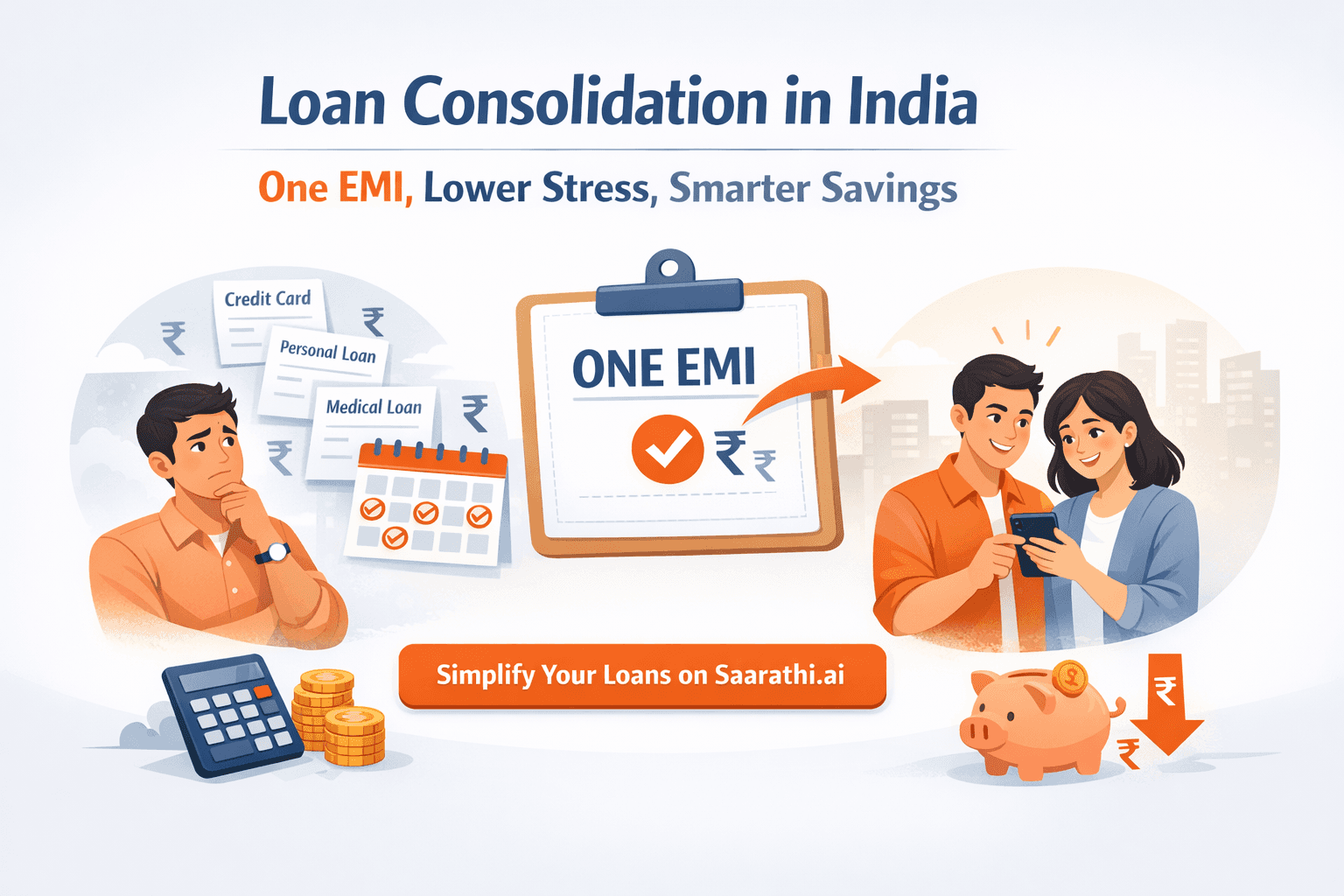
Loan consolidation is the process of merging multiple existing loans into one new loan. The new loan is used to close older liabilities such as credit card balances, personal loans, consumer durable loans, or even overdrafts. After consolidation, you pay one EMI to one lender instead of several EMIs to multiple lenders.
The core objective is simple:
Reduce total interest burden
Simplify repayments
Improve monthly cash flow
Lower the risk of missed EMIs
In India, loan consolidation is usually done through a personal loan, business loan, or loan against property, depending on the borrower’s profile and total outstanding amount.
Why Loan Consolidation Is Gaining Popularity in India
Several factors are driving the rise of loan consolidation among Indian borrowers:
Easy access to credit cards and instant loans
Digital lending apps and credit cards have made borrowing frictionless, but repayments often carry high interest rates.
Rising interest burden on unsecured debt
Credit cards can charge 36-48 percent annually. Consolidation replaces these with lower-cost options.
Increased financial awareness
Borrowers are now actively looking for structured ways to manage debt instead of rolling balances endlessly.
Stricter credit discipline
As per guidance from the Reserve Bank of India, lenders increasingly evaluate repayment behaviour. Fewer EMIs often mean better repayment discipline and lower risk flags.
Key Benefits of Loan Consolidation
One EMI, one due date
This drastically reduces the chances of missing payments and paying penalties.
Lower overall interest rate
Replacing high-interest credit cards with a personal loan can significantly reduce interest outgo.
Improved monthly cash flow
A longer tenure or lower rate means manageable EMIs and breathing room for savings.
Better credit score management
Timely repayment of a single consolidated loan improves repayment history over time.
Mental peace and financial clarity
Knowing exactly how much you owe and when you will be debt-free reduces stress.
Types of Loans You Can Consolidate
Loan consolidation in India commonly covers:
Credit card outstanding balances
Personal loans from banks or NBFCs
Consumer durable or buy-now-pay-later loans
Short-term digital loans
Business overdrafts (for self-employed borrowers)
Education loans and home loans are usually not part of consolidation due to already lower interest rates.
Who Should Consider Loan Consolidation?
Loan consolidation is ideal if you:
Pay three or more EMIs every month
Are servicing high-interest unsecured loans
Feel monthly EMIs consume more than 40-45 percent of income
Have a stable income or business cash flow
Want to improve credit behaviour without taking fresh lifestyle debt
At Saarathi.ai, we often recommend consolidation when borrowers start using new loans to repay old ones, as this signals a debt cycle.
Loan Consolidation vs Balance Transfer
Many borrowers confuse loan consolidation with balance transfer. The difference is important.
Loan consolidation
Combines multiple loans into one
Can involve a new lender
Covers credit cards and multiple loan types
Balance transfer
Moves a single loan to another lender
Usually applies to one personal loan or credit card
Focused mainly on interest reduction
Consolidation offers broader relief when liabilities are spread across products.
How Loan Consolidation Works Step by Step
Step 1: List all existing loans
Note outstanding amount, interest rate, EMI, and remaining tenure.
Step 2: Check eligibility for a consolidation loan
This depends on income, credit score, employment stability, and total obligations.
Step 3: Compare offers across lenders
Interest rate, processing fees, tenure flexibility, and foreclosure charges matter.
Step 4: Use the new loan to close old dues
Some lenders directly pay existing creditors; others disburse to your account.
Step 5: Start paying one consolidated EMI
Track it regularly to avoid slipping back into multiple debts.
On Saarathi.ai, this entire journey is simplified through AI-driven eligibility checks and lender comparisons, helping borrowers see realistic options upfront.
Interest Rates and Tenure Expectations
Loan consolidation is usually done through personal loans or business loans. Typical ranges in India are:
Interest rate: 10.5 percent to 24 percent per annum
Tenure: 12 months to 60 months
Processing fee: 1 percent to 3 percent plus GST
Rates depend heavily on credit score, employer profile, and income stability.
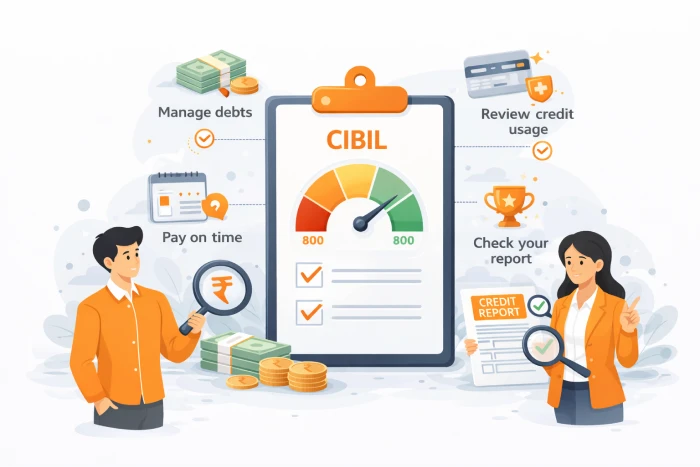
Impact on Credit Score
Loan consolidation can positively impact your credit score if done correctly.
Short-term, there may be a minor dip due to a new loan inquiry. Over time, benefits include:
Lower credit utilisation
Fewer active loan accounts
Improved repayment history
As highlighted in consumer credit studies referenced by CRISIL, disciplined repayment behaviour is one of the strongest drivers of long-term credit score improvement.
Common Mistakes to Avoid
Consolidating without closing old accounts
If you continue using credit cards irresponsibly, consolidation fails.
Choosing longer tenure blindly
Lower EMI feels good, but excessive tenure increases total interest paid.
Ignoring foreclosure charges
Some existing loans may have penalties that reduce consolidation benefits.
Taking fresh debt after consolidation
This is the biggest risk. Consolidation works only with spending discipline.
How Saarathi.ai Makes Loan Consolidation Smarter
At Saarathi.ai, loan consolidation is not treated as a generic personal loan. Our platform focuses on suitability and transparency.
AI-based eligibility assessment helps you know realistic approval chances before applying.
Saarathi Recommendation Engine compares offers from 110+ banks and NBFCs to show best-fit options.
Saarathi AI expert answers eligibility, EMI, and documentation questions instantly.
Saarathi Bazaar dashboard lets you track applications and offers in one place.
Paperless digital journey ensures faster approvals and minimal documentation.
Borrowers can compare personal loan offers on Saarathi.ai, check eligibility instantly, and proceed with confidence.
FAQs on Loan Consolidation in India
Is loan consolidation good or bad?
Loan consolidation is good if it reduces interest and improves repayment discipline. It is risky only if followed by fresh debt.
Can I consolidate credit card dues into a personal loan?
Yes. This is one of the most common and effective forms of loan consolidation.
What credit score is required for loan consolidation?
Most lenders prefer a score of 700 or above, though options may exist below this with higher rates.
Does loan consolidation reduce EMI immediately?
In most cases, yes. EMI reduces due to lower interest or extended tenure.
Can self-employed borrowers consolidate loans?
Yes. Business loans or LAP options are commonly used for consolidation.
Conclusion
Loan consolidation is not about taking more debt; it is about managing existing debt better. When done at the right time, it can lower EMIs, reduce stress, and put you back in control of your finances. The key lies in choosing the right lender, understanding total costs, and maintaining spending discipline after consolidation. At Saarathi.ai, we believe consolidation should be transparent, personalised, and driven by data, not guesswork. Discover personalised loan consolidation options on Saarathi.ai today and move towards a simpler, stress-free repayment journey.