Home Loans for Pensioners: Complete Guide
|
Owning a comfortable home after retirement is a dream many senior citizens cherish. Rising property prices and limited post-retirement income often make this goal feel difficult. The good news is that home loans for pensioners in India are not only possible but increasingly accessible in 2026. Banks and NBFCs now offer tailored housing finance solutions for retirees, defence pensioners, and senior citizens with stable pension income. At Saarathi.ai, we have observed growing demand from pensioners who want transparent guidance, faster approvals, and clear EMI planning without paperwork stress. This guide explains eligibility, age limits, interest rates, documentation, pros and cons, and smart tips to improve approval chances. If you are a pensioner or planning retirement soon, this article will help you make a confident, informed decision.
Understanding Home Loans for Pensioners
A home loan for pensioners is a housing loan offered to retired individuals who receive a regular pension. Lenders consider pension as a stable income source, especially when credited monthly through government or reputed institutions. While salaried borrowers rely on future income growth, pensioners are evaluated on repayment capacity, existing savings, and loan tenure.
Key features usually include:
Shorter loan tenure compared to salaried borrowers
Slightly stricter age criteria
Option to include a co-applicant like spouse or earning child
Competitive interest rates for government pensioners
According to guidelines influenced by the Reserve Bank of India, lenders must ensure responsible lending and affordability, which is why pension-based home loans focus strongly on EMI-to-income ratios.
Who Is Eligible for a Home Loan After Retirement?
Eligibility varies across banks and NBFCs, but common criteria include:
Age Criteria
Most lenders require:
Minimum age at loan start: 58 to 60 years
Maximum age at loan maturity: 70 to 75 years
Some NBFCs allow up to 80 years if a co-applicant is added.
Income and Pension Type
Eligible pension types generally include:
Government pension
PSU pension
Defence pension
Family pension with continuity
Private pensions may be considered if credited regularly and supported by strong financial records.
Credit Score Requirement
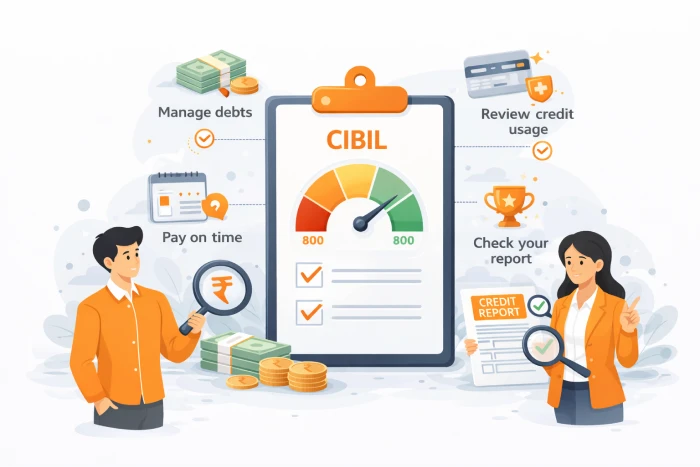
A CIBIL score of 700 or above improves approval chances. At Saarathi.ai, we have seen pensioners with scores above 750 get faster approvals and better rates through AI-based lender matching.
Property Eligibility
The property should be:
Self-occupied or intended for self-use
Approved by local authorities
Clear in title and documentation
Types of Home Loans Available for Pensioners
Standard Home Loan
Used for purchasing a ready or under-construction residential property. This is the most common option.
Home Construction Loan
For pensioners owning a plot and planning construction. Disbursement usually happens in stages.
Home Improvement or Renovation Loan
Ideal for upgrading an existing home for accessibility, safety, or comfort in retirement.
Loan Against Property
Some pensioners prefer a loan against an owned property to fund a new home. Interest rates are slightly higher, but eligibility may be flexible.
Interest Rates and Loan Tenure in 2026
Interest rates for pensioners are broadly similar to standard home loans, ranging between 8.5 percent to 10.5 percent per annum depending on:
Lender type
Credit score
Pension stability
Loan tenure
Loan tenure is usually shorter, between 5 to 15 years. Adding a younger co-applicant can extend tenure and reduce EMIs.
Example EMI Calculation
Loan amount: Rs 40 lakh
Interest rate: 9 percent
Tenure: 10 years
Approx EMI: Rs 50,700
At Saarathi.ai, our AI recommendation engine instantly shows such EMI scenarios across multiple lenders, helping pensioners choose wisely.
Documents Required for Pensioner Home Loans
Most lenders ask for:
Proof of identity and address
Age proof
Pension Payment Order or pension certificate
Last 6 months pension bank statements
Property documents
Photographs
The process is largely paperless on Saarathi.ai, reducing physical visits and stress.
Role of Co-Applicant in Improving Eligibility
Adding a co-applicant is one of the most effective ways for pensioners to improve loan approval chances. Common co-applicants include:
Spouse receiving pension
Working son or daughter
Earning family member with stable income
Benefits include:
Higher loan eligibility
Longer tenure
Lower EMI burden
Better interest rates
Pros and Cons of Home Loans for Pensioners
Advantages
Enables home ownership post-retirement
Pension treated as stable income
Special concessions for government pensioners
Option to include co-applicant
Challenges
Shorter tenure increases EMI
Stricter age limits
Limited flexibility for very high loan amounts
Being aware of these factors helps pensioners plan realistically.
Tips to Improve Approval Chances for Pensioners
At Saarathi.ai, we have observed the following strategies work well:
Maintain a high credit score by paying existing EMIs and credit cards on time
Reduce existing liabilities before applying
Choose realistic loan amounts aligned with pension income
Add a strong co-applicant if possible
Opt for lenders experienced with senior citizen loans
Using Saarathi.ai, pensioners can compare offers from 110+ banks and NBFCs and track applications through Saarathi Bazaar with full transparency.
Tax Benefits on Home Loans for Pensioners
Pensioners can still claim tax benefits if they have taxable income:
Deduction under Section 24 for home loan interest
Deduction under Section 80C for principal repayment
These benefits depend on individual tax liability and should be discussed with a tax advisor.
Digital Application Process for Pensioners on Saarathi.ai
The traditional loan process can be tiring for senior citizens. Saarathi.ai simplifies this with:
AI-powered eligibility check in minutes
Paperless application journey
Personalised lender recommendations
Dedicated Saarathi AI expert support
Real-time tracking on Saarathi Bazaar dashboard
This people-first approach ensures comfort, clarity, and confidence for pensioners.
Common Myths About Home Loans After Retirement
Myth: Pensioners cannot get home loans
Fact: Many lenders actively offer pension-based housing loans
Myth: Interest rates are very high
Fact: Rates are comparable to regular home loans if credit profile is strong
Myth: Process is complicated
Fact: Digital platforms like Saarathi.ai make it simple and guided
FAQs on Home Loans for Pensioners
Can a pensioner get a home loan at 65 years of age?
Yes, many lenders allow loans if repayment ends by 70 to 75 years, or later with a co-applicant.
Is pension considered stable income for home loans?
Yes, especially government and defence pensions credited monthly.
What is the maximum loan amount for pensioners?
It depends on pension amount, age, credit score, and co-applicant profile.
Can family pensioners apply for home loans?
Yes, if pension continuity is assured and documented.
Is a medical check-up required?
Some lenders may request basic health declarations due to age.
Conclusion
Home loans for pensioners in India are a practical and empowering option in 2026. With the right planning, stable pension income, and smart lender selection, senior citizens can own or upgrade their homes comfortably. Key takeaways include:
Pension is accepted as reliable income
Co-applicants significantly improve eligibility
Digital platforms reduce stress and delays
If you or your loved ones are planning a home loan after retirement, discover personalised, transparent, and fast options on Saarathi.ai today and take the next step towards peaceful home ownership.