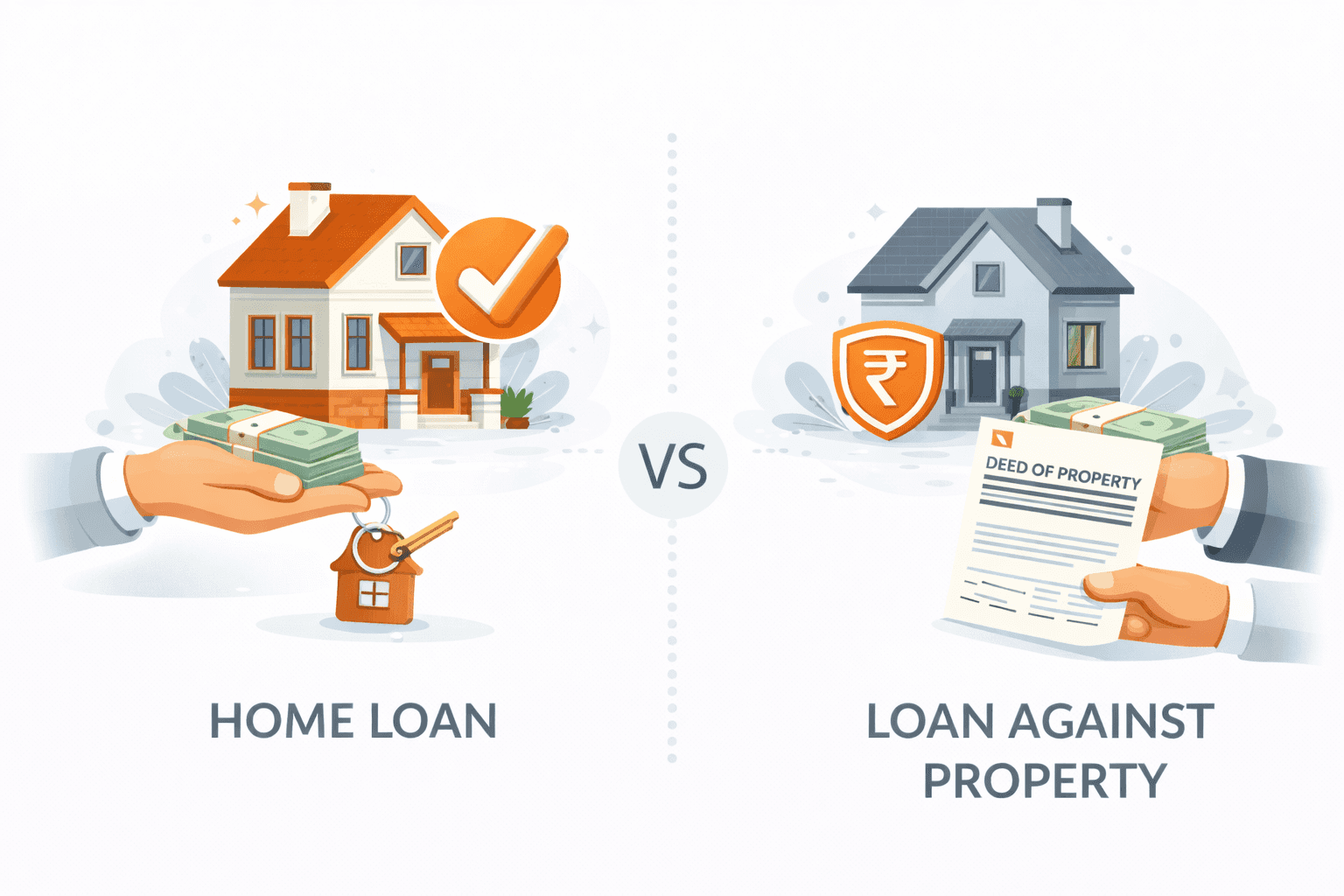
Home Loan vs Loan Against Property: Which is better in 2026?
|
Property-backed loans remain among the most affordable borrowing options in India. In 2026, borrowers often face a common dilemma: choosing between a home loan and a loan against property. Both are secured loans with lower interest rates compared to personal loans, but they serve very different purposes. A home loan is designed to help you buy or construct a house, while a loan against property lets you unlock the value of an existing property for personal or business needs. At Saarathi.ai, we have observed that many borrowers select the wrong product due to limited clarity, leading to higher costs or restricted usage later. This guide explains the difference between home loan and loan against property in 2026, helping you choose what truly fits your financial goals.
What Is a Home Loan?
A home loan is a secured loan taken to purchase, construct, or renovate a residential property. The property itself acts as collateral. Home loans typically come with long tenures, sometimes up to 30 years, and are among the lowest interest-rate loans available in India. In 2026, most home loans are linked to external benchmarks and offered by banks and NBFCs with competitive pricing. They also come with tax benefits on principal and interest repayment, making them attractive for salaried and self-employed borrowers planning long-term asset creation.
What Is a Loan Against Property?
A loan against property, commonly known as LAP, is a secured loan where you pledge an already owned residential or commercial property as collateral. Unlike home loans, the end use of funds is flexible. Borrowers use LAP for business expansion, working capital, education, medical needs, or even debt consolidation. Interest rates are higher than home loans but lower than unsecured loans. Tenures usually range from 10 to 20 years. In 2026, LAP has become popular among MSMEs and self-employed professionals who need large funds without selling assets.
Interest Rates Comparison in 2026
Interest rates are one of the biggest differentiators between home loans and LAP. Home loan interest rates in 2026 generally start from around 8.5 percent to 10 percent per annum, depending on borrower profile and lender. Loan against property rates are higher, typically ranging from 10 percent to 14 percent per annum. The difference exists because LAP allows flexible usage and carries slightly higher risk for lenders. According to policy cues and lending norms aligned with the Reserve Bank of India, secured loans continue to be priced competitively, but risk-based pricing is becoming more granular.
Loan Amount and Eligibility Differences
Home loan eligibility is linked to income, repayment capacity, property value, and credit score. Lenders usually finance up to 75 to 90 percent of the property value. In contrast, loan against property eligibility depends heavily on the market value of the pledged property and its legal status. Most lenders offer up to 50 to 65 percent of the property’s value as LAP. At Saarathi.ai, we have seen borrowers unlock higher loan amounts through LAP when income alone was not sufficient to qualify for large personal or business loans.
Tenure and EMI Impact
Home loans offer longer tenures, which significantly reduce monthly EMI and improve affordability. This makes them ideal for long-term planning. LAP tenures are shorter, resulting in higher EMIs for the same loan amount. Borrowers must assess cash flow carefully before opting for LAP. Using the Saarathi Bazaar dashboard, borrowers can simulate EMI scenarios and understand the long-term cost impact before choosing between the two.
End-Use Restrictions and Flexibility
End-use is where the difference becomes most clear. Home loans have strict usage rules. Funds must be used only for property purchase, construction, or approved renovation. Misuse can attract penalties. Loan against property offers flexibility, allowing borrowers to use funds for almost any purpose except speculative activities. In 2026, this flexibility makes LAP a preferred option for entrepreneurs and professionals funding growth or consolidating expensive debt.
Tax Benefits Comparison
Home loans come with significant tax benefits under the Income Tax Act. Borrowers can claim deductions on principal repayment and interest paid, subject to limits. Loan against property offers limited tax benefits. Interest paid may be deductible only if the loan is used for business purposes, and even then, conditions apply. For salaried individuals planning to buy a home, tax efficiency often tilts the decision in favour of a home loan.
Processing Time and Documentation
In 2026, both home loans and LAP have become more digital, but LAP still involves more documentation due to property verification. Home loan processing typically takes a few days to a couple of weeks, depending on property readiness. LAP may take slightly longer due to title checks and valuation. Saarathi.ai simplifies both processes by connecting borrowers with lenders offering paperless journeys and transparent timelines.
Risk Considerations
Both loans involve property as collateral, which means default can lead to asset loss. However, LAP carries higher risk because borrowers often use funds for business or consumption, which may not generate predictable returns. It is important to borrow responsibly and choose EMI levels aligned with stable income.
How AI Helps You Choose the Right Option
AI-driven platforms analyse borrower goals, income stability, property value, and risk appetite to recommend the right product. Saarathi AI expert helps borrowers understand whether a home loan or LAP fits their objective better. The Saarathi Recommendation Engine then matches borrowers with suitable lenders offering competitive terms, reducing trial and error.
Who Should Choose a Home Loan in 2026
A home loan is better suited if you are purchasing or constructing a house, seeking long tenure and low EMI, and want tax benefits. It is ideal for salaried professionals and families planning long-term stability.
Who Should Choose a Loan Against Property in 2026
A loan against property is suitable if you already own property and need funds for business expansion, education, or debt consolidation. It works well for self-employed borrowers and MSMEs who need flexibility and larger ticket sizes.
FAQs
Which loan has a lower interest rate in 2026?
Home loans generally have lower interest rates compared to loan against property.
Can I use a home loan for business purposes?
No. Home loan funds must be used only for property-related purposes.
Is loan against property risky?
It can be if repayment capacity is uncertain, as the property is at stake in case of default.
Are tax benefits available on loan against property?
Limited benefits are available if the loan is used for business purposes.
Can I compare both options digitally?
Yes. Platforms like Saarathi.ai allow you to compare eligibility, EMIs, and offers transparently.
Conclusion
Choosing between a home loan and a loan against property in 2026 depends on your financial goal, risk appetite, and cash flow stability. Key differences lie in interest rates, usage flexibility, tenure, and tax benefits. A home loan supports long-term asset creation, while LAP unlocks liquidity from existing assets. To make the right choice without confusion, compare personalised home loan and loan against property offers across 110+ lenders, track applications transparently, and get expert guidance on Saarathi.ai today.