Fixed vs Floating Interest Rates in 2026: What to choose?
|
Choosing between a fixed and floating interest rate is one of the most important decisions Indian borrowers make while taking a loan. In 2026, with interest rates responding to inflation trends, RBI policy signals, and global economic conditions, this choice has become even more critical. The wrong selection can increase EMIs unexpectedly or lock borrowers into higher costs for years. At Saarathi.ai, we have observed that many borrowers focus only on the initial interest rate without understanding long-term implications. This guide explains fixed vs floating interest rates in 2026, helping Indian borrowers choose the option that best matches their income stability, risk appetite, and financial goals.
What Is a Fixed Interest Rate
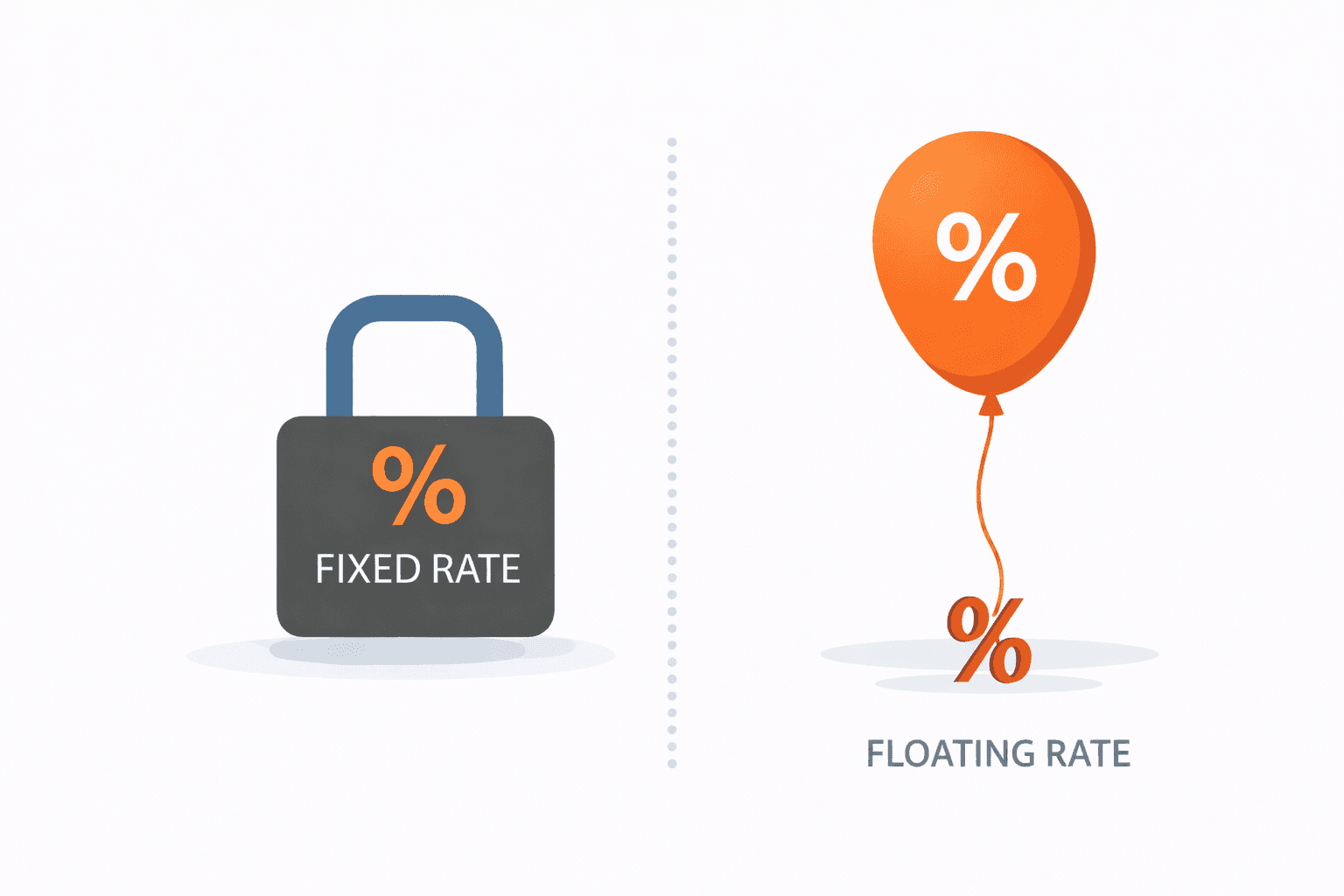
A fixed interest rate remains constant throughout the loan tenure or for a defined initial period. Your EMI stays the same regardless of market movements. Fixed rates offer predictability and peace of mind, making budgeting easier. In India, fixed-rate loans are common for personal loans, consumer loans, and some home loans with fixed periods. In 2026, fixed rates are generally higher than initial floating rates because lenders factor in future rate risks.
What Is a Floating Interest Rate
A floating interest rate moves in line with an external benchmark, often linked to the repo rate set by the Reserve Bank of India. When the benchmark changes, the loan’s interest rate and EMI or tenure may change. Floating rates usually start lower than fixed rates, making them attractive initially. However, they expose borrowers to interest rate fluctuations over time.
Interest Rate Trends in 2026
In 2026, interest rates are influenced by inflation control measures, economic growth priorities, and global monetary trends. While sharp spikes are less frequent, gradual changes are common. This environment makes the fixed vs floating decision less about predicting rates and more about understanding personal financial resilience. Borrowers with stable income and higher risk tolerance may handle floating rates better, while others may prefer certainty.
EMI Stability vs Cost Efficiency
Fixed rates offer EMI stability. Your monthly outgo remains unchanged, which is ideal for borrowers with tight budgets or fixed incomes. Floating rates offer potential cost efficiency over the long term if rates decline or remain stable. However, EMIs can increase during upward cycles. Borrowers must evaluate whether they can absorb higher EMIs if rates rise.
Loan Types and Rate Preference
Different loan types suit different rate structures. Personal loans almost always come with fixed rates due to shorter tenures. Home loans and loan against property often offer floating rates with longer tenures. In 2026, some lenders provide hybrid options where the rate is fixed for an initial period and then becomes floating. Understanding the loan product helps narrow the right choice.
Impact of Tenure on Your Decision
Loan tenure plays a major role. For short tenures, the difference between fixed and floating rates is minimal, making fixed rates a safer choice. For long tenures like 20 to 30 years, floating rates may result in lower overall interest if rates remain favourable. However, long-term borrowers must be prepared for periodic EMI changes.
Prepayment Flexibility and Penalties
Floating-rate loans generally offer better prepayment flexibility, often with no penalty for early repayment. Fixed-rate loans may have stricter prepayment or foreclosure charges. Borrowers planning to prepay or refinance should consider this factor seriously. At Saarathi.ai, borrowers can compare prepayment terms clearly before finalising a loan.
Who Should Choose Fixed Interest Rates in 2026
Fixed rates are suitable for borrowers who prioritise EMI stability, have limited buffer for rate increases, or prefer predictable cash flow. They work well for short-term loans and personal loans where budgeting certainty is important.
Who Should Choose Floating Interest Rates in 2026
Floating rates suit borrowers with stable and growing income, long-term loan horizons, and comfort with some uncertainty. They are ideal for home loans and property-backed loans where long-term cost savings matter more than short-term fluctuations.
How AI Helps You Decide Better
AI-driven platforms analyse borrower profiles, income trends, loan tenure, and market conditions to suggest suitable options. Saarathi AI expert helps borrowers understand how rate changes may impact EMIs over time. The Saarathi Recommendation Engine then surfaces lenders offering the best terms for your chosen rate structure.
Common Mistakes Borrowers Make
A common mistake is choosing the lowest initial rate without considering future movements. Another is ignoring prepayment terms and conversion charges. Borrowers should also avoid frequent switching between fixed and floating without understanding costs involved.
FAQs
Which is cheaper in 2026, fixed or floating interest rate?
Floating rates often start lower, but fixed rates offer cost certainty.
Can I switch from fixed to floating later?
Some lenders allow conversion, but charges may apply.
Do EMIs always increase with floating rates?
Not always. EMIs can also decrease if rates fall.
Are fixed-rate home loans available in India?
Yes, but often for limited periods or at higher rates.
Does RBI control fixed interest rates?
RBI influences overall rates through policy, but fixed rates are set by lenders.
Conclusion
The fixed vs floating interest rate decision in 2026 depends on your financial stability, loan tenure, and comfort with uncertainty. Fixed rates offer predictability, while floating rates offer potential long-term savings. There is no one-size-fits-all answer. To make the right choice, compare personalised loan offers, understand EMI scenarios, and get expert guidance through AI-led insights on Saarathi.ai. Choose a rate structure that supports your financial peace of mind today and in the years ahead.